Historic Ghetto Ebraico in Ferrara, Italy
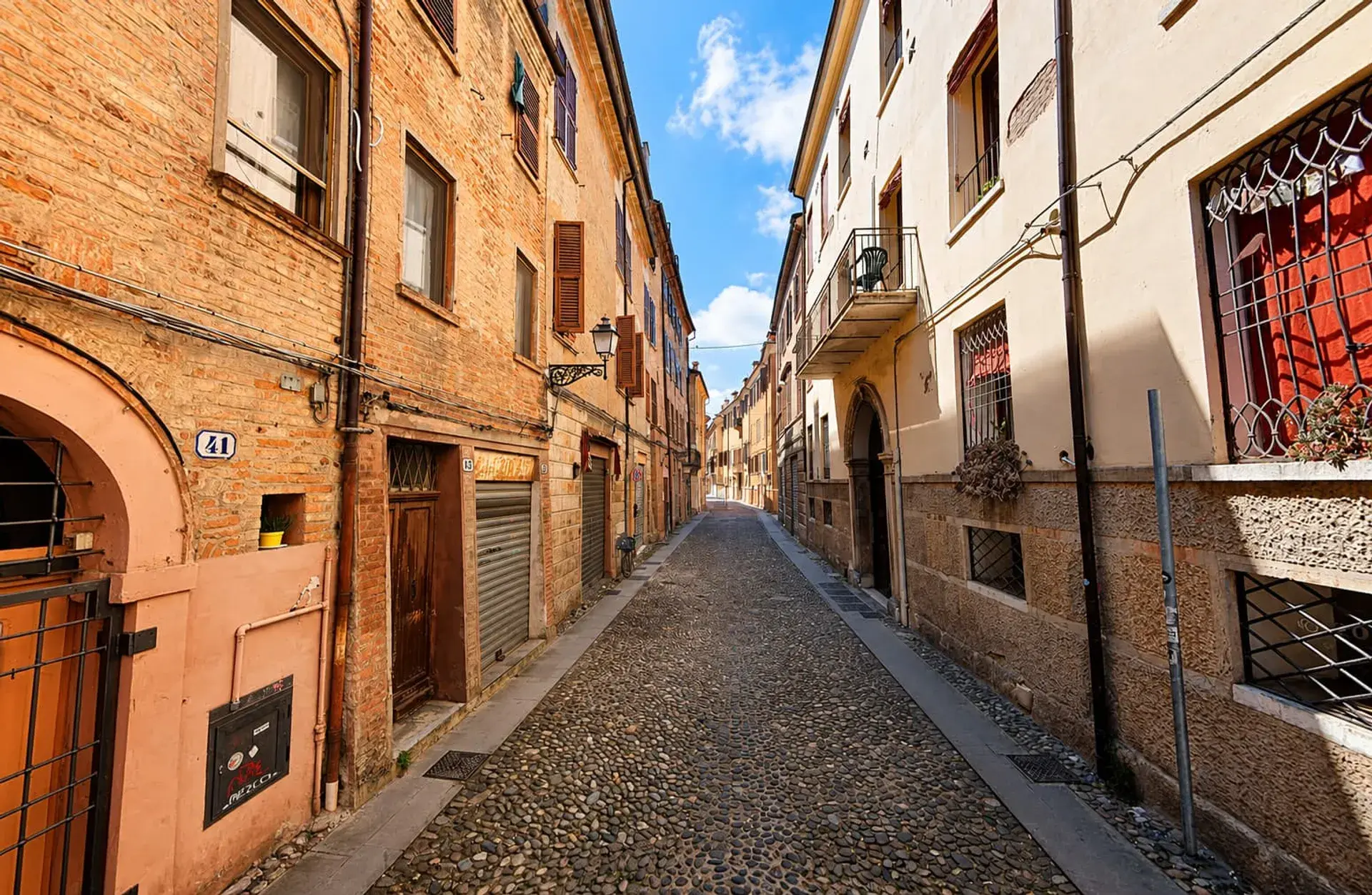
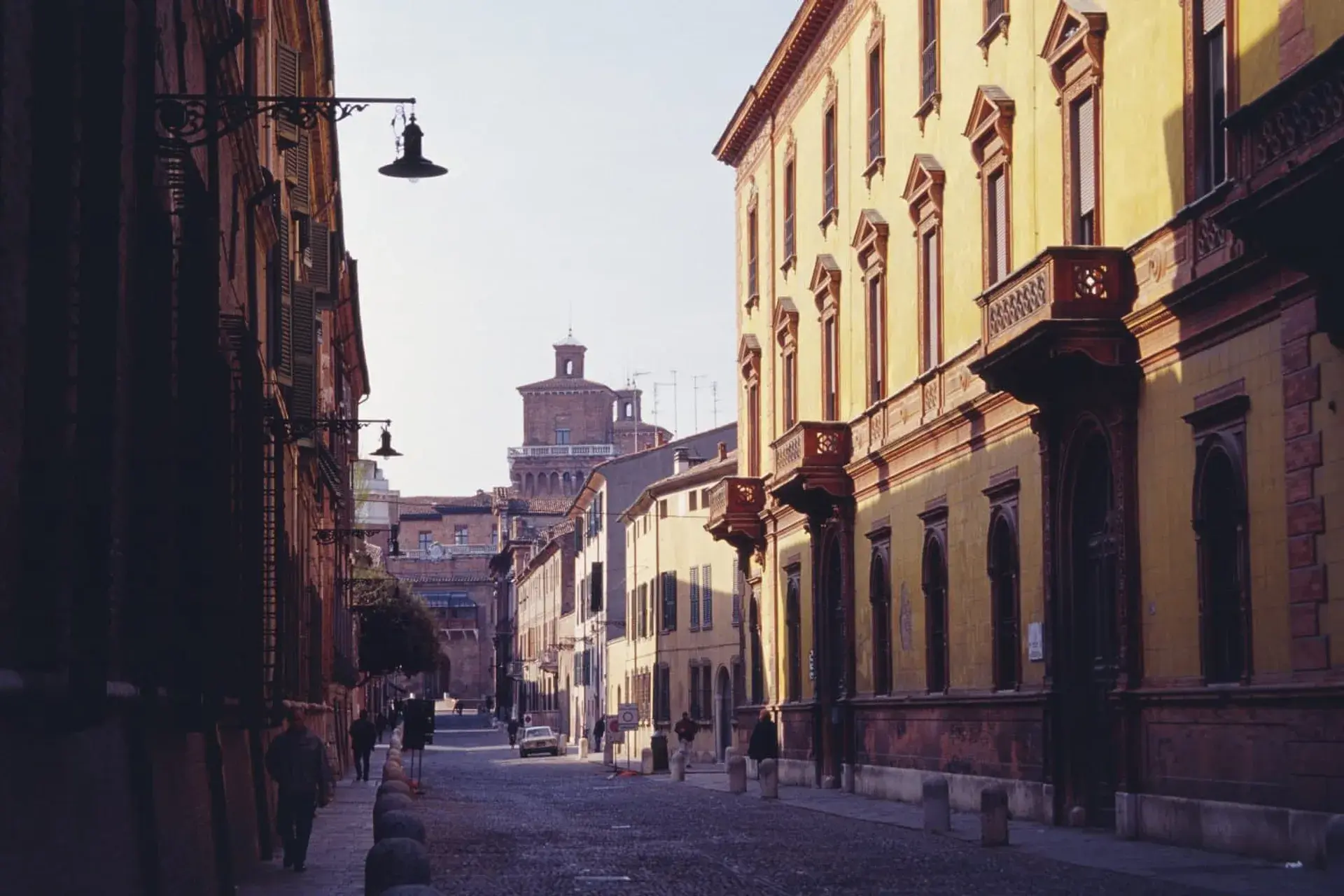
A walk down the historic Via Vignatagliata reveals the unassuming yet deeply significant exterior of the Ghetto Ebraico, reflecting centuries of local Jewish history. Located just south of Piazza Trento e Trieste, the former Jewish ghetto serves as an essential geographical and historical bridge within Ferrara’s UNESCO-listed city center. The district is centered around a historic quadrilateral network of streets, primarily Via Mazzini, Via Vignatagliata, Via della Vittoria, and Piazzetta Isacco Lampronti. The transition from the vast expanse of the cathedral square into these narrow, shadowed corridors is marked by unified exposed terracotta brick facades.
A Sanctuary Turned Walled Prison
During the 15th and 16th centuries, the Dukes of Este transformed Ferrara into a safe haven for Jewish populations fleeing persecution. The community flourished to around 2,000 residents. However, this era of tolerance ended abruptly when Duke Alfonso II died in 1597 without an heir, returning Ferrara to the administration of the Papal States. Behind five heavy gates, a flourishing sanctuary of the Renaissance transformed into a walled prison overnight. Between 1624 and 1627, Papal authorities formally enclosed the ghetto. The five gates sealing the district from the rest of the city were strictly locked at sunset and opened at sunrise.
Historic Landmarks and Hidden Curiosities
The main spine of the district, Via Mazzini, was originally named Via dei Sabbioni (Street of the Sands) due to the heavy sand spread over the unpaved road for public races and rainy weather. Located at Via Mazzini 95, the Synagogue Complex historically housed three distinct temples in a building donated in 1485 by Roman Jewish banker Ser Samuel Melli.
During the Papal era, residents were forced to attend conversion sermons. These were strategically held at the Oratory of San Crispino, positioned right at the ghetto gate on Piazza Trento e Trieste. This placement was chosen specifically to spare the Jewish community from physical abuse by hostile crowds during the walk to the Ducal Palace chapel.
The Fascist Era and Giorgio Bassani
The gates of the ghetto were temporarily opened by Napoleonic forces in 1796 but were not permanently abolished until 1859 when Ferrara joined the Kingdom of Sardinia (which later became Italy). However, segregation returned in 1938 under the Fascist Racial Laws. During World War II, the Jewish school at Via Vignatagliata 33 became an essential underground sanctuary for educators and children banned from public schools. It was here that author Giorgio Bassani taught, later immortalizing the district and its wartime tragedies in literary works like The Garden of the Finzi-Continis.
The Ghetto Ebraico Today
Today, Via Mazzini operates as an active pedestrian shopping street lined with local boutiques, while Via Vignatagliata and Via della Vittoria remain quiet residential corridors characterized by intricate wrought-iron balconies and discreet arched portals. The building at Via Mazzini 95 continues to serve as the institutional headquarters of the Ferrara Jewish Community.
Scattered throughout the district are commemorative plaques and polished bronze pietre d'inciampo (stumbling stones) embedded in the pavement to honor Holocaust victims. Nearby, a surprising piece of hidden history lies at the monument of Duke Borso d'Este in front of the Cathedral. During structural maintenance in 1960, it was discovered that the pink and white marble column supporting the monument had been secretly restored in the 18th century using headstones confiscated by Papal authorities from the Jewish Cemetery, with Hebrew funerary inscriptions hidden on the internal faces of the blocks.
FAQ
Where is the Ghetto Ebraico located in Ferrara?
The former ghetto is located immediately south of Piazza Trento e Trieste in the historic center, spanning across Via Mazzini, Via Vignatagliata, Via della Vittoria, and Piazzetta Isacco Lampronti.
When was the Jewish ghetto in Ferrara established?
The ghetto was established between 1624 and 1627 by Papal authorities. It was enclosed by five gates that were locked at sunset and opened at sunrise until it was permanently abolished in 1859.
Are the synagogues in Ferrara's ghetto still active?
Yes, the historic Synagogue Complex at Via Mazzini 95 remains the active institutional headquarters of the Ferrara Jewish Community.
Gallery