Piazza del Municipio: Ferrara's Ducal Courtyard
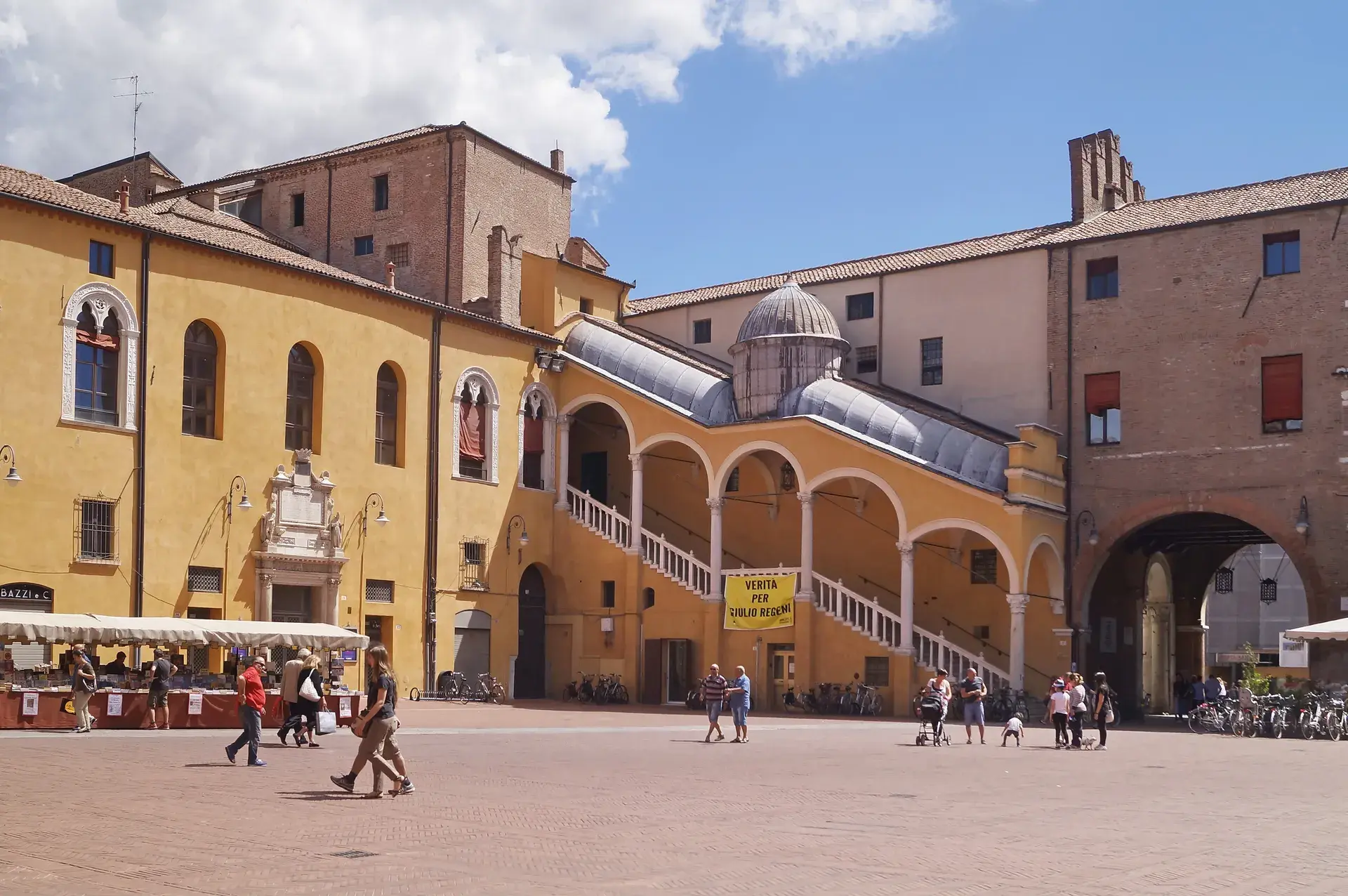
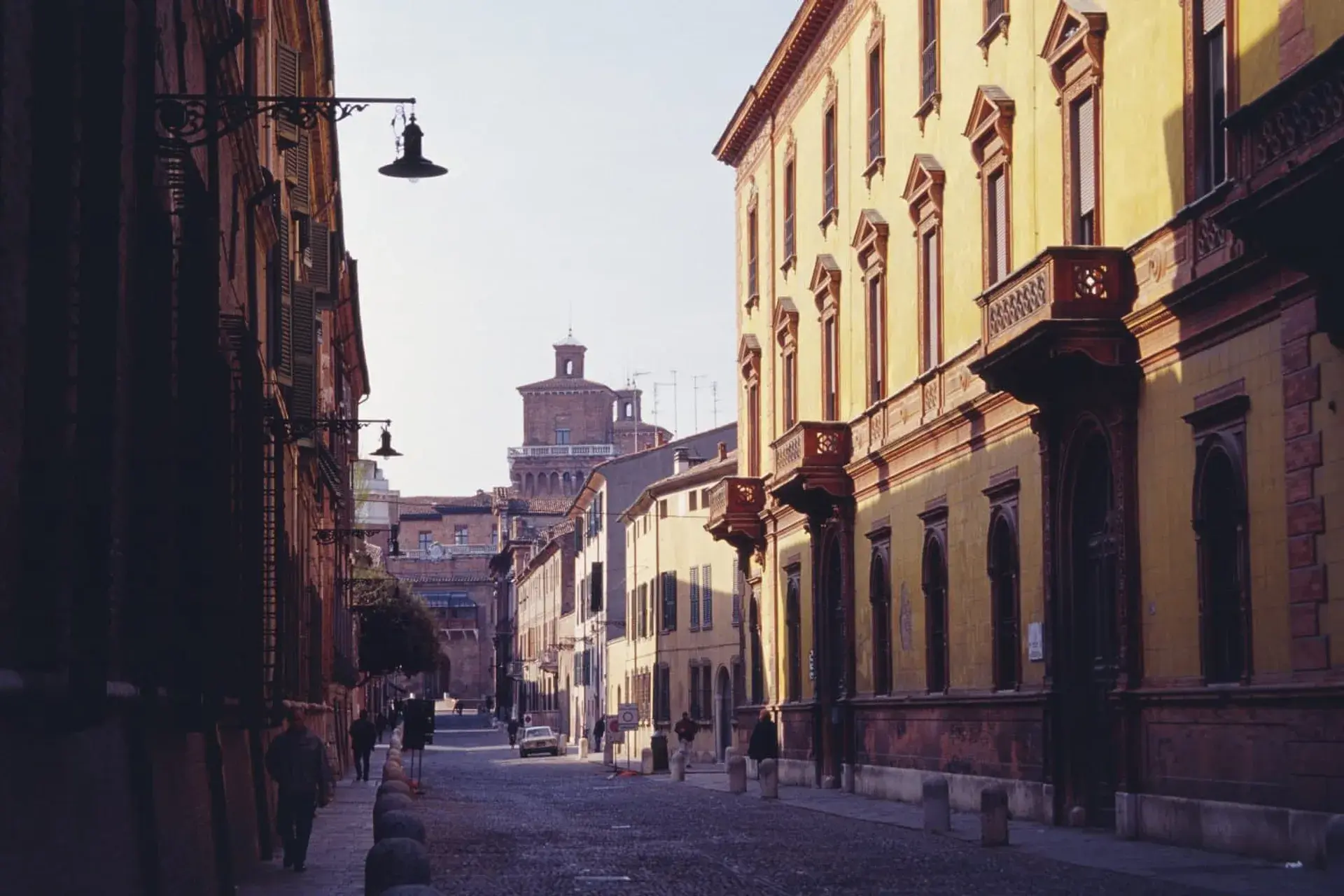
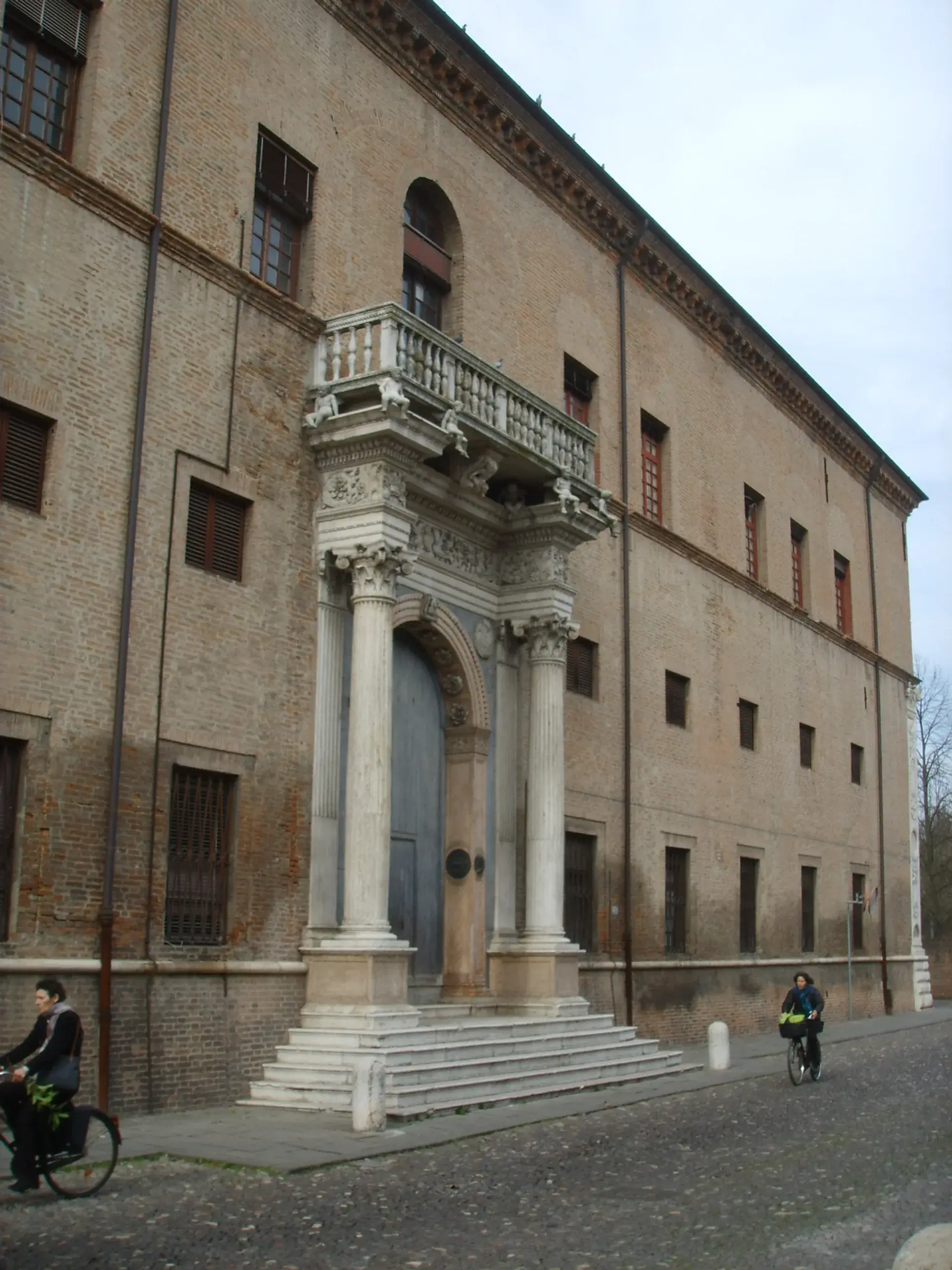
Before the ruling Este family moved into their famous moated castle, they governed—and staged pioneering Renaissance theater—from this enclosed courtyard. Situated directly opposite the Cathedral of San Giorgio, Piazza del Municipio (formerly the Cortile Ducale) served as the primary seat of the Este court after originating in 1245 as the Palazzo Ducale. Passing from the bustling cathedral square through the deep, shadowy arch of the Volto del Cavallo creates a distinct acoustic and spatial threshold, opening abruptly into a quiet, stone-paved inner court framed by red brickwork and white marble.\n\n## Architectural Marvels and the Grand Staircase\n\nThe courtyard is accessed through three vaulted passages: the Volto del Cavallo, the Volto della Colombina, and the Volto del Cavalletto. Inside, the space is defined by the Scalone d'Onore, or Grand Staircase. Designed by ducal architect Pietro Benvenuto dagli Ordini and built between 1473 and 1481, the staircase features white marble arches, a vaulted roof with a small central dome, and a balustrade that blends Late Gothic and early Renaissance motifs. Surrounding the courtyard, trilobe marble windows mark the historic ducal apartments, while the north side houses the former Court Chapel, now the Sala Estense. On the wall opposite the grand staircase rests a restored vertical sundial, created in 1869 by gnomonist Giovanni Zaffi.\n\n## Statues of the Este Dukes\n\nFlanking the main Volto del Cavallo entrance are prominent statues of Marquis Niccolò III d'Este on horseback and Duke Borso d'Este seated on a faldstool. The arched base supporting Niccolò III's equestrian statue is attributed to the famous Renaissance architect Leon Battista Alberti. The bronze figures seen today are 1927 replicas created by Giacomo Zilocchi; the 15th-century originals were destroyed and melted down during the French revolutionary occupation in 1796. Historical records note that the pedestal and column supporting the Borso d'Este statue were rebuilt using marble salvaged from confiscated tombstones from the Ferrara Jewish Cemetery during the Inquisition era.\n\n## From Renaissance Theater to Modern Civic Hub\n\nDuring the late 15th century under Duke Ercole I d'Este, the courtyard was utilized as a pioneering venue for classical Renaissance open-air theater. It hosted early vernacular stagings of comedies, including a 1486 production of Plautus's 'Menaechmi' which was attended by a teenage Ludovico Ariosto. Today, the site serves as the active Town Hall for the Comune di Ferrara. The Scalone d'Onore functions as the main public entrance to the municipal offices and reception halls on the piano nobile. As a pedestrian town square, the courtyard continues to host cultural events, outdoor exhibitions, concerts, and ceremonial trials for the flag-wavers (sbandieratori) ahead of the historic Palio di Ferrara.
FAQ
Are the bronze statues in Piazza del Municipio the originals?
No, the bronze statues of Niccolò III and Borso d'Este are 1927 replicas created by Giacomo Zilocchi. The 15th-century originals were melted down during the French revolutionary occupation in 1796.
What is the Scalone d'Onore?
The Scalone d'Onore is a Grand Staircase designed by Pietro Benvenuto dagli Ordini and built between 1473 and 1481. It features white marble arches and a vaulted roof, currently serving as the main public entrance to Ferrara's municipal offices.
What historical events took place in the courtyard?
Under Duke Ercole I d'Este in the late 15th century, the courtyard was a pioneering venue for classical Renaissance open-air theater. In 1486, it famously hosted an early staging of Plautus's comedy 'Menaechmi'.