Guide to Piazza Savonarola in Ferrara
The Hinge of Historic Ferrara
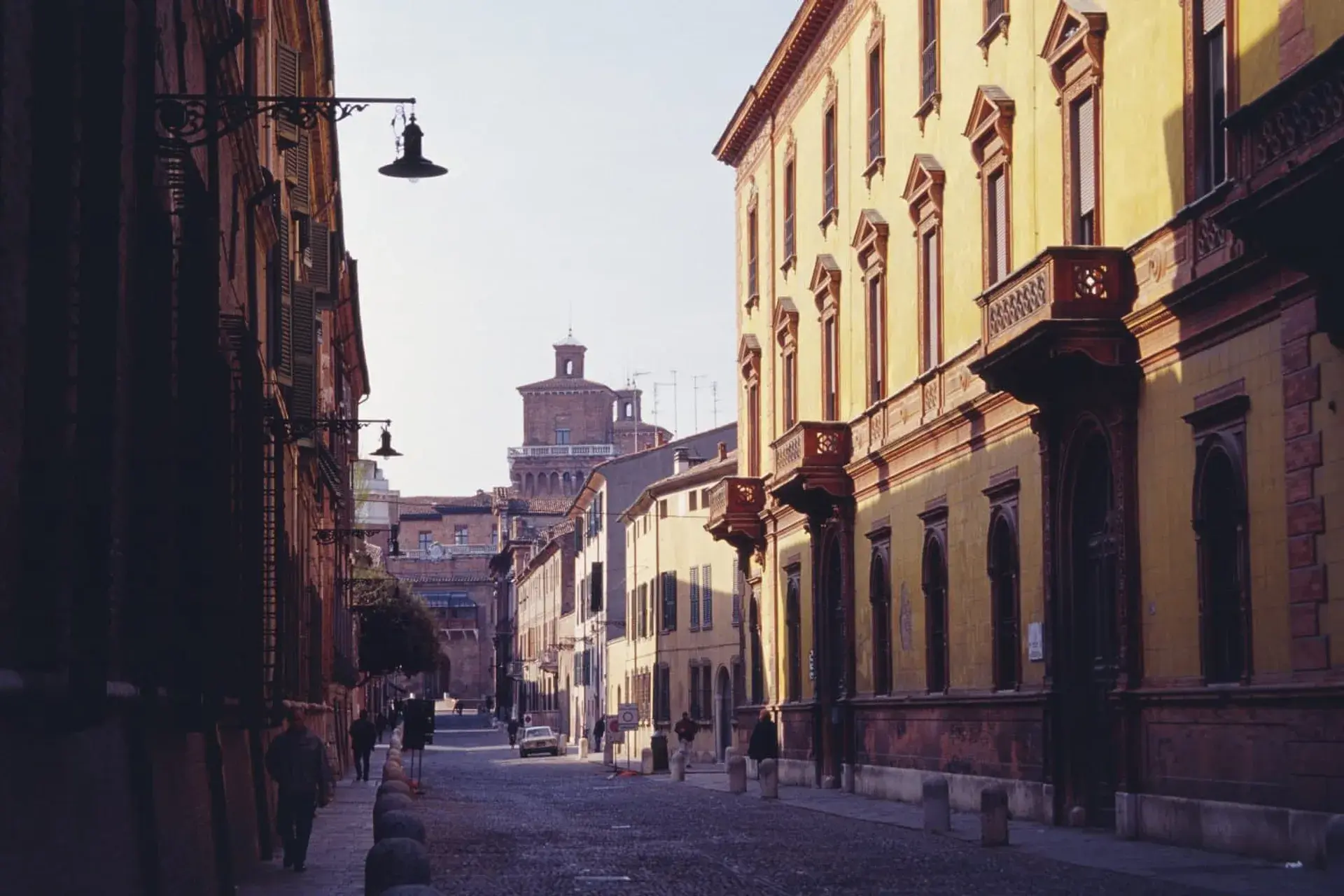
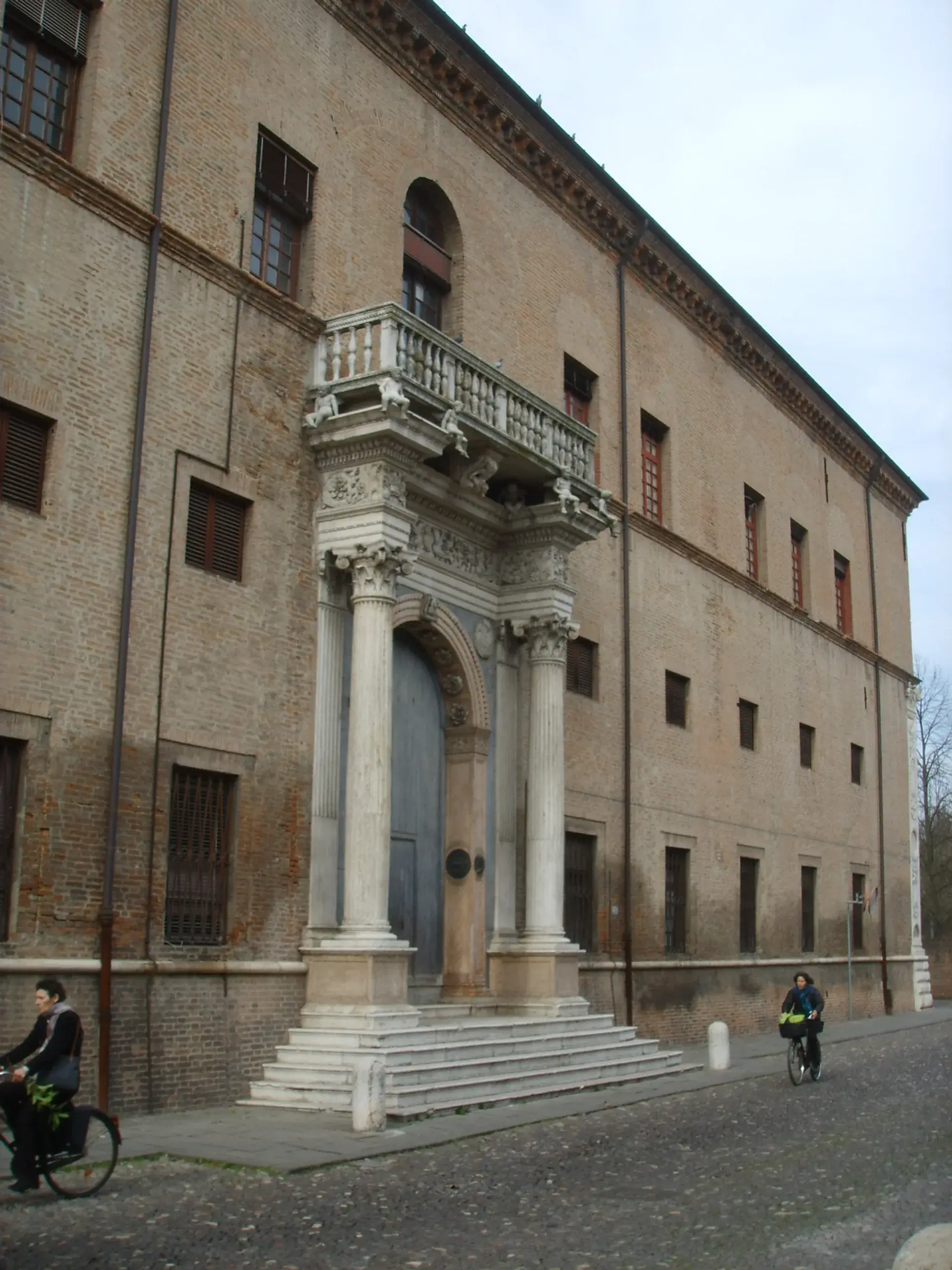
Piazza Savonarola serves as a vital architectural bridge in central Ferrara. It physically and thematically connects the medieval civic heart of the cathedral area with the defensive Castello Estense and the northern Renaissance expansion. The square is enclosed by significant historic structures, including the south moat of the castle and the sixteenth-century Loggia dei Camerini of the Palazzo Ducale.
The Monument to a Fiery Preacher
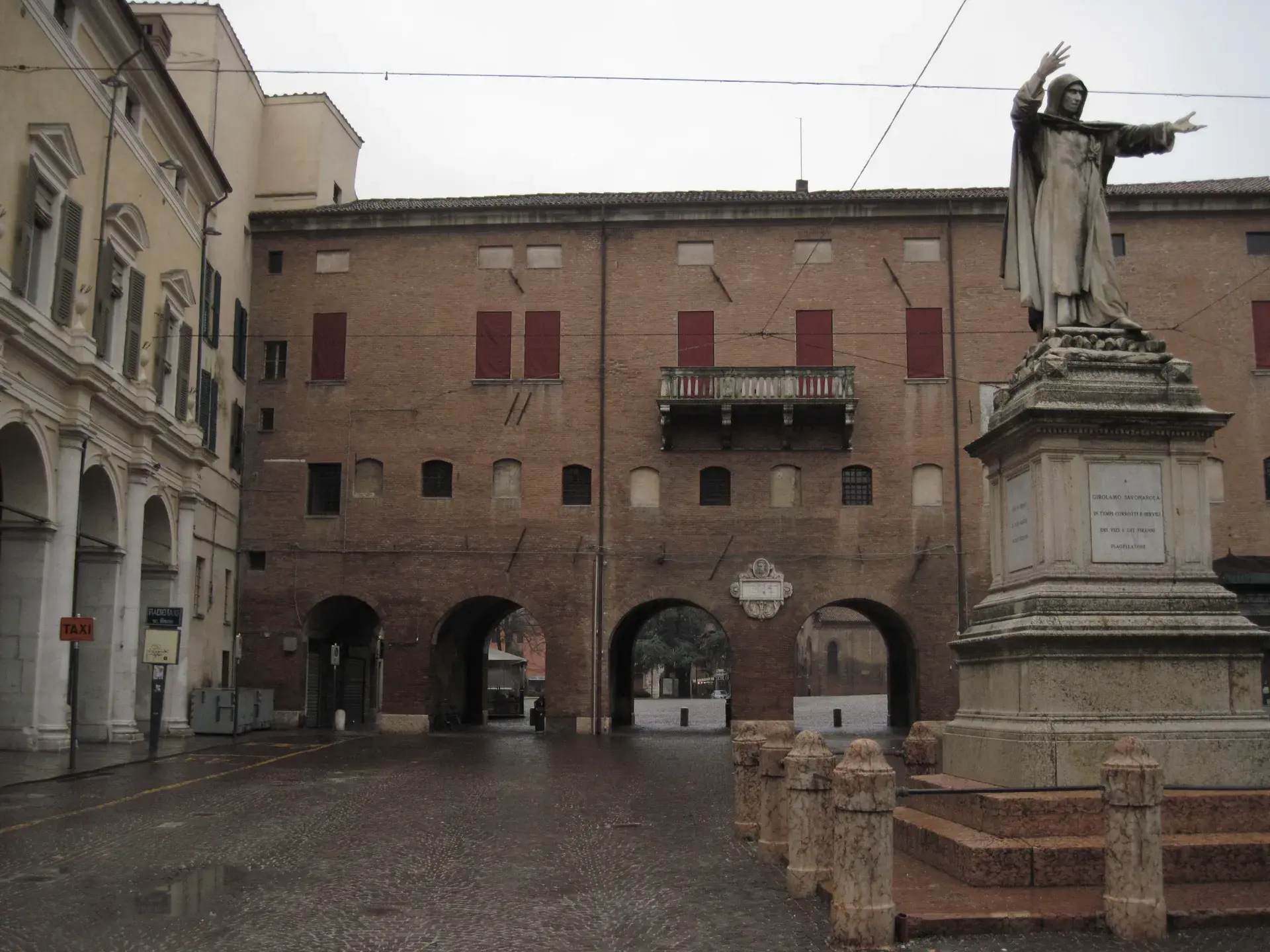
At the center of the paved stone ground stands a stark white marble monument dedicated to Girolamo Savonarola. Born in Ferrara in 1452, the Dominican friar gained fame for his fierce denunciations of clerical corruption and his leadership in Florence before his eventual execution in 1498. Following Ferrara's integration into the emerging Italian state, the city council renamed the square in his honor in 1860.
Inaugurated in 1875 in the presence of the future King Umberto I, the statue was sculpted by Stefano Galletti. It portrays the preacher frozen mid-sermon with intense facial tension and raised arms, framing him as a Risorgimento symbol of defiance against papal authority. In a surprising detail, the base immediately beneath his feet is not a traditional classical plinth. Instead, Galletti sculpted a stack of logs, integrating the Florentine pyre on which Savonarola was burned directly into the standing monument.
Architectural Contrasts
The square offers a striking visual contrast between the bright marble monument and the surrounding architecture. The western edge is defined by the Via Coperta, a 57-meter elevated corridor resting on five stone arches. Originally conceived as a wooden footbridge under Borso d'Este to link the castle fortress with the administrative ducal palace, it was later rebuilt in stone by successive Este dukes. Through these arches, the heavy brick mass and dark waters of the Castello Estense moat remain visible.
Modern Life and Local Legends
Today, Piazza Savonarola is a bustling open-air pedestrian thoroughfare lined with outdoor café seating. It frequently hosts Friday morning markets, artisan gatherings, and craft fairs. The space carries several local quirks and historical nicknames. In the nineteenth century, it was colloquially known as "Piazza de' Fiaccherai" due to a stand of hackney carriages established there in May 1858.
A popular modern superstition claims that making direct eye contact with the statue's stern gaze brings bad luck. Conversely, the figure remains a focal point for city pride; during major city-wide sports celebrations, local supporters periodically drape the historic monument in SPAL football scarves.
FAQ
Who is the statue in Piazza Savonarola dedicated to?
The marble statue is dedicated to Girolamo Savonarola, a Dominican friar born in Ferrara in 1452 who famously denounced political and clerical corruption before being executed in Florence.
What is the elevated structure on the edge of the square?
The structure is the Via Coperta, a 57-meter elevated corridor built on five stone arches. It was originally designed as a wooden footbridge by Borso d'Este to connect the Castello Estense with the Palazzo Ducale.
Why is the statue's pedestal shaped like logs?
Sculptor Stefano Galletti designed the pedestal to look like a stack of wood to represent the pyre on which Girolamo Savonarola was executed in Florence in 1498.