Piazza Trento e Trieste: Ferrara's Historic Heart
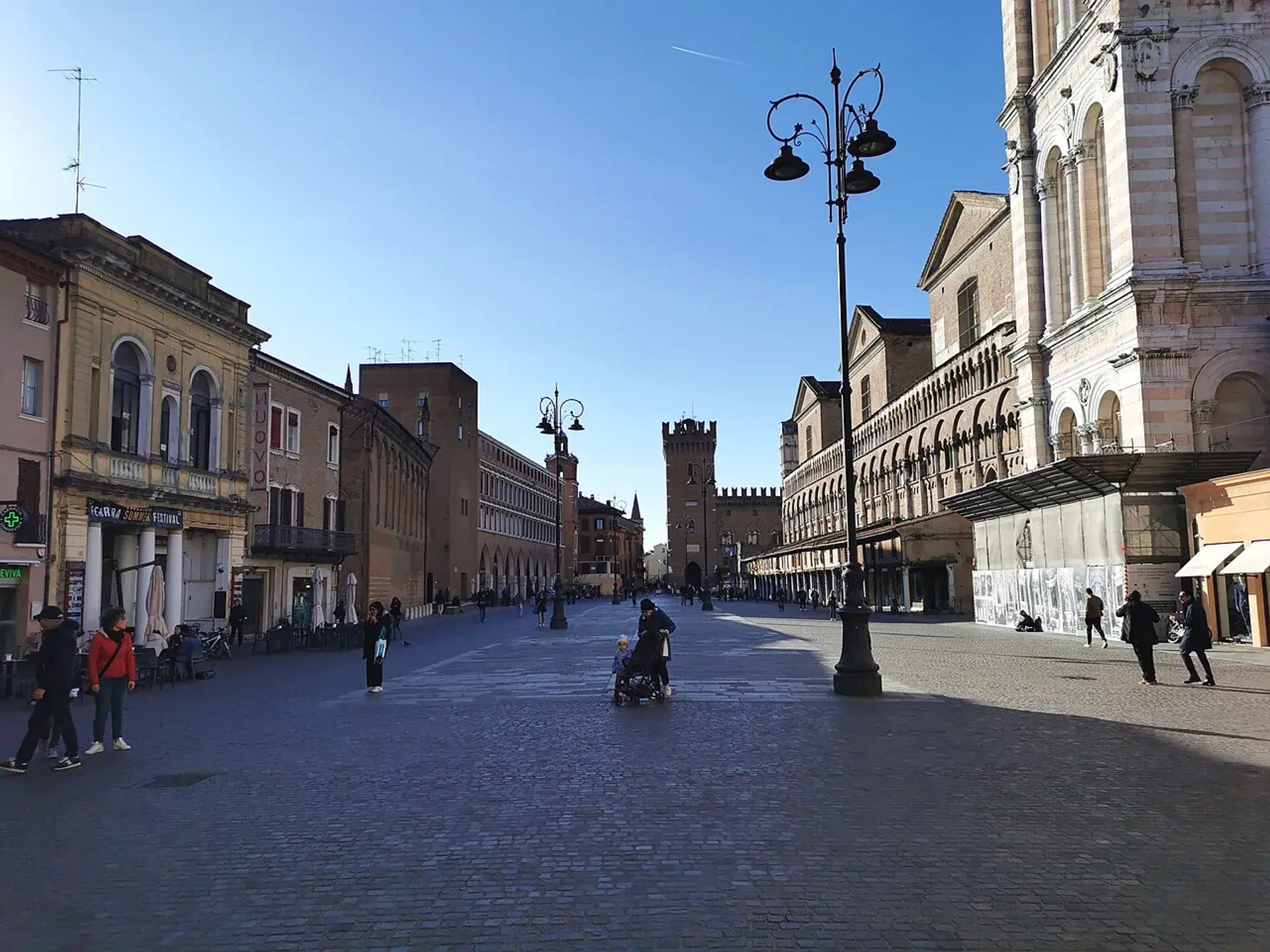
Piazza Trento e Trieste has anchored Ferrara’s civic identity since the Middle Ages. Originally known as Piazza del Mercato delle Erbe, this expansive rectangular square emerged in the 12th century alongside the Cathedral of San Giorgio. Today, it remains a vibrant hub where historic facades and bustling street life frame the urban rhythm of the city.
Architectural Landmarks and the Listone
The square is bisected by a striking architectural feature known as the Listone. This 120-metre-long and 12-metre-wide raised stone platform is a classic Venetian urban design element that is rarely seen in the Emilia-Romagna region. The smooth stone paving of the promenade contrasts sharply with the surrounding cobblestones, creating a natural stage for the city's daily activities.
Several prominent historical structures border the plaza. At the corner stands an unfinished multi-tiered Cathedral Bell Tower attributed to the Renaissance architect Leon Battista Alberti. Its classical marble revetment blends seamlessly into rough, unfinished upper stonework because its intended spire was never completed. Nearby, the Clock Tower and the Palazzo di San Crispino—the historic seat of the shoemakers' guild—add to the square's rich architectural tapestry. During the winter months, dense regional fog known as nebbia often hangs over the area, obscuring the upper reaches of the bell tower and cathedral to create a striking metaphysical atmosphere.
The Loggia dei Merciai and Ancient Laws
Along the southern flank of the cathedral runs the Loggia dei Merciai, a continuous covered arcade built in the 15th century. The Este family commissioned the structure to organize chaotic market stalls and beautify the space for royal weddings. Historically, the square connected directly to the cathedral via the Porta dei Mesi, a Romanesque portal adorned with agricultural reliefs that was later demolished in the mid-18th century.
Beneath the Loggia dei Merciai lies a remarkable piece of civic history. Before the advent of modern municipal printing, Ferrara's foundational 1173 legal statutes were physically carved into marble slabs along the cathedral’s exterior foundation wall. This ensured that no citizen could claim ignorance of municipal laws. Today, portions of these ancient stone inscriptions remain preserved inside modern shop premises operating beneath the portico.
A Center for Civic Life and Passeggiata
Piazza Trento e Trieste continues its centuries-old role as an active commercial and social hub. The raised Listone serves as the traditional venue for the local evening and Sunday stroll, known as the passeggiata. The echoing chatter under the Loggia dei Merciai mingles with the ringing of passing bicycle bells and the chiming of the Clock Tower.
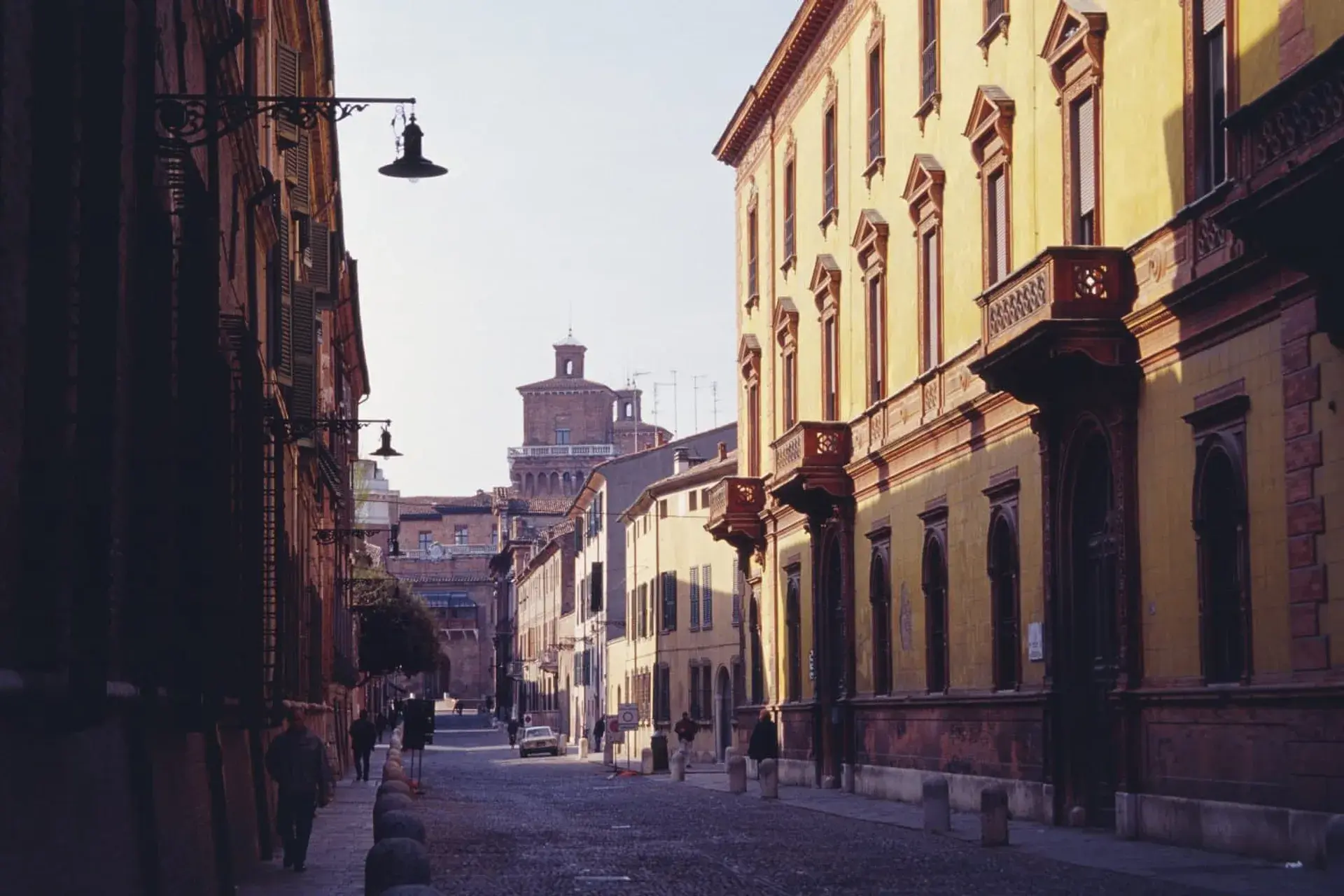
The historic arcade now houses contemporary boutiques and cafes, blending medieval architecture with modern retail. The square also regularly hosts open-air markets, seasonal fairs, and cultural festivals. Functioning as a vital link in the city's classic axis, it connects medieval southern quarters like the historic Jewish Ghetto to the Renaissance civic core near Palazzo Municipale.
FAQ
What is the Listone in Piazza Trento e Trieste?
The Listone is a 120-metre-long raised stone platform that bisects the square. It is a traditional Venetian urban design feature rarely found in Emilia-Romagna, serving as the main promenade for the local evening stroll.
Where can Ferrara's oldest laws be found?
Ferrara's original 1173 municipal statutes were carved directly into the marble foundations of the Cathedral of San Giorgio. Portions of these historic stones are still preserved inside modern shops located beneath the Loggia dei Merciai.
Why does the Cathedral Bell Tower look unfinished?
The Renaissance bell tower, attributed to architect Leon Battista Alberti, remains visibly truncated because its intended spire was never completed. This leaves a unique blend of classical marble and unfinished upper stonework.