Via delle Volte: Ferrara's Street of Arches
A Linear Relic of Early Medieval Ferrara
Via delle Volte is a narrow medieval street situated in the southern part of Ferrara's historic center, running east-west between Via Capo delle Volte and Via Giuoco del Pallone. The street's axis dates back to the 7th through 9th centuries. As the primary surviving example of Ferrara's early linear medieval layout, the lane forms a deliberate structural contrast with the broad, geometric street grid of the Renaissance Addizione Erculea located to the north.
The Function Behind the Flying Arches
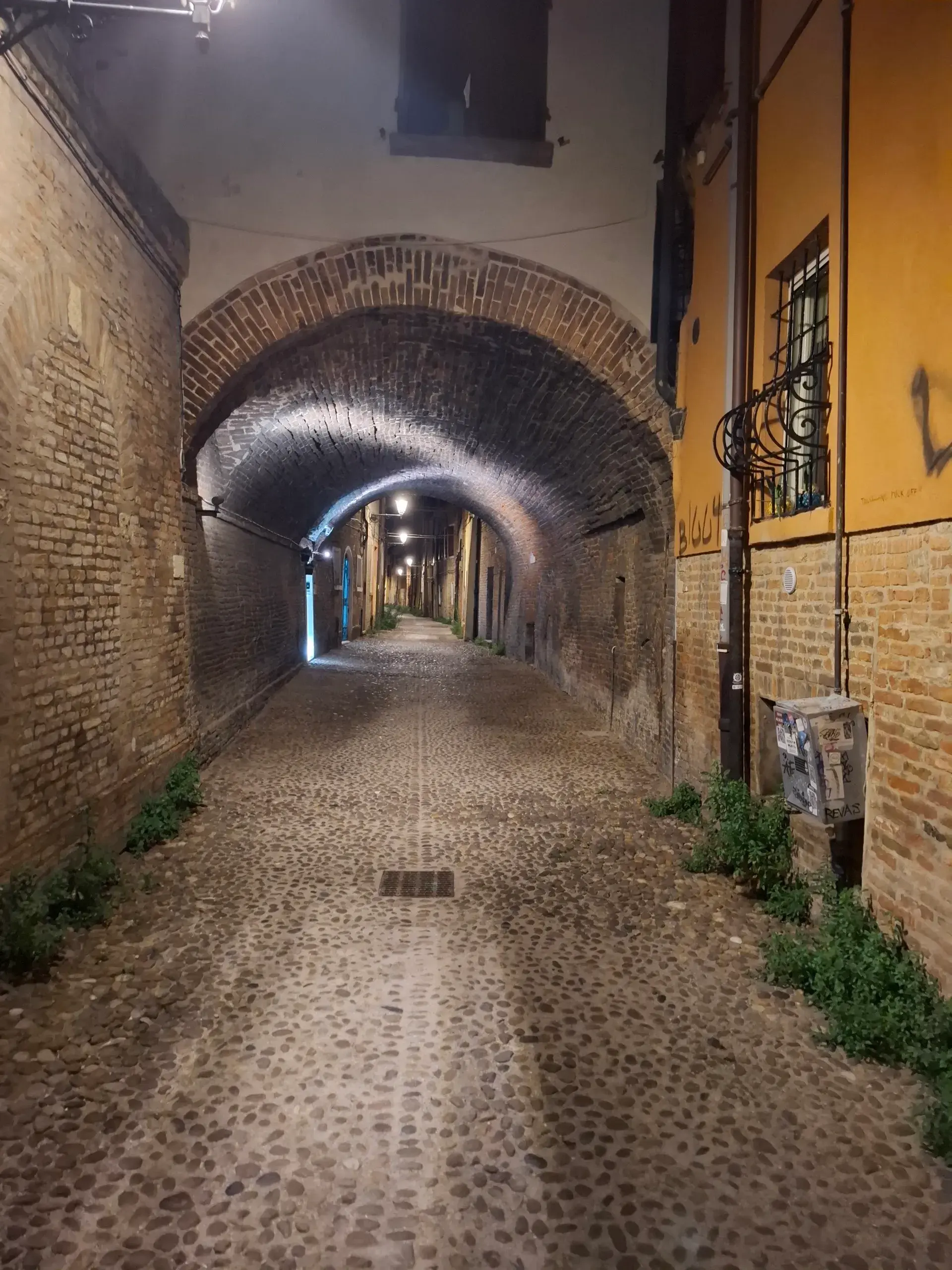
The street is visually defined by its exposed brick facades and striking overhead covered vaults. Most of these flying arches—which feature both rounded and pointed, ogival designs—were constructed during the 13th and 14th centuries.
Originally laid out along the natural embankment of the Po di Volano river branch, the street served as the main commercial and transport artery of early medieval Ferrara. Following a major natural course shift of the Po River in 1152, known as the Rotta di Ficarolo, the waterway lost its primary shipping prominence. However, the street retained its vital mercantile layout. The overhead vaults functioned as elevated corridors linking the homes of merchants and artisans on one side of the street directly to warehouses, workshops, or dock landings on the opposite side. This design allowed workers to move goods efficiently while avoiding muddy riverbank conditions and the threat of street-level theft.
From Illicit Nights to Literary Fame
Despite its architectural charm, the narrow, unlit street evolved into Ferrara's primary district for brothels and illicit activity. This red-light district reputation persisted into the early 20th century. Author Giorgio Bassani famously documented this darker atmosphere and the faint lights of its brothels in his acclaimed Ferrarese novel, The Garden of the Finzi-Continis.
Modern Charm and Culinary Traditions
Today, Via delle Volte is a pedestrianized heritage lane lined with restored private residences. The ground level features an uneven texture of original river pebble paving, known locally as ciottoli di fiume. The narrow brick walls and overhead vaulting create sudden transitions between daylight and deep shadow. During the colder months, the famous Po Valley fog (la nebbia) gathers densely under the archways, muting ambient sounds.
Situated immediately adjacent to the historic Jewish Ghetto, the street is now home to various wine bars and osterie serving traditional regional dishes. Due to this proximity, the local eateries historically absorbed subtle kosher, Sephardic, and Italian Jewish culinary traditions, creating a flavor profile uniquely tied to Ferrara's gastronomy.
FAQ
Why does Via delle Volte have overhead arches?
The arches were built in the 13th and 14th centuries as elevated corridors. They allowed medieval merchants and artisans to move goods safely between their homes and riverside warehouses without dealing with the mud, congestion, and theft common at street level.
Where is Via delle Volte located?
The street is situated in the southern part of Ferrara's historic center, running between Via Capo delle Volte and Via Giuoco del Pallone. It is located immediately adjacent to the city's historic Jewish Ghetto.
What role did the street play in Ferrara's history?
Dating back to the 7th through 9th centuries, the street originally ran along the Po di Volano riverbank and served as early medieval Ferrara's main commercial artery. It maintained its mercantile importance even after the river naturally shifted course in 1152.
Discover Ferrara like never before
Dive into Ferrara hidden stories and secret spots with Ciceru interactive tours.
Explore tour
Audioguide
Quizzes
Maps
Solo
Couples
Groups & families

© Photo by Todorovic Zoran via Google Maps · Google Places