Chiesa di San Matteo: Genoa's Doria Family Chapel
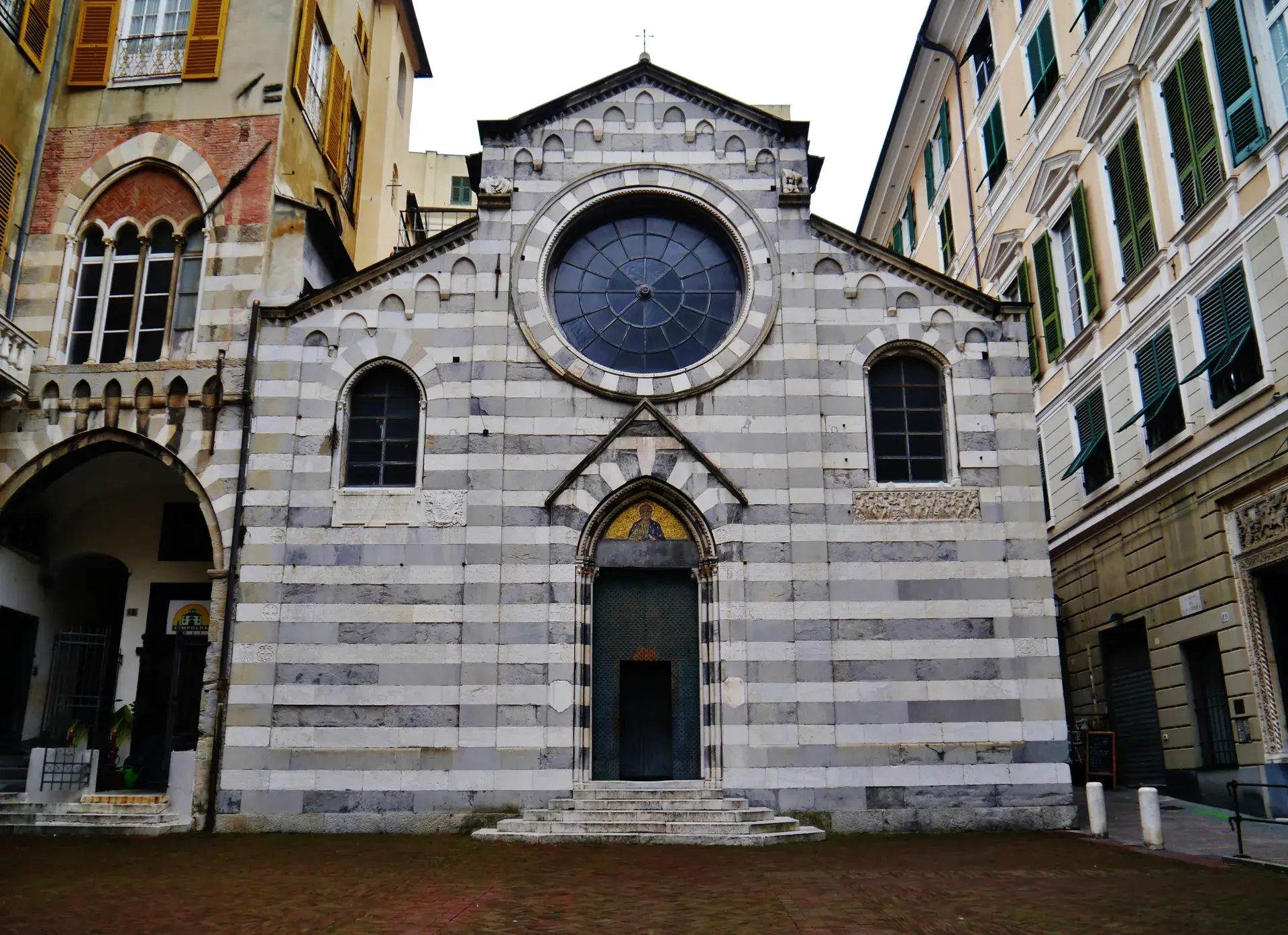
Nestled in a quiet square, the Chiesa di San Matteo is a jewel of Genoese history and the private chapel of the powerful Doria family. Founded in 1125 by Martino Doria, the church and its surrounding piazza served as the administrative and spiritual heart for one of the city-state's most influential families.
Architectural Evolution
Originally a Romanesque structure, the Chiesa di San Matteo underwent a significant Gothic renovation in 1278, which gave it the distinctive black and white striped marble façade typical of medieval Genoese architecture. The adjacent cloister was constructed in 1308. This medieval exterior contrasts with the interior, which was transformed during the Renaissance.
In the mid-16th century, the celebrated Admiral Andrea Doria commissioned a major modernization. This project was supervised by Giovanni Angelo Montorsoli, who designed the presbytery, the dome, and Andrea Doria's tomb. Further interior decorations were added between 1557 and 1559 under the direction of Giovanni Battista Castello, with contributions from artists like Luca Cambiaso. The church also features an original Baroque pipe organ built by Antonio Alari in 1773.
A Family Pantheon
The church became the Doria family's pantheon, the final resting place for generations. The tomb of Admiral Andrea Doria, dubbed 'Father of the Homeland,' lies within the crypt. On the church's main façade is the tomb of Lamba Doria, another famous admiral who secured a major naval victory for Genoa against the Venetians. His tomb incorporates an ancient Roman sarcophagus. The church also houses a ceremonial sword gifted to Andrea Doria by Pope Paul III.
A Private City Within a City
Piazza San Matteo was an exceptional case in Genoa, functioning as a private family property until the 19th century. The Doria family had the authority to require permission for anyone wishing to cross the square. The surrounding palaces, all bearing the Doria coat of arms, were connected to the church by a 15th-century loggia, allowing the family to attend services without mixing with the public. This architectural ensemble created a 'microcosm of power' in the heart of the city.
The Church and Square Today
The Chiesa di San Matteo remains an active place of worship, and its adjacent cloister is accessible to visitors. While the square is typically quiet, it often hosts open-air theatre and music on summer evenings. The historic Doria palaces that frame the square are now a mix of private residences and professional offices.
FAQ
Who is buried in the Chiesa di San Matteo?
The church serves as a pantheon for the Doria family. The most notable tomb is that of Admiral Andrea Doria, located in the crypt. The tomb of Admiral Lamba Doria is also incorporated into the church's façade.
What is the architectural style of the Chiesa di San Matteo?
The church features a mix of styles. Its exterior has the characteristic Genoese Gothic design with black and white stripes, while its interior was heavily renovated in the mid-16th century in a Renaissance style.
Why was the Piazza San Matteo considered private?
The Doria family obtained a special privilege to establish a private square. Until the 19th century, it remained their private property, and anyone wishing to cross it had to ask for permission from the family's descendants.
Who founded the Chiesa di San Matteo?
Martino Doria founded the church in 1125, establishing it as the private chapel for his powerful family.