Porta Soprana: Genoa's Medieval Twin-Towered Gate
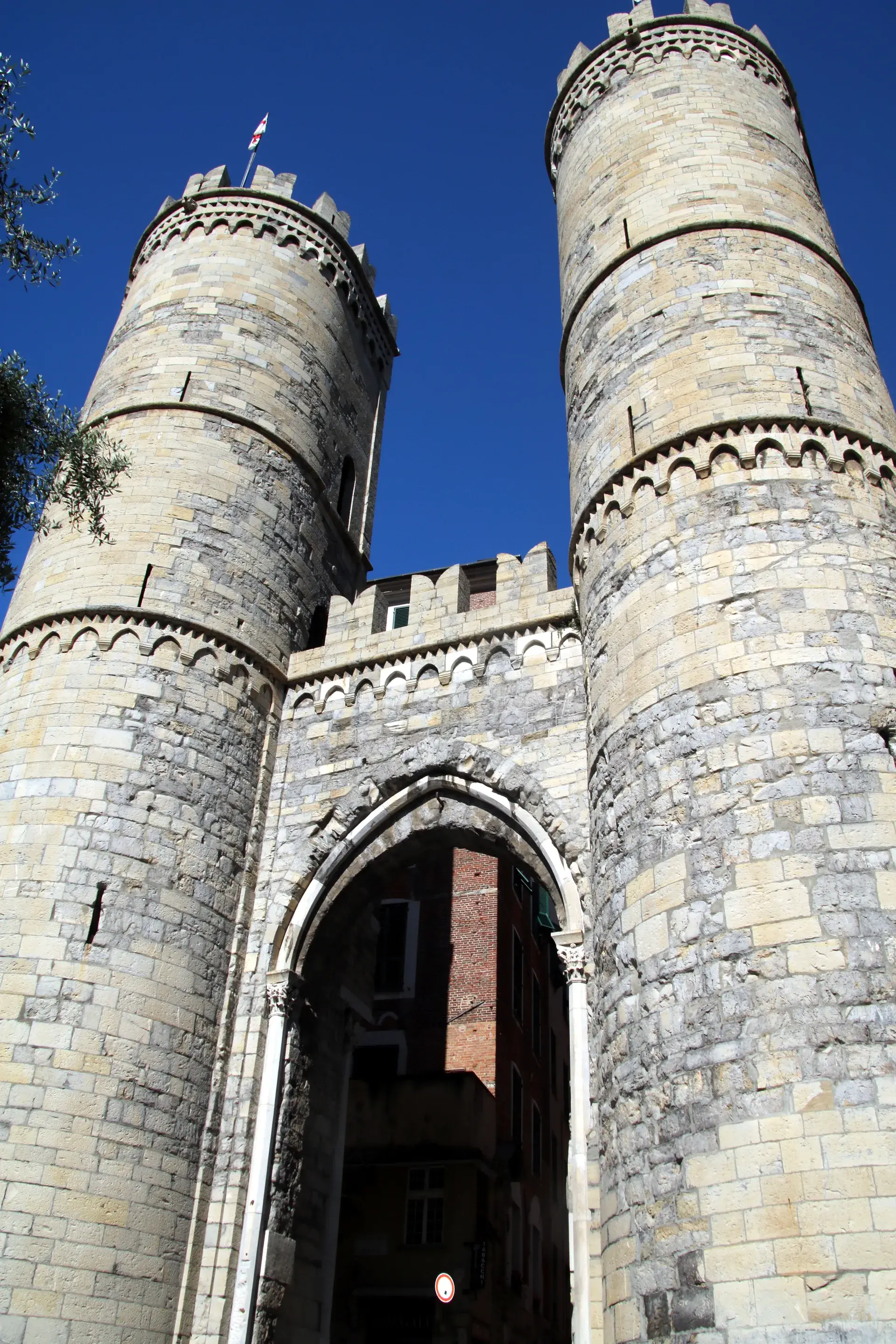
Porta Soprana stands as one of Genoa's most significant and well-preserved medieval landmarks. With its imposing twin towers, this 12th-century gate, also known as Porta di Sant'Andrea, once served as a primary eastern entrance to the city and a powerful symbol of the Republic of Genoa's independence.
A Fortress Against an Emperor
Porta Soprana was a crucial component of Genoa's third defensive ring, the 'Barbarossa Walls.' The walls were constructed with remarkable speed between 1155 and 1159, with the gates completed by 1161. This massive undertaking, involving a majority of the city's citizens, was a direct response to the expansionist ambitions of the Holy Roman Emperor Frederick I, known as Barbarossa. The formidable new fortifications successfully deterred the emperor, compelling him to negotiate with the powerful maritime republic rather than attempt an attack.
Architectural Style and Meaning
The gate is a prime example of Romanesque architecture, characterized by its two grand, circular towers. A notable feature is its ogival arch, which predates the widespread use of this element in Gothic art, suggesting it may be an early instance of Gothic influence in Genoa. A Latin inscription on the arch delivers a stern message: "I am guarded by soldiers, surrounded by beautiful walls and with my value, I cast away the darts of the enemies. If you bring peace, you may approach this gate; if you seek war, you shall return sad and beaten." The name 'Soprana' itself means 'the highest,' a reference to its location atop the plain of Sant'Andrea, the highest point in its section of the wall.
An Evolving Role Through History
By the 14th century, as Genoa expanded, Porta Soprana lost its primary defensive function and was gradually integrated into the urban fabric of the Ponticello district. Its history took on darker tones over the centuries. In the 19th century, the towers were repurposed as a prison. More surprisingly, during the French Revolution in the 18th century, the towers reportedly housed an executioner's chamber equipped with a functioning guillotine. The structure underwent significant restoration between 1882 and 1914, led by Alfredo D'Andrade, with further work on the south tower in the 1930s by Orlando Grosso.
Porta Soprana Today
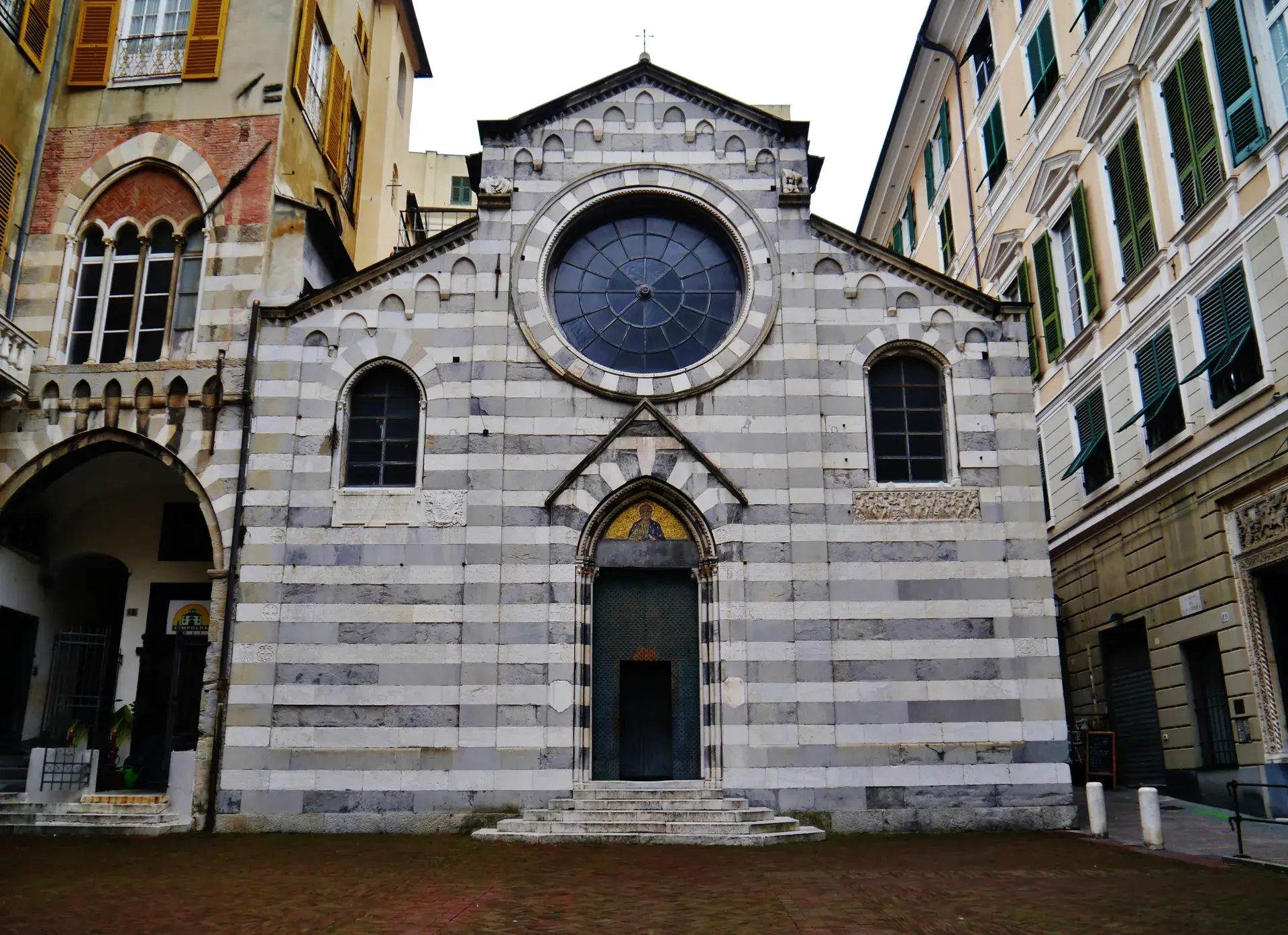
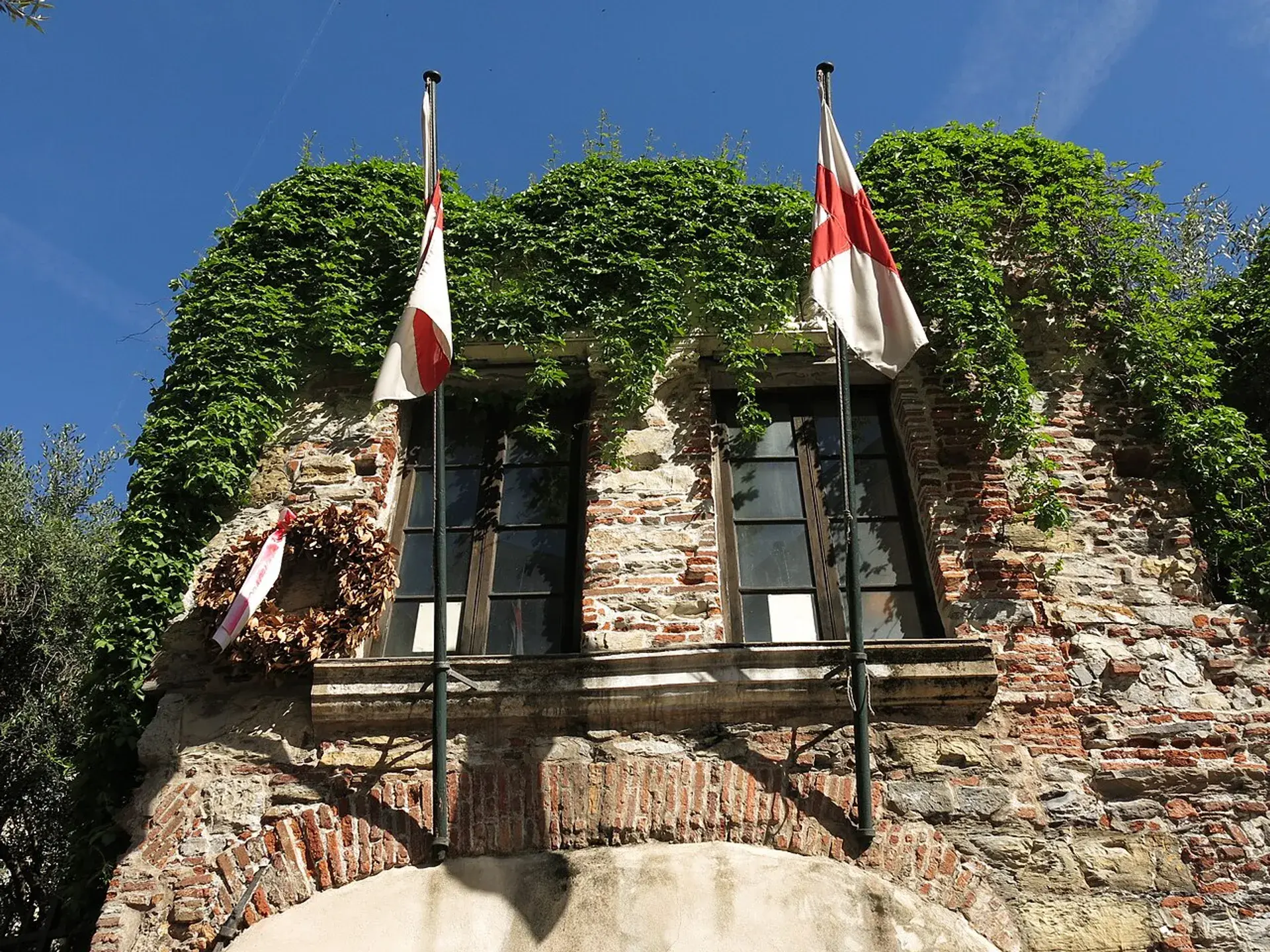
Today, Porta Soprana is a celebrated cultural monument, acting as a symbolic gateway between Genoa's historic old town and the modern city. While the gate itself is an open-air structure, visitors can ascend the ancient staircase within the towers to enjoy panoramic views. The area is a vibrant urban space with cafes and shops. Adjacent to the gate are the remains of the Romanesque cloister of Sant'Andrea and an 18th-century reconstruction of the purported birthplace of Christopher Columbus, linking the site to another of Genoa's famous legacies.
FAQ
Why was Porta Soprana built?
Porta Soprana was constructed between 1155 and 1161 as a key part of the 'Barbarossa Walls,' a defensive system built to protect Genoa from a potential invasion by Holy Roman Emperor Frederick Barbarossa.
Can you go inside Porta Soprana?
The gate itself is an open-air monument. Visitors can climb the staircase inside the twin towers for panoramic city views. The towers typically have visiting hours from 9 AM to 6 PM, and entry is generally free.
What does the name Porta Soprana mean?
The name 'Soprana' translates to 'the highest.' It refers to the gate's majestic location on the plain of Sant'Andrea, which was the highest point in that section of the city's 12th-century walls.
What is the most surprising fact about Porta Soprana's history?
During the French Revolution in the 18th century, the towers of Porta Soprana were repurposed to serve as an executioner's chamber and were equipped with a fully functioning guillotine.