Palazzo San Giorgio: Genoa's Historic Frescoed Bank
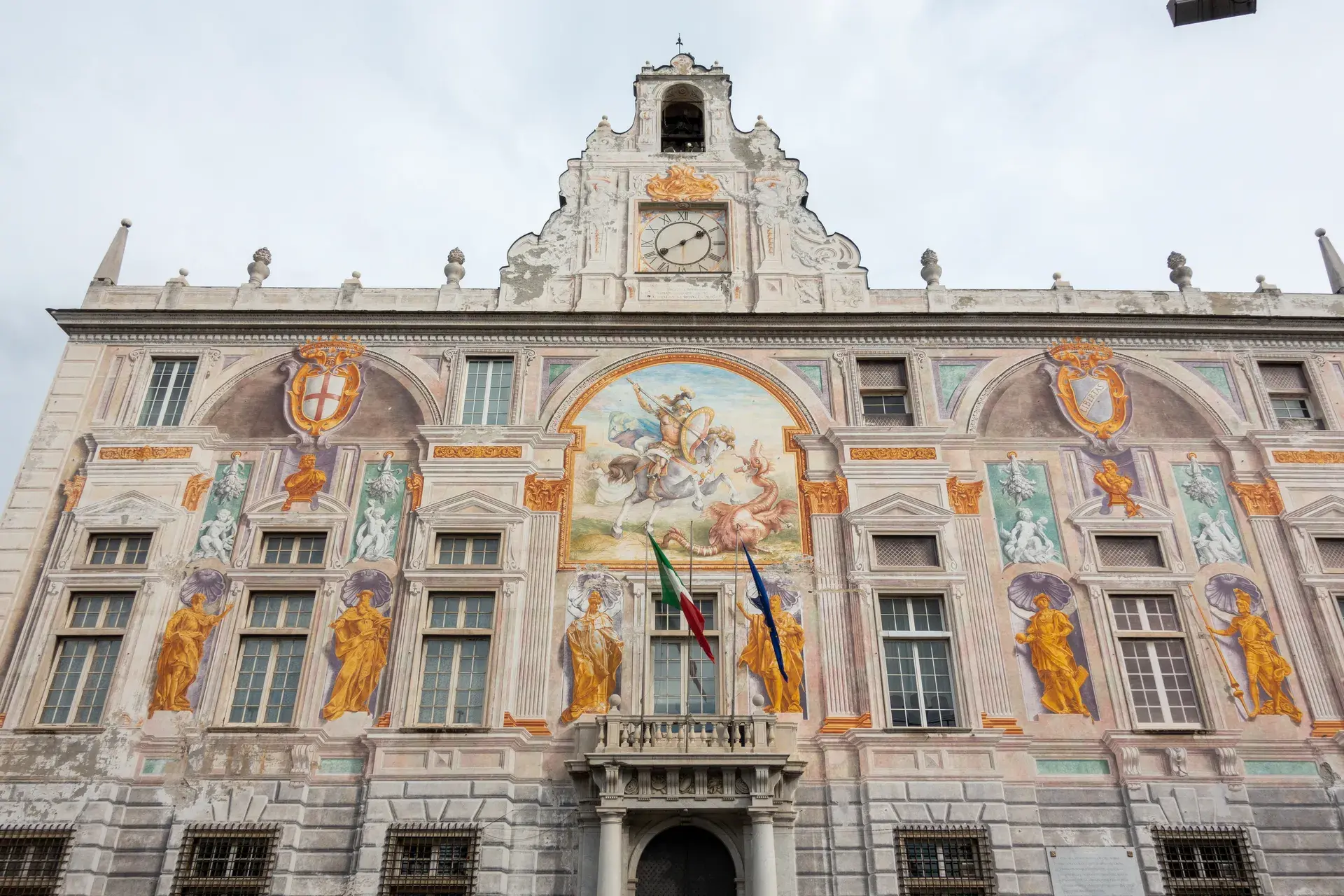
Palazzo San Giorgio stands in Genoa's historic port as a powerful emblem of the city's maritime and economic prowess. Its brilliantly painted facade hints at a rich history that blends civic ambition, financial innovation, and even literary fame. Recognized as a key part of Genoa's UNESCO World Heritage site, the palace's story mirrors the rise of the Genoese Republic.
Origins: A Civic Palace and Famous Prison
Construction of the palace, initially known as the 'sea palace,' took place between 1257 and 1260. Commissioned by Guglielmo Boccanegra, the capitano del popolo, it was designed by the Cistercian monk and architect Friar Oliverio to serve as a seat of civil authority. The original structure showcased a medieval architectural style with Romanesque and Gothic elements.
Its tenure as a municipal hall was short-lived. Following Boccanegra's exile in 1262, the building was converted into a prison. Its most famous inmate was the explorer Marco Polo, who was incarcerated here in 1298 after the Battle of Curzola. During his imprisonment, he dictated his famous travel memoirs, Il Milione, to his cellmate, Rustichello da Pisa.
The Birth of Modern Banking
A major turning point for the palace occurred in 1407 when it became the headquarters for the Banco di San Giorgio. This institution, one of the earliest public banking establishments in the world, was formed to consolidate various bodies that managed loans to the municipality. For centuries, the bank administered public debt and tax revenues, playing a crucial role in financing Genoa's trade and shaping its economic dominance until the Republic's fall in 1797.
Historical plaques still adorn the walls, including one that warns bank officials against accepting illicit bonuses, offering a glimpse into the institution's long history.
Architectural and Artistic Grandeur
The Palazzo San Giorgio is a blend of architectural styles reflecting its long history. The original medieval building was expanded in the 16th century with a Renaissance section facing the sea. Between 1606 and 1608, the artist Lazzaro Tavarone painted the magnificent frescoes on this facade, depicting Saint George and notable Genoese figures.
After a period of decline, the palace underwent extensive restoration in the late 19th century under Alfredo d'Andrade. A surprising change occurred in the early 20th century when a new main entrance was created on the sea-facing side, reversing the building's original orientation, which had faced the city.
Palazzo San Giorgio Today
Continuing its deep connection to the port, the Palazzo San Giorgio now serves as the headquarters of the Port System Authority of the Western Ligurian Sea. While it is an active administrative office, the palace is not entirely closed to the public. The exterior is always accessible, and the interior can be visited on Saturday mornings via tours booked by reservation. The building also occasionally opens for public heritage days.
FAQ
Who was the most famous prisoner at Palazzo San Giorgio?
The celebrated explorer Marco Polo was imprisoned in Palazzo San Giorgio in 1298. It was during his time here that he dictated his travel memoirs, "Il Milione," to his cellmate, Rustichello da Pisa.
What is Palazzo San Giorgio used for today?
Currently, Palazzo San Giorgio is the headquarters of the Port System Authority of the Western Ligurian Sea, continuing its centuries-long association with Genoa's maritime activities.
Why is the Palazzo San Giorgio historically important?
The palace is significant for housing one of the world's first modern banks, the Banco di San Giorgio, from 1407. It was also the site where Marco Polo's famous travels were written down, and it stands as an architectural symbol of Genoa's economic power.
Can you visit inside Palazzo San Giorgio?
Yes, interior visits are possible. While the palace is a working office, public tours are offered on Saturday mornings by reservation. The building may also be accessible during special events like European Heritage Days.
Discover Genoa like never before
Dive into Genoa hidden stories and secret spots with Ciceru interactive tours.
Explore tour
Audioguide
Quizzes
Maps
Solo
Couples
Groups & families

© Kent Wang from Barcelona, Spain | CC BY-SA 2.0