Porta di San Gervasio: Lucca's Medieval Gate
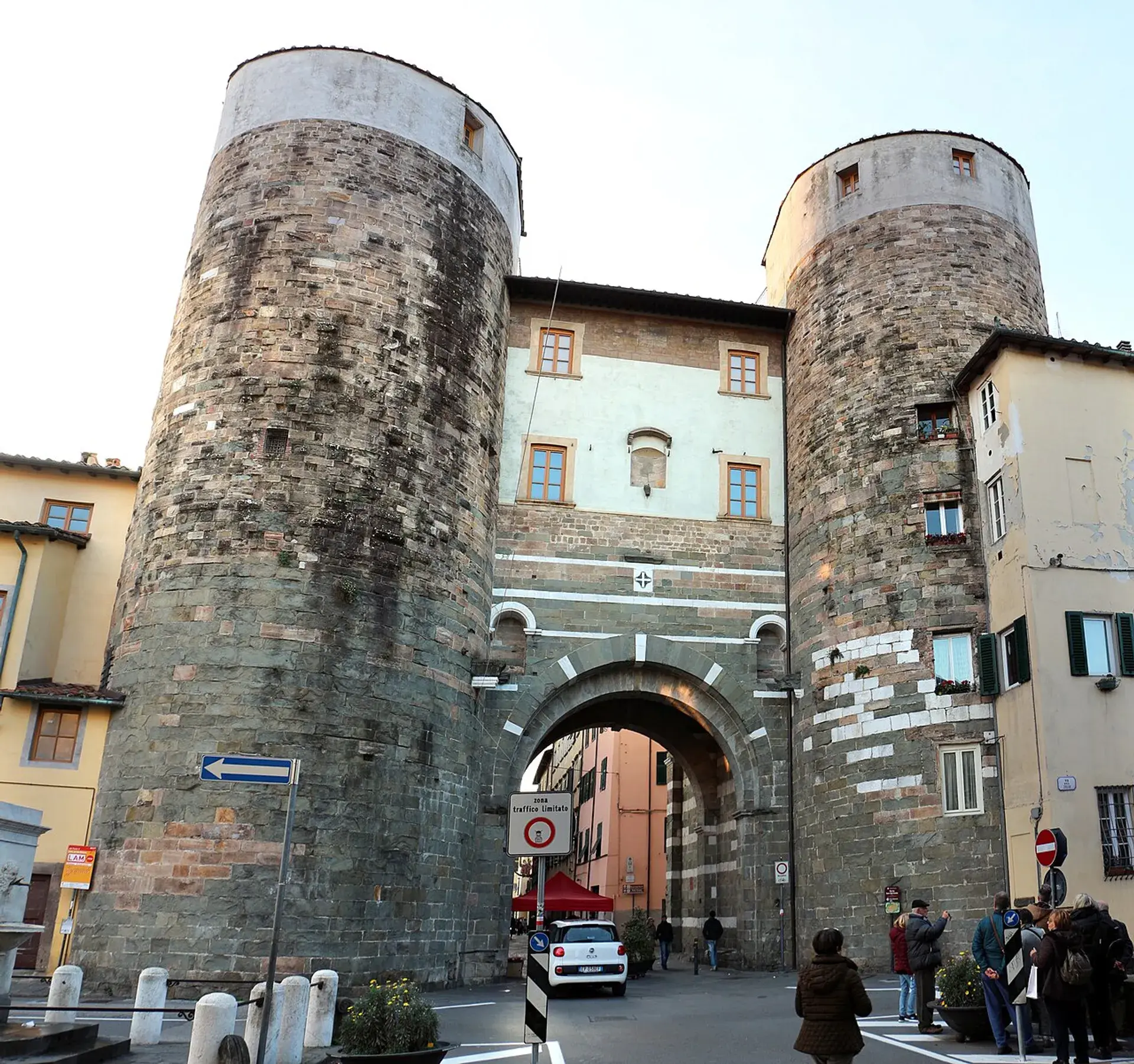
Porta di San Gervasio, also known as Porta Santi Gervasio e Protasio, stands as a powerful testament to Lucca's medieval past. Characterized by a robust central archway flanked by two imposing towers, it is one of the few gates from the city's 13th-century walls that remains visible today. The structure remarkably survived near-demolition during the construction of Lucca's later Renaissance walls, and now stands preserved within them.
History and Construction
Construction of the Porta di San Gervasio began in 1198 and concluded in 1255. It was one of four main gates in the medieval wall system, built to accommodate Lucca's urban expansion. The gate's design reflects medieval military engineering, utilizing local gray sandstone and brick with white limestone decorations. Its original purpose was defensive, protecting the city from rivals like Florence and Pisa, although the walls were never tested in military conflict.
Strategically positioned on the eastern side of the city, the gate sat along the Via Francigena, a major pilgrimage and trade route to Rome. This made it a crucial point for controlling access and for monitoring and taxing goods and people entering Lucca. The gate is dedicated to the early Christian martyrs Saints Gervasius and Protasius, whose relics were believed to offer protection to the city.
A Story of Survival
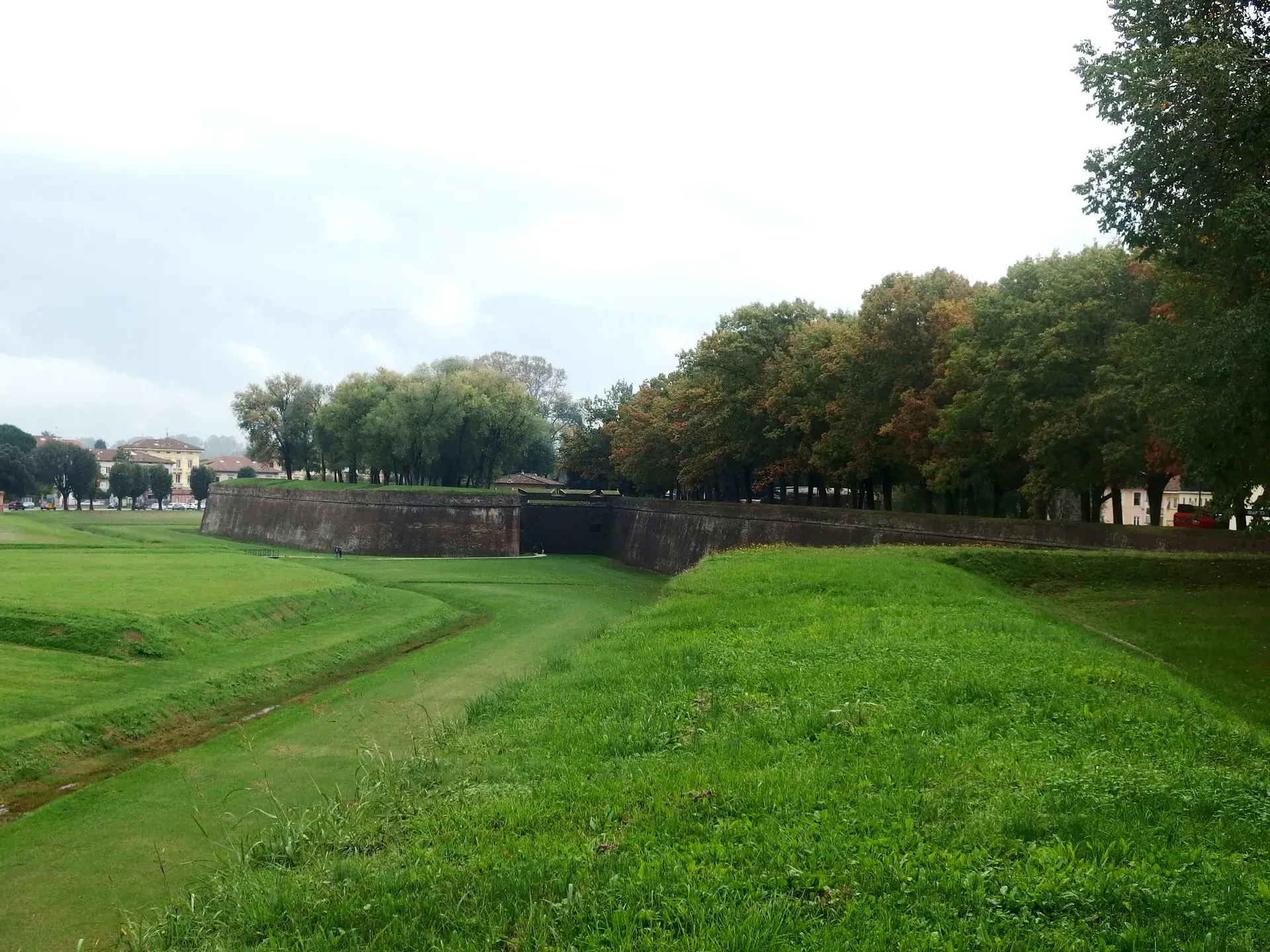
One of the most significant moments in the gate's history was its survival. When Lucca constructed its famous, larger Renaissance-era walls, most of the older medieval fortifications were demolished. Porta di San Gervasio was nearly destroyed but ultimately spared, making it one of only two medieval gates still standing within the city.
While the medieval walls were never used for their intended military purpose, they famously served the city in 1812. The gates, including Porta San Gervasio, were closed to protect Lucca from a severe flood of the Serchio River. The structure underwent restorations in the 19th and 20th centuries, with significant work completed between 2006 and 2007.
Architectural Details
The gate features a large central archway that is 8 meters high. The original medieval walls it belonged to were 11 to 12 meters high and included features like a drawbridge and massive wooden doors. Inside the gate's inner lunette, a fresco depicts the Madonna and Child, flanked by two kneeling saints, believed to be Gervasio and Protasius. Beneath the archway, observers can also spot red stars painted on a white field.
The Gate in Modern Times
Today, Porta di San Gervasio is a historical landmark situated within the perimeter of Lucca's Renaissance walls, which have been repurposed into a popular public park. The two towers flanking the gate are now private residences and are not accessible to the public. In the 20th century, these towers housed notable figures; guitarist and poet Italo Meschi lived in the left tower, while his cousin, the painter Alfredo Meschi, had a studio in the right tower. The area around the gate is a vibrant part of the city, with snack bars and restaurants nearby.
FAQ
When was Porta di San Gervasio built?
Construction on Porta di San Gervasio began in 1198 and was completed in 1255 as part of Lucca's medieval wall system.
Can you go inside the towers of Porta di San Gervasio?
No, the two towers flanking the gate are used as private residences and are not accessible to the public.
Why is Porta di San Gervasio located inside the main city walls?
The gate was part of Lucca's earlier medieval walls. It survived near-demolition when the larger Renaissance walls were built around it, which is why it now stands within the city's current ramparts.
What artwork is inside the gate's arch?
The inner lunette of the gate contains a fresco of the Madonna and Child with two kneeling Saints. Additionally, red stars painted on a white field can be seen beneath the archway.