Laubengasse: Merano's Medieval Arcade Street
The Historical Spine of Merano
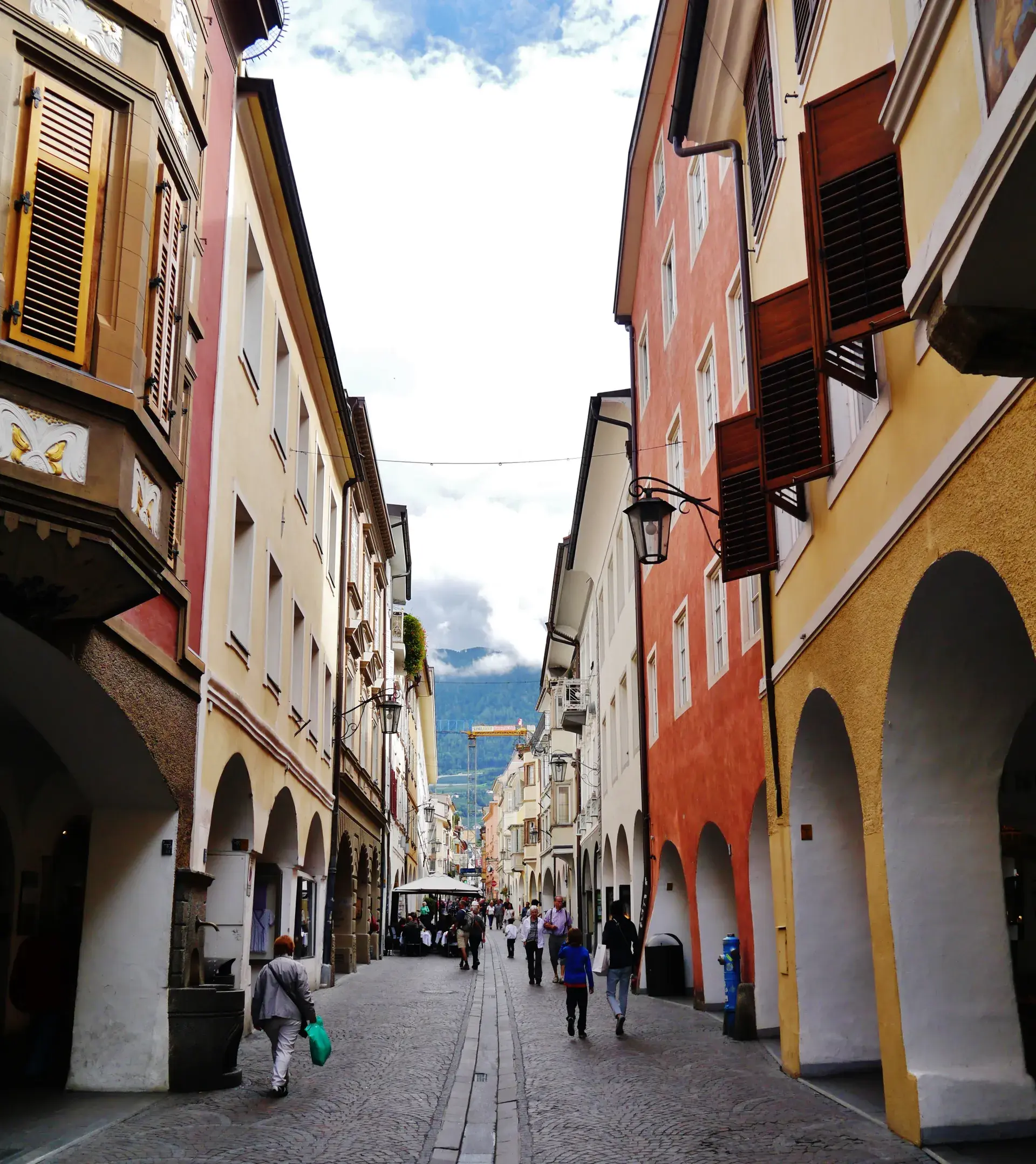
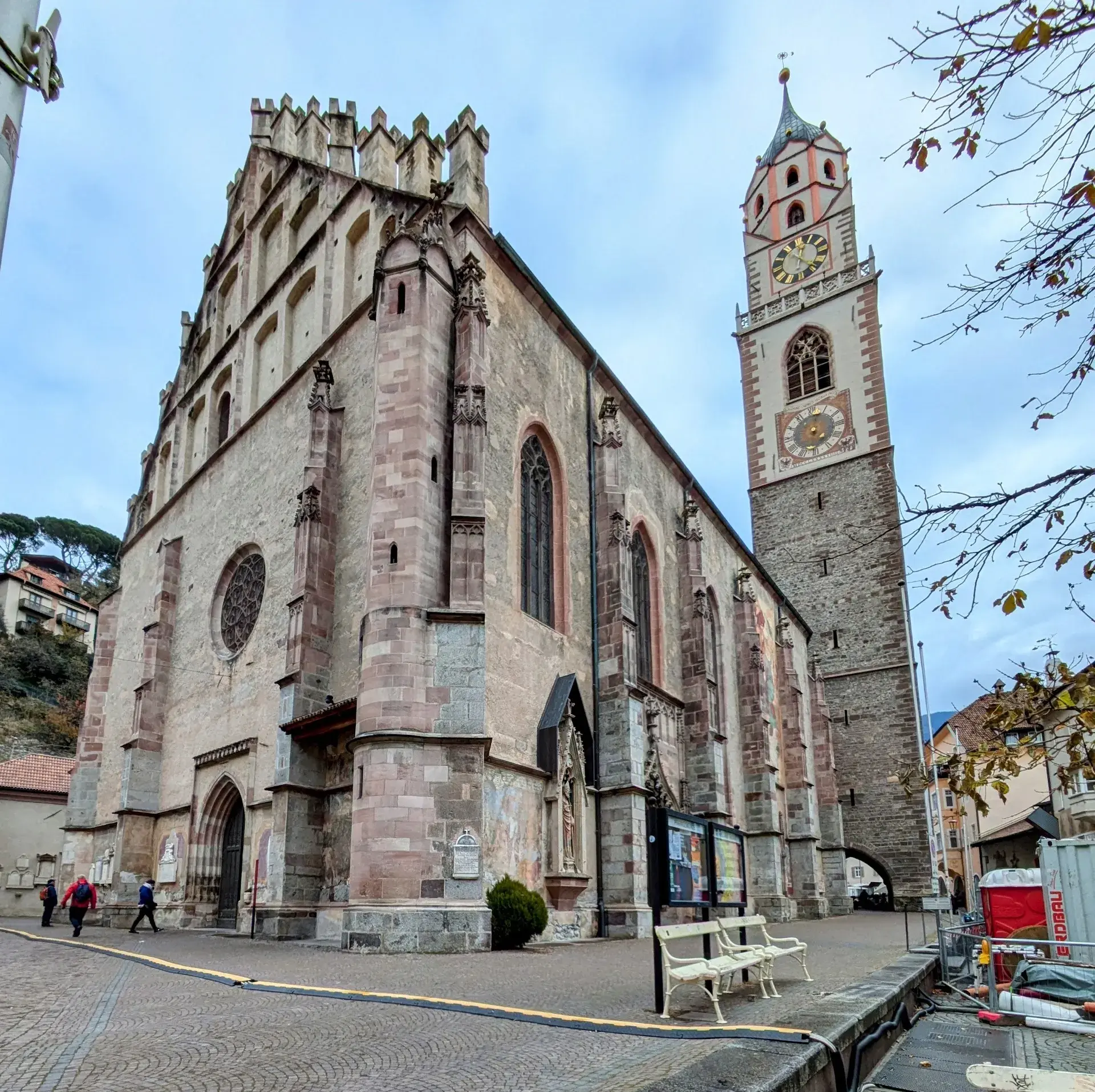
Laubengasse, also known by its Italian name Via dei Portici, is an approximately 400-metre-long medieval arcade street in Merano. Documented as the longest continuous commercial arcade street in historic Tyrol, it forms an urban corridor connecting Pfarrplatz and the Parish Church of St. Nicholas in the east with Kornplatz in the west. Running parallel to the Passer River, the street links Merano's medieval mercantile core with the adjacent nineteenth-century spa promenade district.
Origins and Medieval Town Planning
The street was established in the thirteenth century under Count Meinhard II of Tyrol-Gorizia, who developed Merano into an administrative center and the seat of the county mint. To foster commerce, Meinhard II relocated regional market privileges, including the Whitsun fair, from Tirol Castle to the valley floor. The street was first recorded in municipal archives in 1322.
To maximize merchant access beneath the sheltering arcades, plots were divided into narrow frontages measuring roughly four paces wide. While presenting compact facades to the street, these properties extended up to 50 metres deep into the block. To provide light and ventilation through these elongated structures, builders integrated central open-air light wells (Lichthöfe) that illuminated multi-level workshops, cellars, and living spaces.
Division and Preservation Through Decline
Laubengasse is arranged into two facing sides: the Berglauben (Mountain Arcades) on the north towards Küchelberg and the Wasserlauben (Water Arcades) on the south facing the Passer River. Municipal regulations during the fourteenth and fifteenth centuries at times enforced ethnic separation of commerce, positioning German and Italian merchants on opposing sides of the street.
The street's preservation was shaped by a political shift in 1420, when Duke Frederick IV relocated the Tyrolean court from Merano to Innsbruck. The loss of capital status caused an economic slowdown that spared Laubengasse from extensive early-modern redevelopment, leaving its medieval footprint intact. The covered route remained completely unbroken for more than six centuries until 1913, when Sparkassenstraße and Galileistraße were cut through the arcade alignment.
Modern Character and Architectural Layers
Today, Laubengasse remains Merano's primary pedestrian shopping artery, occupied by boutiques, retail shops, delicatessens, bakeries, and cafés. The arcade floor slopes upward from west to east and features public stone drinking water fountains active from spring through autumn. Transitioning from the open squares into the barrel-vaulted arcades brings a perceptible drop in light and temperature, accompanied by the echo of footsteps on stone paving and the aromas of smoked speck, mountain cheese, and espresso.
The street displays a layering of architectural periods. At Laubengasse 78, Casa Mahlknecht features an early twentieth-century floral Jugendstil facade. Further along at No. 163, the restored Haus Sparkasse hosts Kunst Meran / Merano Arte, an exhibition venue for contemporary art and architecture. Near the Galileistraße intersection, medieval oriel windows and Gothic arches directly meet the monumental travertine facade of the Rationalist Merano Town Hall, designed by Ettore Sottsass Sr. and constructed between 1929 and 1932.
FAQ
How long is Laubengasse in Merano?
Laubengasse measures approximately 400 metres in length, making it the longest continuous commercial arcade street in historic Tyrol.
Why are the townhouses along Laubengasse so deep?
The medieval plots were designed with narrow street frontages of roughly four paces to maximize shopfronts beneath the arcades, extending up to 50 metres deep with central light courts (Lichthöfe) to provide daylight and ventilation.
What are the Berglauben and Wasserlauben?
They are the two rows of arcades lining Laubengasse: the Berglauben (Mountain Arcades) on the northern side facing Küchelberg, and the Wasserlauben (Water Arcades) on the southern side facing the Passer River.
Why was the medieval architecture of Laubengasse preserved?
After Duke Frederick IV moved the Tyrolean ducal court to Innsbruck in 1420, Merano experienced an economic slowdown that halted major reconstruction, keeping the thirteenth-century layout intact.