Porta Venosta: Merano's Medieval City Gate
The Ancient Gateway to the Vinschgau
Porta Venosta (known in German as the Vinschgauer Tor or Vinschger Tor) stands at the northwestern head of Rennweg (Via delle Corse), marking the western threshold of Merano's medieval core. First documented in 1290, it is the oldest of the three surviving medieval city gates from Merano's original defensive circuit of four. Alongside Porta Bolzano (Bozner Tor) and Porta Passiria (Passeirer Tor), it defined the fortified perimeter of the town long before Merano transformed into an international spa destination in the 19th century.
Historically, the gate defended Merano's western boundary and governed transit along the primary trade corridor heading into the Vinschgau (Val Venosta) and over the Reschen Pass. Over the centuries, it evolved alongside neighboring institutions, forming an interconnected architectural ensemble with the adjacent Capuchin Monastery (Kapuzinerkloster) and its church, consecrated in 1617.
Architectural Features and Heraldry
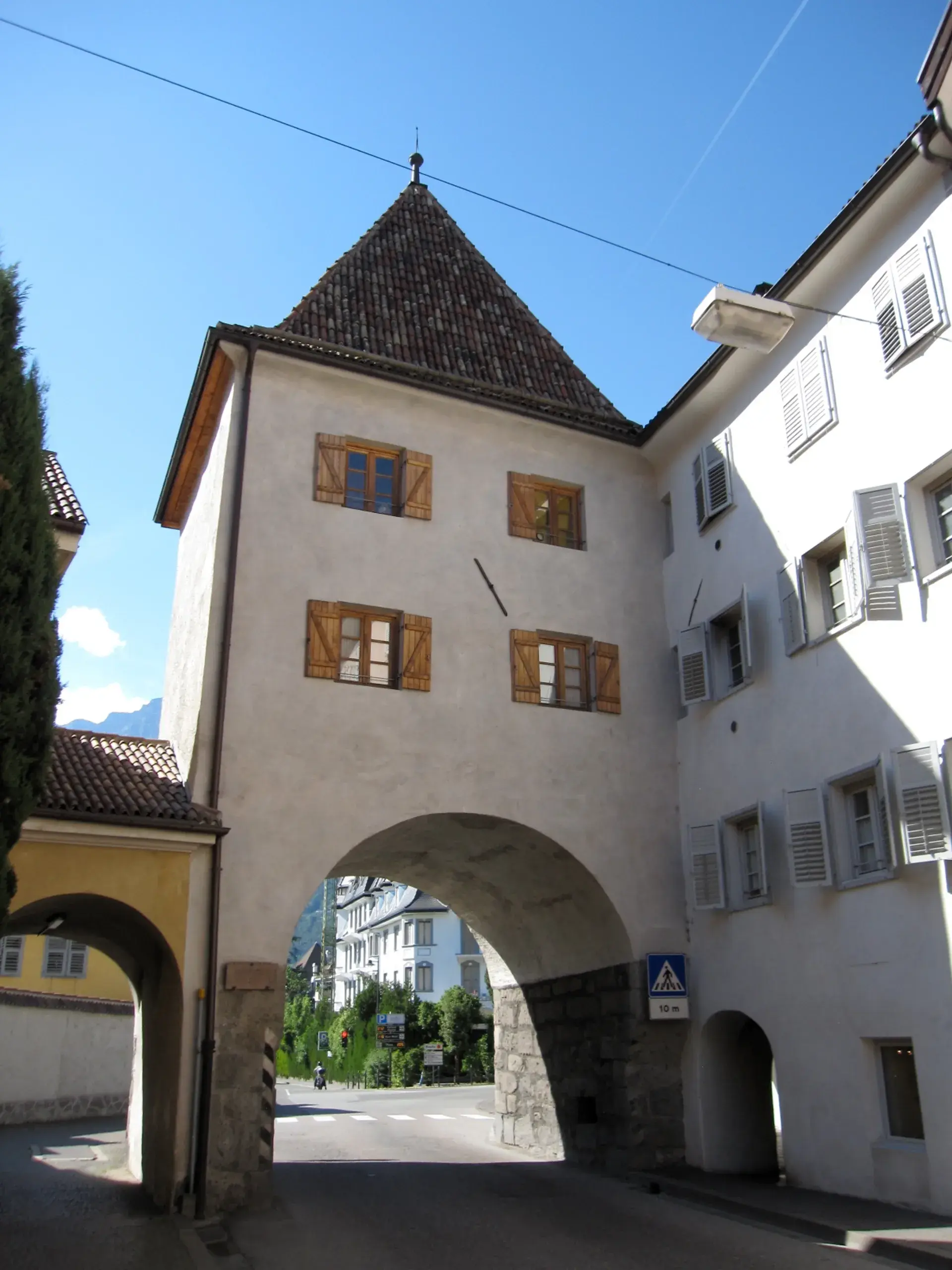
The gate consists of a massive stone tower topped by a steep, pointed shingle roof. Above its vaulted ground-level passages, the structure rises two storeys, each punctuated by four rectangular windows framed by dark wooden shutters.
The outer western facade features an imposing painted fresco that highlights the region's historic allegiances. The artwork depicts the coats of arms of the County of Tyrol and the Habsburg Austrian territories, crowned by an archducal hat. Below the facade, the tower base features a central vaulted vehicular opening flanked by smaller arched openings cut directly into the masonry for foot traffic.
From Debtors' Prison to Transit Corridor
After undergoing major rebuilding in the 16th century and additional renovations during the 18th century, Porta Venosta ceased to serve a purely military defensive function. The municipal authorities repurposed its upper levels into a civic detention facility. Rather than housing violent offenders, these upper rooms were primarily used as a debtors' prison for citizens unable to clear personal financial obligations.
During the 20th century, modernization and rising vehicle numbers placed the medieval structure in jeopardy. City planners repeatedly proposed demolishing Porta Venosta to eliminate a notorious traffic bottleneck. However, campaigns by preservation groups and local citizens successfully halted the plans.
To accommodate growing transportation demands without destroying the historic fabric, the city engineered structural compromises. The central archway was broadened in 1912, and dedicated side portals were pierced through the base in 1913 and 1968. For a period during the early 20th century, Merano's municipal electric tramway (Strassenbahn Meran) ran directly underneath the central medieval archway.
Porta Venosta in the Modern Cityscape
Today, Porta Venosta remains an active arterial entrance to the old town. Motor vehicles and local buses continue to pass beneath the widened central vault, while pedestrians use the flanking side passages.
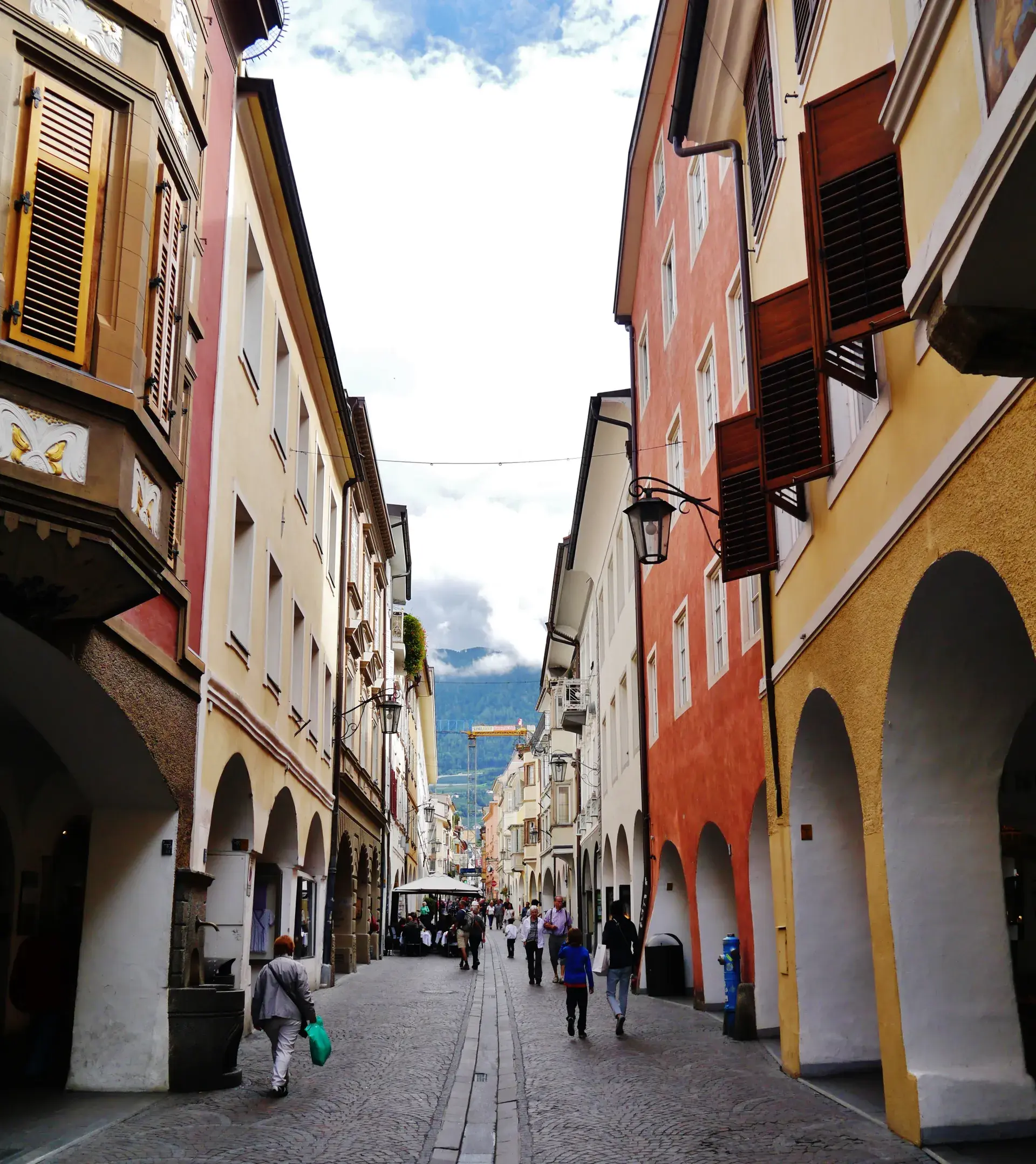
The gate opens directly into Rennweg, a street whose name recalls its medieval role as the designated grounds for horse races, jousting tournaments, and knightly games. Passing through the thick, cool stonework marks an immediate transition from the open outer streets into the narrow, sheltered corridor of historic Merano.
FAQ
When was Porta Venosta built?
Porta Venosta was first documented in 1290, making it the oldest of the three surviving medieval city gates in Merano.
Why was the gate not demolished during the 20th century?
Despite municipal plans to tear down the gate to ease vehicular bottlenecks, protests by local residents and heritage groups saved it. The structure was adapted for modern traffic by widening the main archway in 1912 and adding pedestrian portals in 1913 and 1968.
What were the upper floors of Porta Venosta used for in the past?
Following renovations in the 16th and 18th centuries, the upper chambers were used as a municipal jail and debtors' prison for individuals unable to pay personal debts.
What coats of arms are painted on Porta Venosta?
The outer western facade features a fresco depicting the coats of arms of the County of Tyrol and the Habsburg Austrian territories beneath an archducal hat.