Palazzo Corvaja: Taormina’s Medieval Palace
Architectural Synthesis and Exterior Design
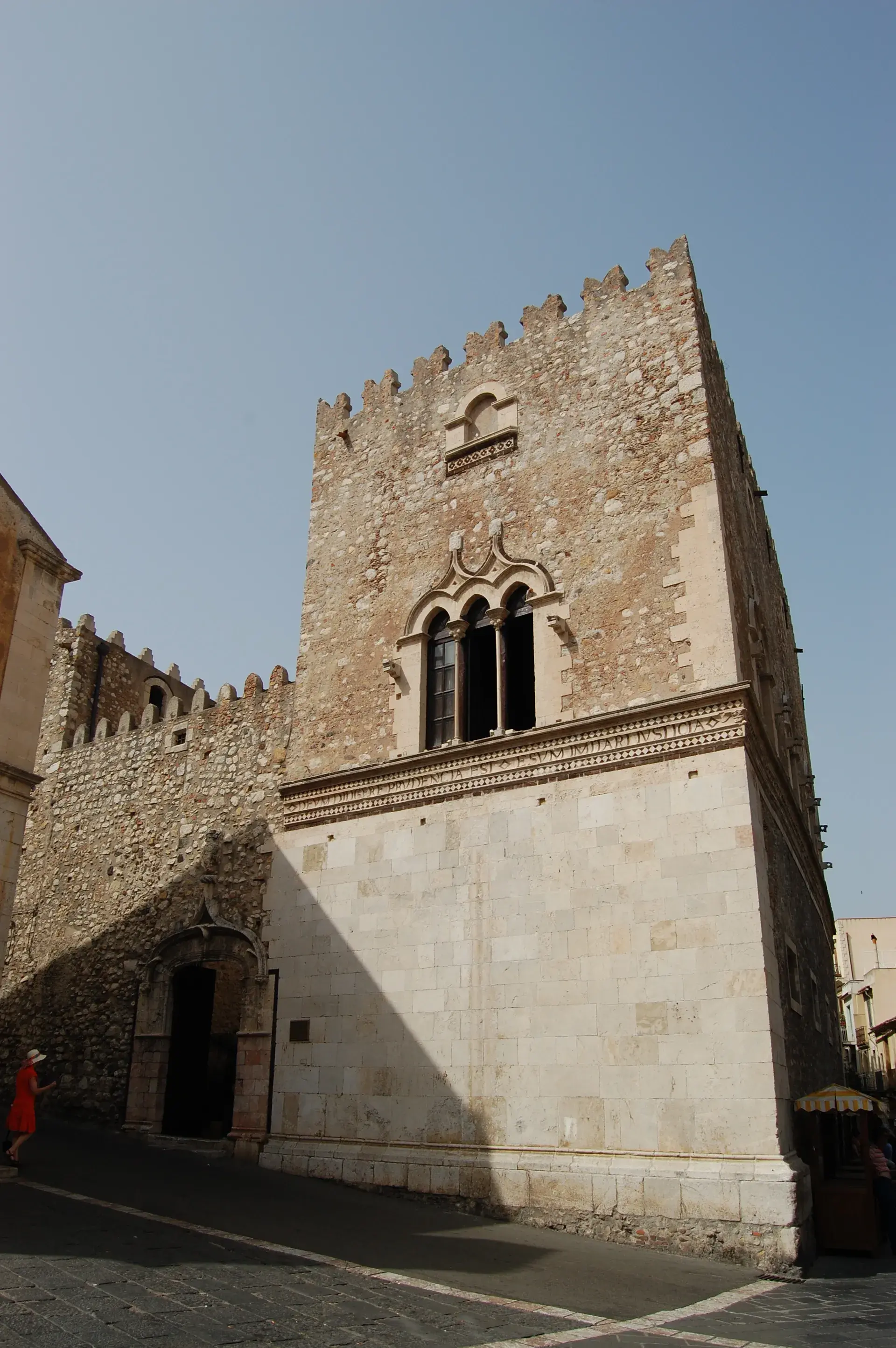
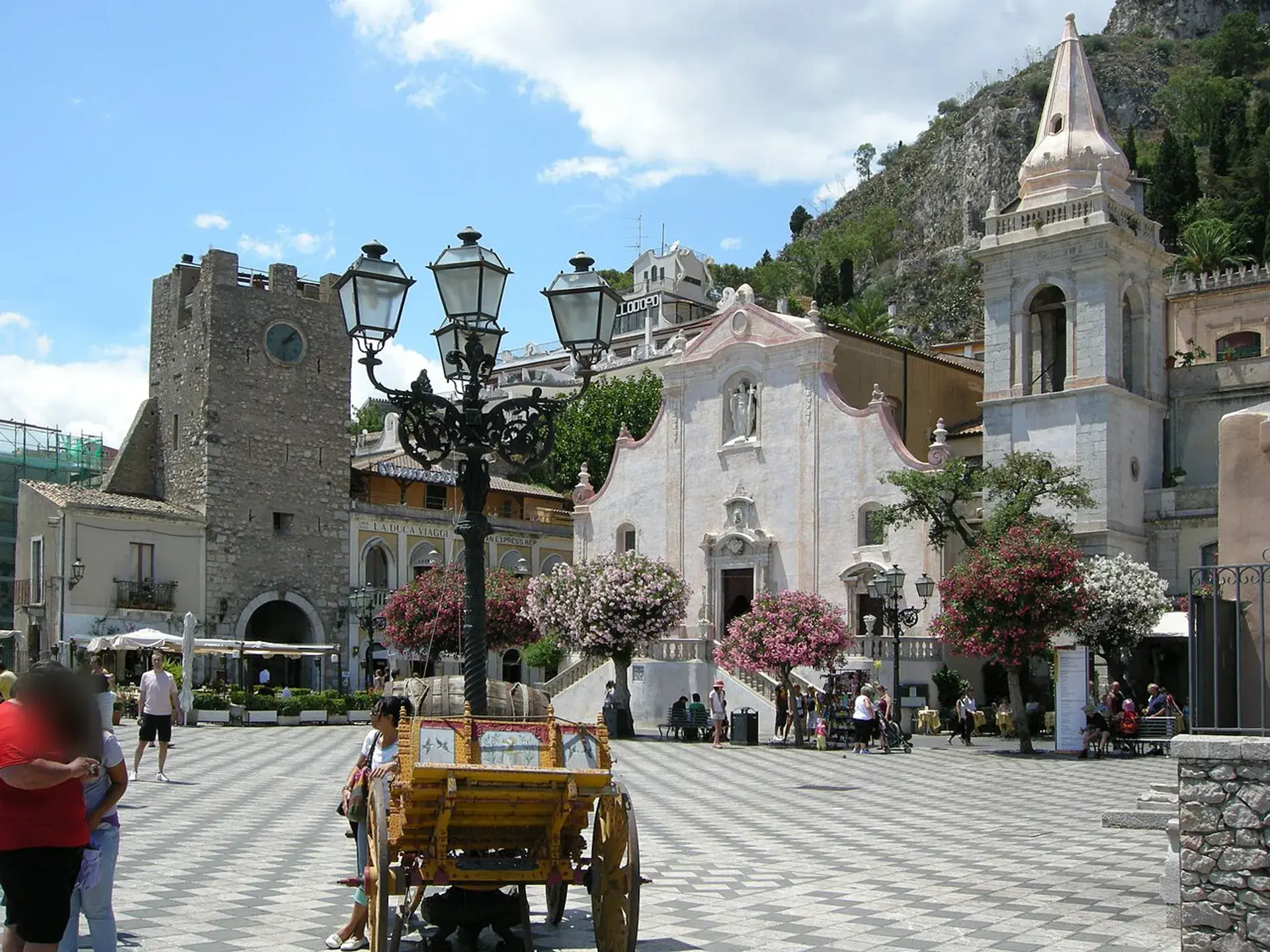
Standing on Piazza Santa Caterina at the threshold of Corso Umberto, Palazzo Corvaja is one of Taormina's most recognizable civic landmarks. Positioned adjacent to the Baroque Church of Saint Catherine of Alexandria and directly abutting the excavated Roman Odeon, the complex displays architectural layers accrued over several centuries. The structural core consists of an Arab cubic defensive tower built between the 10th and 11th centuries, enriched by Norman modifications and 14th- to 15th-century Catalan-Gothic expansions.
The exterior features crown battlements and double-lancet Gothic mullioned windows (bifore) supported by slender central columns. A distinctive aesthetic element is the bichromatic masonry, which pairs dark, porous Mount Etna lava stone with smooth, pale Taormina limestone and Syracuse stone. This contrasting stonework frames the decorative arches, friezes, and lintels, some of which bear engraved Latin moral inscriptions such as "ESTO MICHI...".
History: From Arab Fortress to Sicilian Parliament
The origins of the site date to the period of Arab rule in Sicily, when a fortified tower was raised over the ruins of an ancient Roman forum. A long-standing local tradition suggests the cubic tower was proportioned after the Kaaba in Mecca, though primary historical documentation for this claim is absent.
In the late 13th and 14th centuries, the building grew with the addition of a left wing to serve as the seat of the Spanish Termes family, who operated as royal magistrates (Maestro Giustiziere). The building achieved broad historical significance in 1411 when Queen Bianca of Navarre, then regent of Sicily, convened a historic session of the Sicilian Parliament in the newly constructed right-wing assembly hall to address a royal succession crisis. Because of this event, the palace is also designated in historical records as the Palazzo del Parlamento and Palazzo della Regina Bianca.
The noble Corvaja family acquired the residence in 1538 and held it until 1945. Following neglect and internal divisions during World War II, the municipality of Taormina expropriated the property in 1945 and commissioned Neapolitan architect Armando Dillon to complete a comprehensive restoration between 1945 and 1948.
The Inner Courtyard and Genesis Reliefs
Behind its fortified perimeter, Palazzo Corvaja conceals an enclosed stone courtyard that buffers the noise of the surrounding pedestrian core. Within this space, an open-air 13th-century stone staircase ascends to a decorative first-floor balcony and landing.
The balustrade along this exterior landing features three high-relief panels sculpted from pale Syracuse stone. These panels depict scenes from the Book of Genesis: the creation of Eve, the original sin beside the forbidden tree, and the expulsion of Adam and Eve from the Garden of Eden.
Current Role and Museum Collections
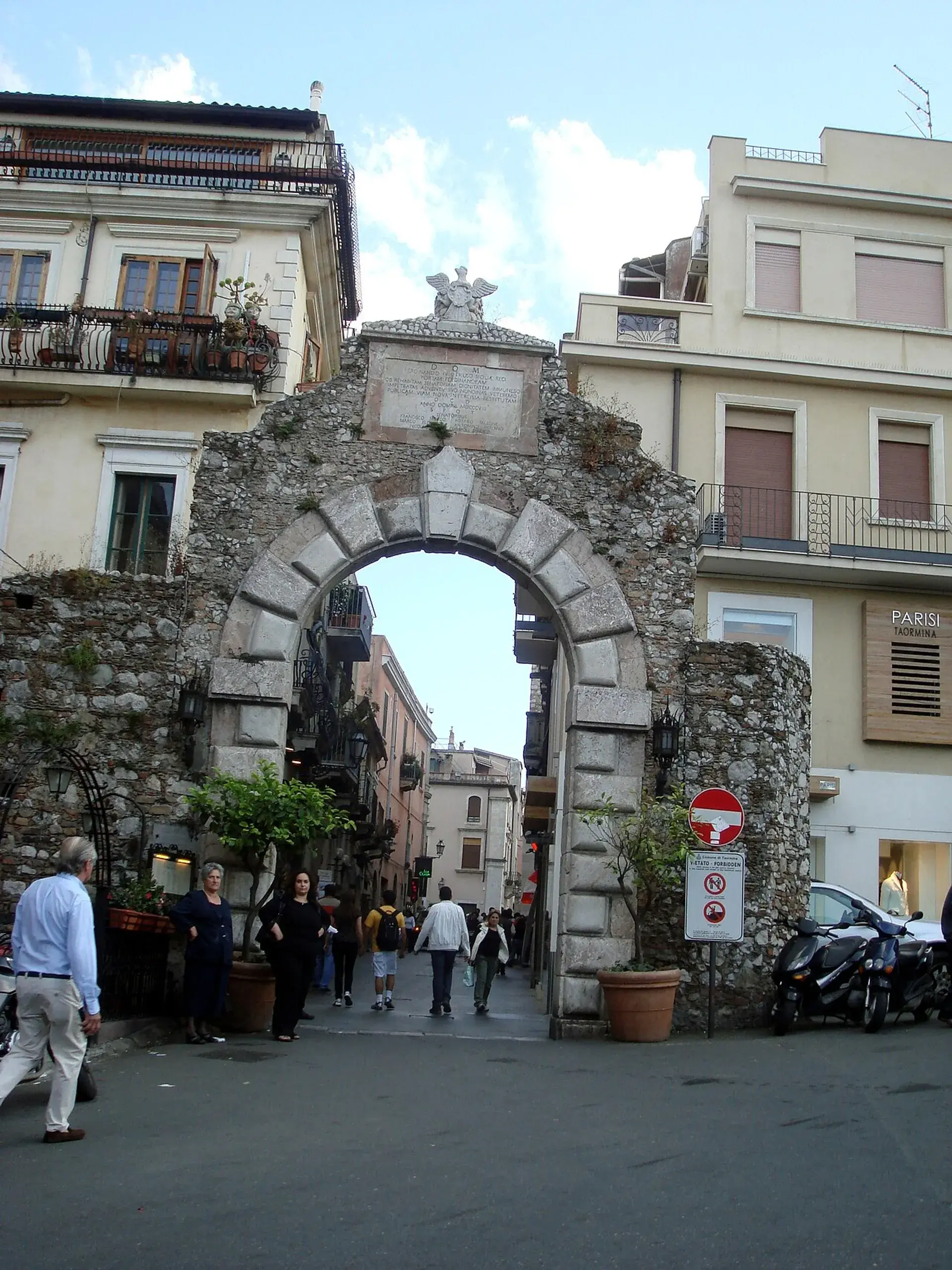
Palazzo Corvaja serves as a public civic and cultural venue near Taormina’s historic Porta Messina gate. The ground floor houses the town’s local tourist information office (Azienda Autonoma Soggiorno e Turismo).
The upper level functions as an exhibition space and the seat of the Museum of Art and Popular Traditions (Museo di Arte e Tradizioni Popolari). The museum displays regional artifacts, including historic ceramics, traditional painted Sicilian carts, regional crafts, and traditional Sicilian marionettes (pupi).
FAQ
Why is Palazzo Corvaja also called Palazzo del Parlamento?
The palace earned the name in 1411 when the Sicilian Parliament convened in its right-wing assembly hall, presided over by Queen Bianca of Navarre, to resolve a royal succession crisis.
What architectural styles are visible in Palazzo Corvaja?
The building features an Arab cubic defensive tower core, Norman elements, and 14th- to 15th-century Catalan-Gothic additions, characterized by bifore windows and contrasting lava and limestone masonry.
What is inside Palazzo Corvaja today?
The ground floor houses the local tourist information office, while the upper floor hosts the Museum of Art and Popular Traditions, exhibiting Sicilian folk crafts, puppets, carts, and ceramics.