Porta Messina in Taormina: History and Architecture
The Historic Northern Gateway
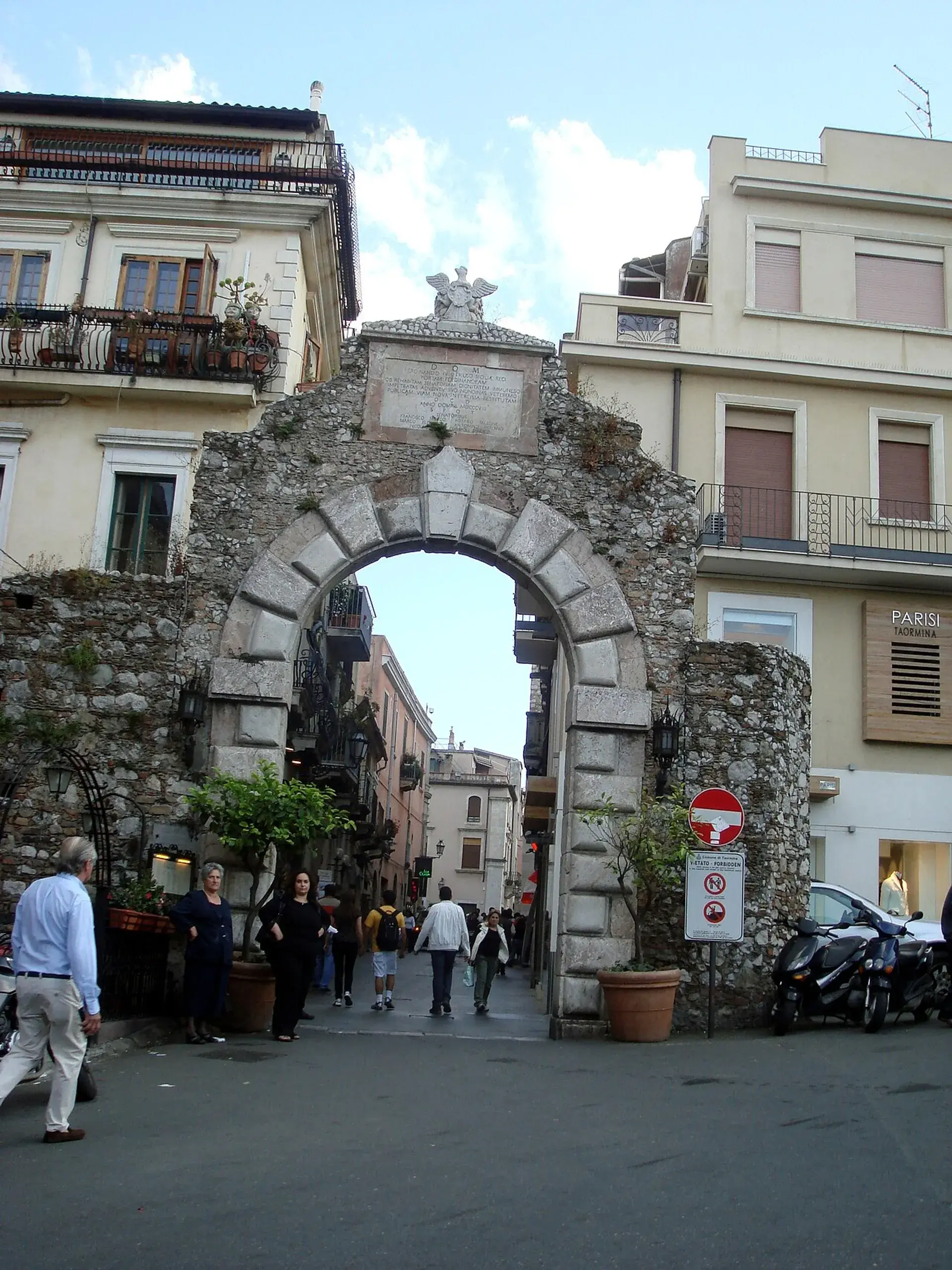
Porta Messina marks the northern entrance into the historic center of Taormina, serving as the monumental starting point of Corso Umberto. While Taormina is celebrated widely for its ancient and medieval Gothic-Catalan architecture, this defining entry gate is actually a 19th-century neoclassical stone archway built long after the original town fortifications.
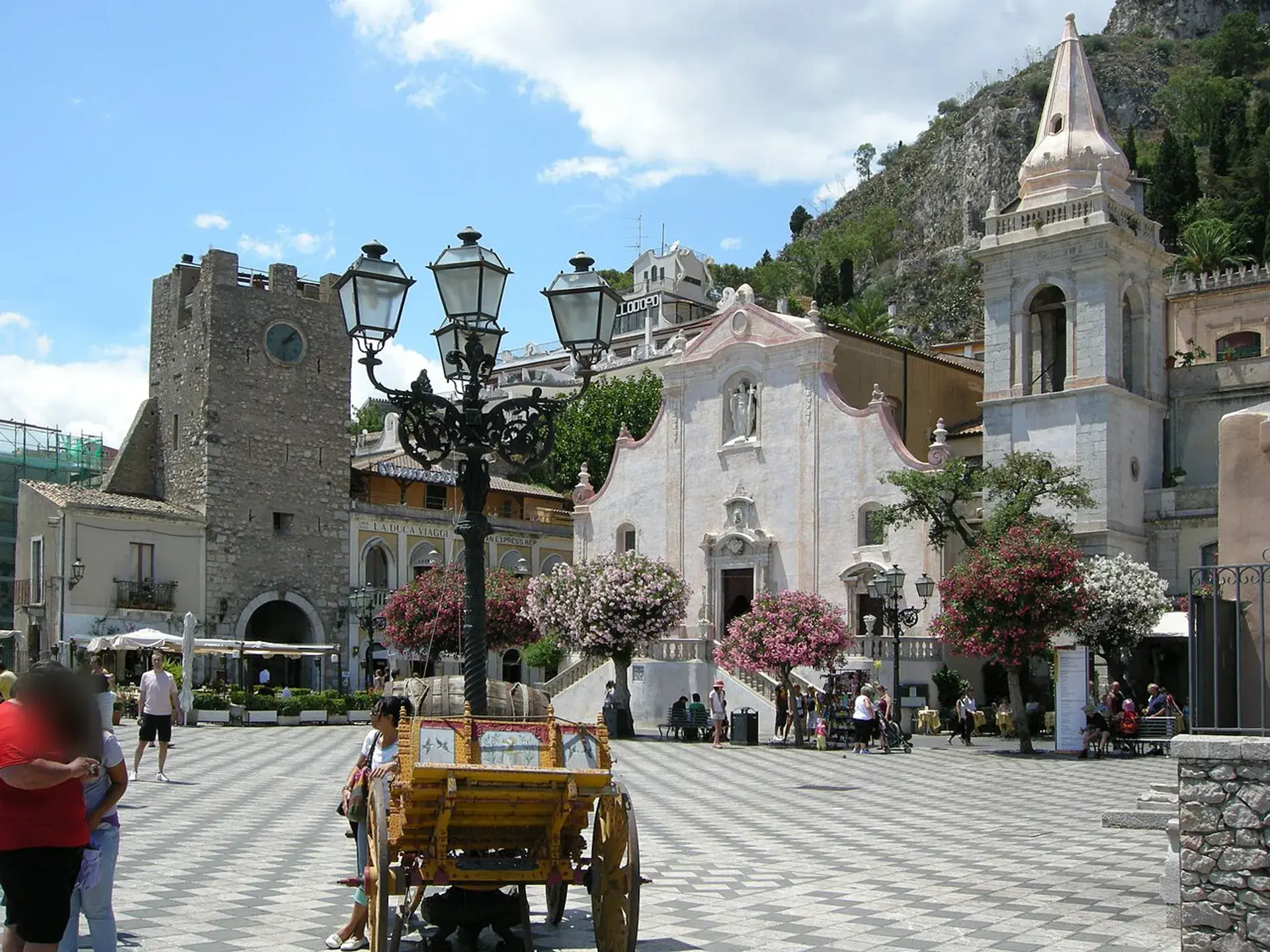
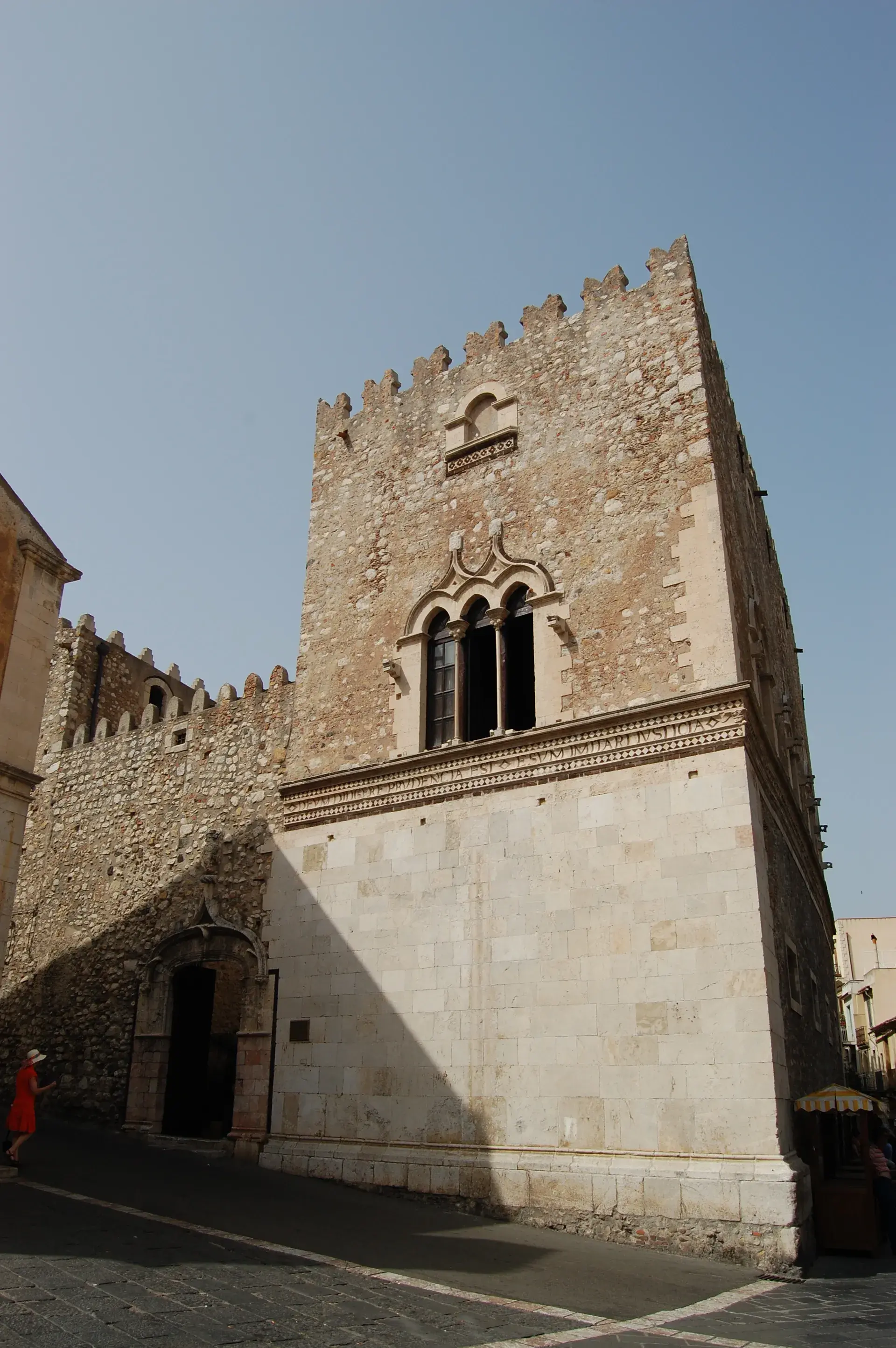
The gate functions as the northern bookend of the town's primary pedestrian spine, balanced roughly 800 meters to the south by Porta Catania. Nearly all of Taormina's central landmarks—including Palazzo Corvaja, Piazza IX Aprile, and the Duomo—are distributed along the corridor framed between these two historic gates.
Defensive Origins and the 1808 Reconstruction
Long before its current architectural form was established, the site served as an essential checkpoint in Taormina's defensive perimeter. Originally fortified during the Byzantine, Arab, and medieval periods, the portal was integral to a triple fortification system stepping across the hillside. This defensive line was anchored by Porta Messina guarding the northern approach from Messina, Porta Catania securing the south, and the central Clock Tower (Porta di Mezzo) protecting the interior.
In 1808, the older defensive portal was remodeled into the neoclassical monumental gateway that stands today under the reign of King Ferdinand IV of Bourbon. A commemorative marble tablet mounted at the top of the structure records its 1808 inauguration, and the heraldic Bourbon coat of arms remains carved into the keystone of the arch. Following this reconstruction, the gate was officially named Porta Ferdinandea in honor of the king. However, the local populace continued to refer to the portal as Porta Messina due to its geographic orientation toward the city of Messina.
Ancient Roman Roots and Modern Setting
The pedestrian street beginning at Porta Messina carries deep historic significance, as the path along Corso Umberto directly overlays the ancient Roman consular highway known as the Via Valeria, which once connected Messina to Catania.
Today, Porta Messina remains an open, freely accessible landmark and a central gathering point for exploring the historic district. Moving through the stone portal produces an immediate acoustic transition, muffling the external sounds of vehicle and bus traffic and opening into the echoing corridor of the pedestrian street. Directly inside the gateway sits Piazza Vittorio Emanuele II, alongside Palazzo Corvaja and the Roman Odeon, while the Church of San Pancrazio is situated just outside the former defensive perimeter.
FAQ
Why is Porta Messina also known as Porta Ferdinandea?
The gate was renamed Porta Ferdinandea after being rebuilt in 1808 under King Ferdinand IV of Bourbon. Although this was its official title, local residents continued to call it Porta Messina because it faces the road toward the city of Messina.
What defensive role did Porta Messina historically play?
Porta Messina was the northern anchor of Taormina's triple fortification system, which originated during the Byzantine, Arab, and medieval periods to protect the town alongside Porta Catania in the south and the central Clock Tower (Porta di Mezzo).
What ancient road corresponds to the route through Porta Messina?
The path beginning at Porta Messina and running through Corso Umberto traces the route of the ancient Roman consular road known as the Via Valeria, which historically linked Messina to Catania.