Porta Catania: Taormina's Historic Southern Gate
The Southern Gateway of Taormina
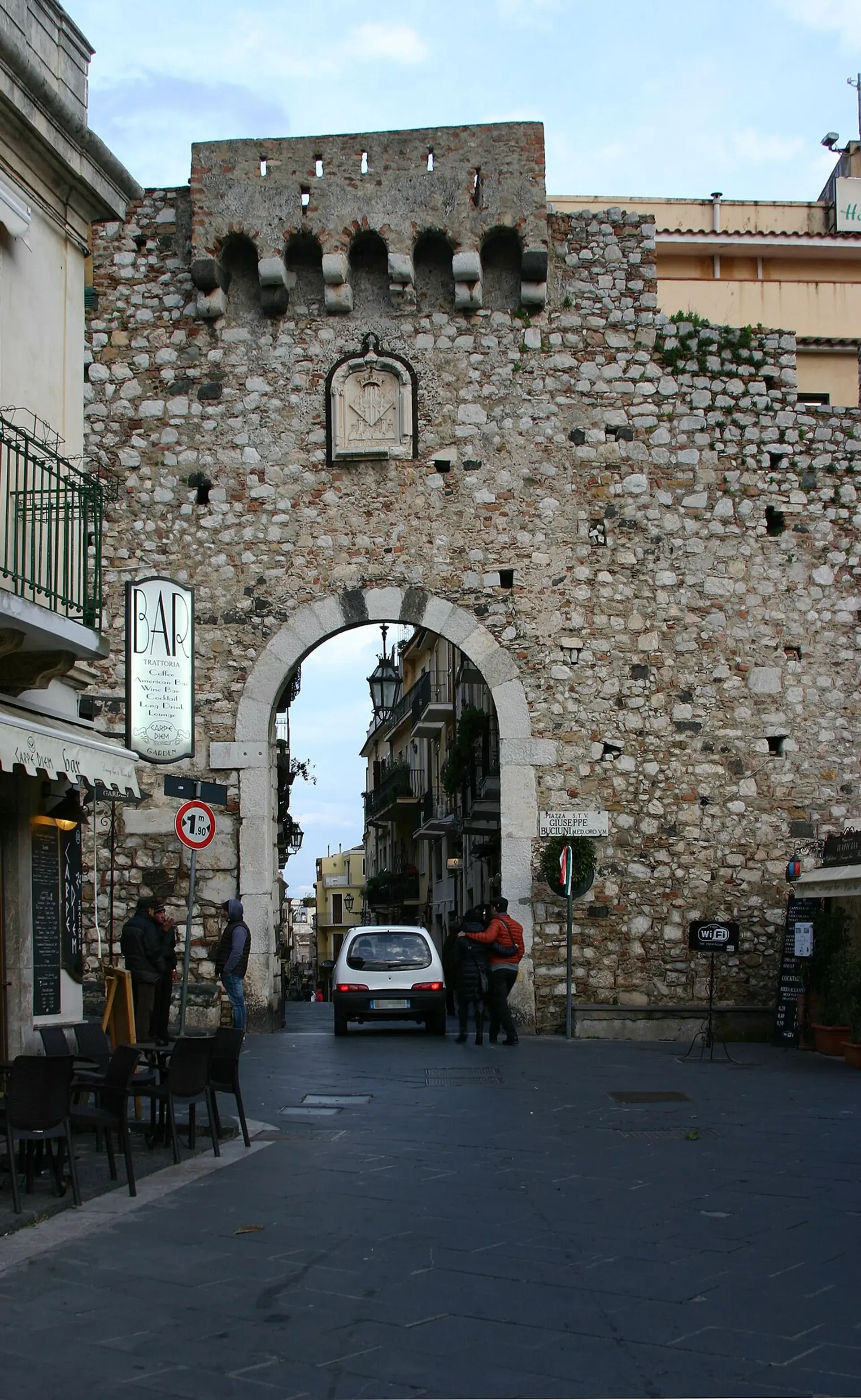
Porta Catania stands at the southwestern terminus of Corso Umberto I, defining the southern threshold of Taormina's historic pedestrian center in Sicily. The gateway historically functioned as a fortified checkpoint monitoring access into the hilltop town along the southern route from Catania. Serving as an integral part of the settlement's second medieval defensive wall circuit, it regulated civilian and commercial passage into the fortified core.
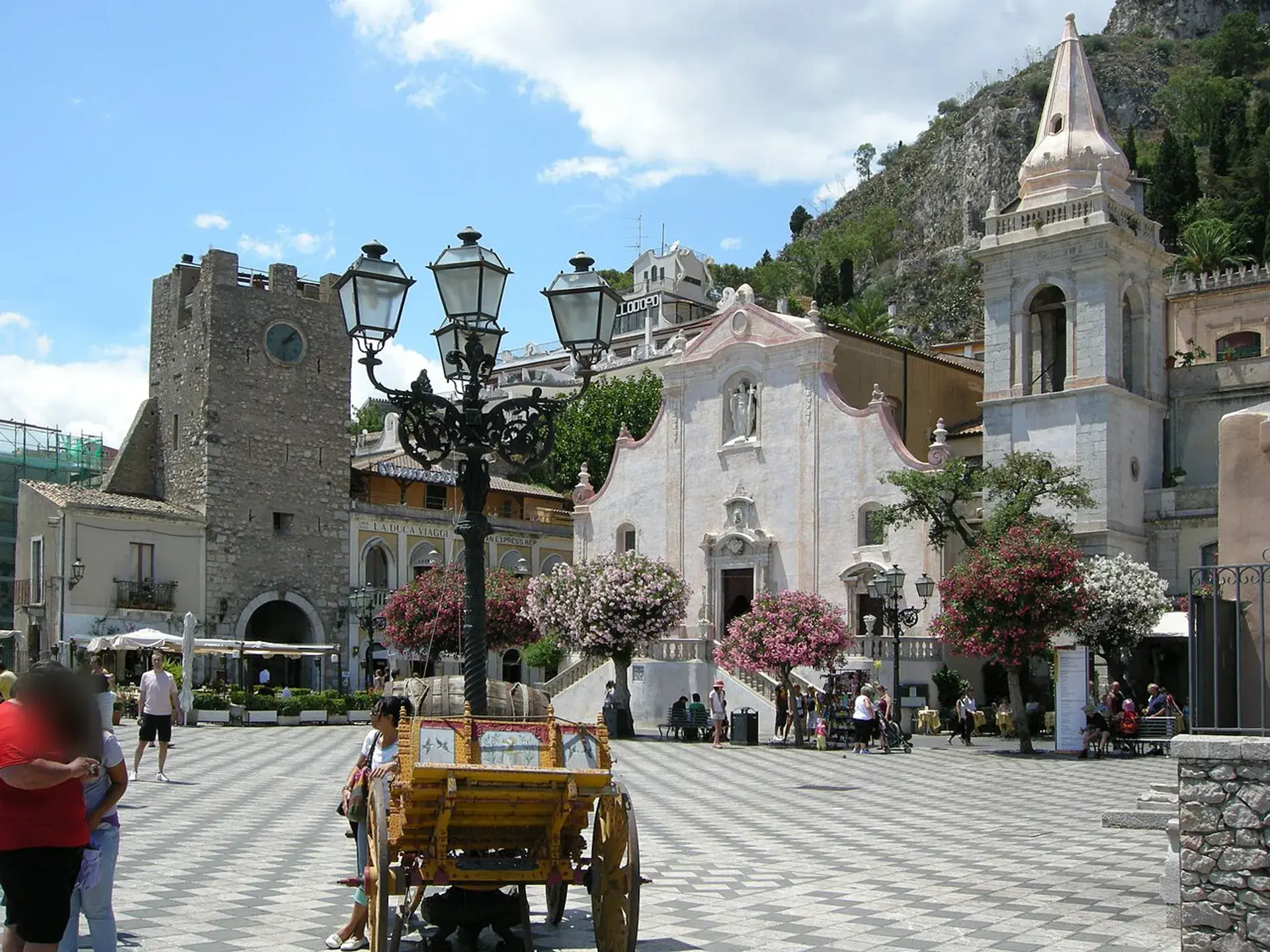
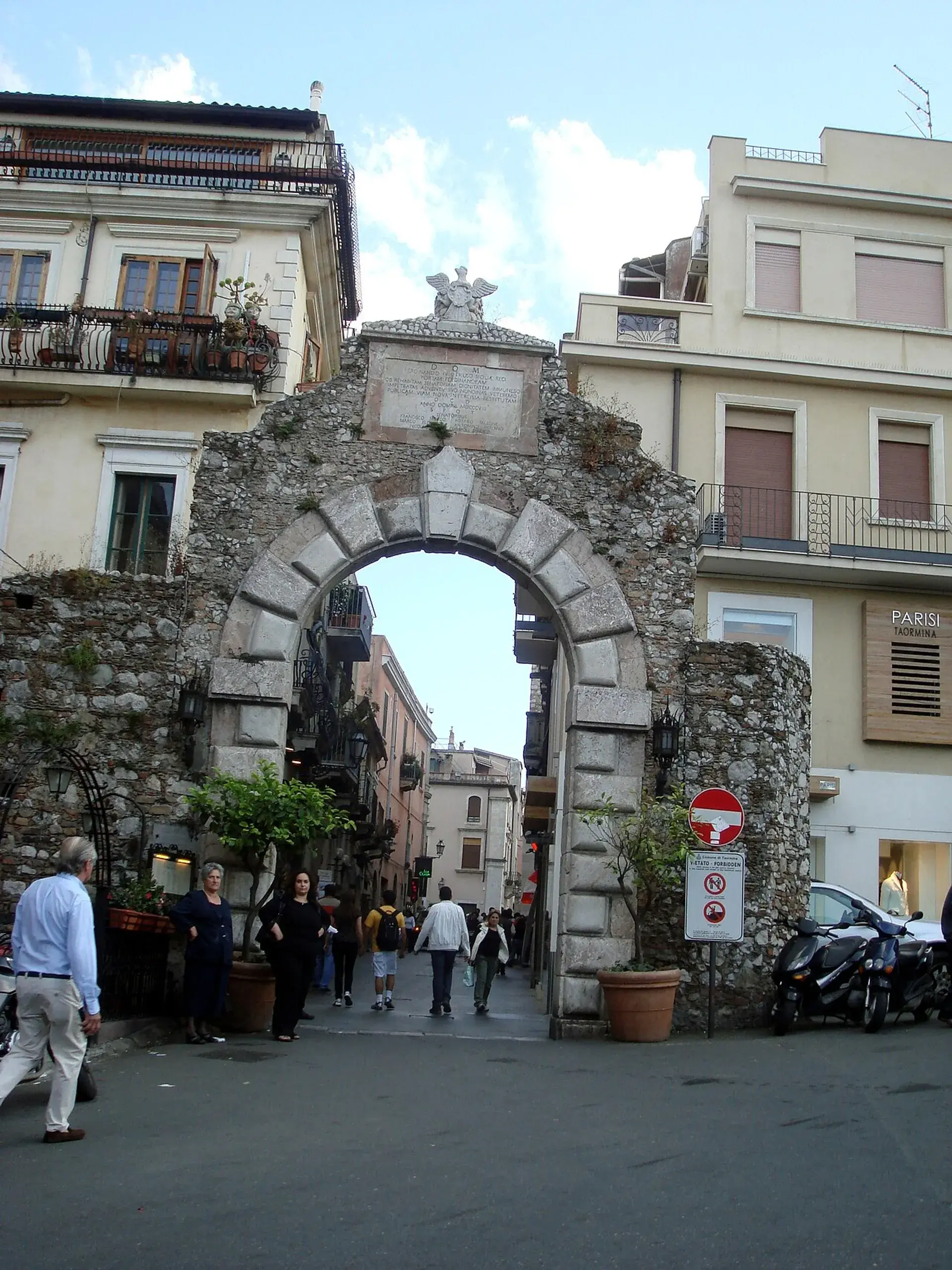
The portal also forms a key urban bookend for Taormina. The primary pedestrian thoroughfare of Corso Umberto retraces the course of the ancient Greco-Roman Via Valeria. This historical axis is framed on opposite ends by two monumental entrances: Porta Messina in the northeast and Porta Catania in the southwest, with the central Clock Tower—the Porta di Mezzo—marking the midpoint. Along this traditional route, Porta Catania provides the definitive terminus immediately following Piazza Duomo and the medieval cathedral.
Construction and Aragonese Heraldry
While defensive enclosures occupied this location under earlier Arab and Norman administrations, the gate received its enduring structure during the mid-15th century under the Crown of Aragon. Unlike many medieval monuments whose building timelines must be estimated by historians, Porta Catania carries the precise year of its reconstruction carved directly into its stone.
Positioned centrally above the vaulted archway is a sculpted stone aedicule. Carved clearly into this niche is the year 1440. The aedicule also features the royal coat of arms of the House of Aragon alongside the official civic emblem of Taormina, underscoring the town's historical allegiance and political administration during the Aragonese period.
The Tradition of Porta del Tocco
In civic memory, the gate carries the historical designation Porta del Tocco. This name originates from local assembly traditions dating back to Norman rule. In that era, public administrators and town council members convened civic gatherings in the open square directly outside the gate at one o'clock in the afternoon.
This specific hour was known locally as l'ora del tocco (the hour of the touch), referring to the singular chime of the bell marking one o'clock. The auditory signal announced the assembly time to the local populace, permanently attaching the nickname to the gate.
Surrounding Architecture and Modern Role
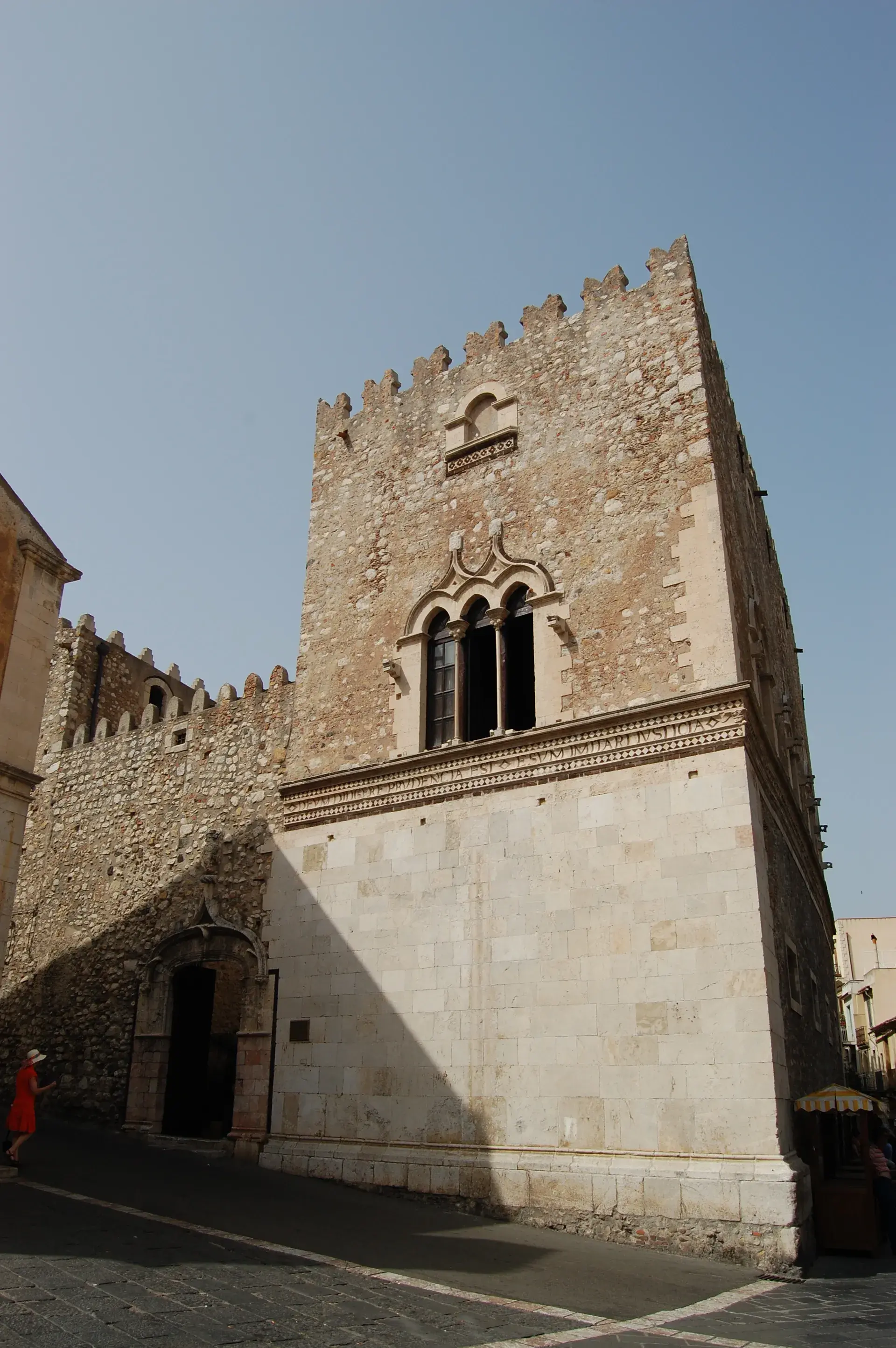
Directly adjacent to Porta Catania sits the 14th-century Palazzo dei Duchi di Santo Stefano. The palace features a distinctive fusion of Arab-Norman and Sicilian Gothic architectural elements, presenting an ornate contrast to the austere, utilitarian masonry of the defensive gateway.
Today, Porta Catania functions continuously as an open pedestrian passage marking the southern limit of Corso Umberto. It also serves as the main entry point to the historic core for travelers arriving from vehicular routes connecting Giardini Naxos and the coast, as well as those utilizing the neighboring multi-story Porta Catania parking structure.
FAQ
When was Porta Catania constructed?
Porta Catania was substantially rebuilt in 1440 under the Crown of Aragon. The exact year '1440' is carved into the stone aedicule located above the arch.
Why is Porta Catania also called Porta del Tocco?
The name comes from 'l'ora del tocco' (the hour of the touch), referring to the 1:00 PM bell chime that historically signaled the assembly of town council gatherings outside the gate.
What emblems are carved on Porta Catania?
The stone aedicule above the arch features the sculpted coat of arms of the House of Aragon alongside the civic emblem of Taormina.
What historical road does Porta Catania connect to?
Porta Catania sits at the southwestern end of Corso Umberto I, which retraces the path of the ancient Greco-Roman Via Valeria connecting to Porta Messina at the northeastern end.