Ancient Theatre of Taormina: History & Architecture
A Classical Monument on Monte Tauro
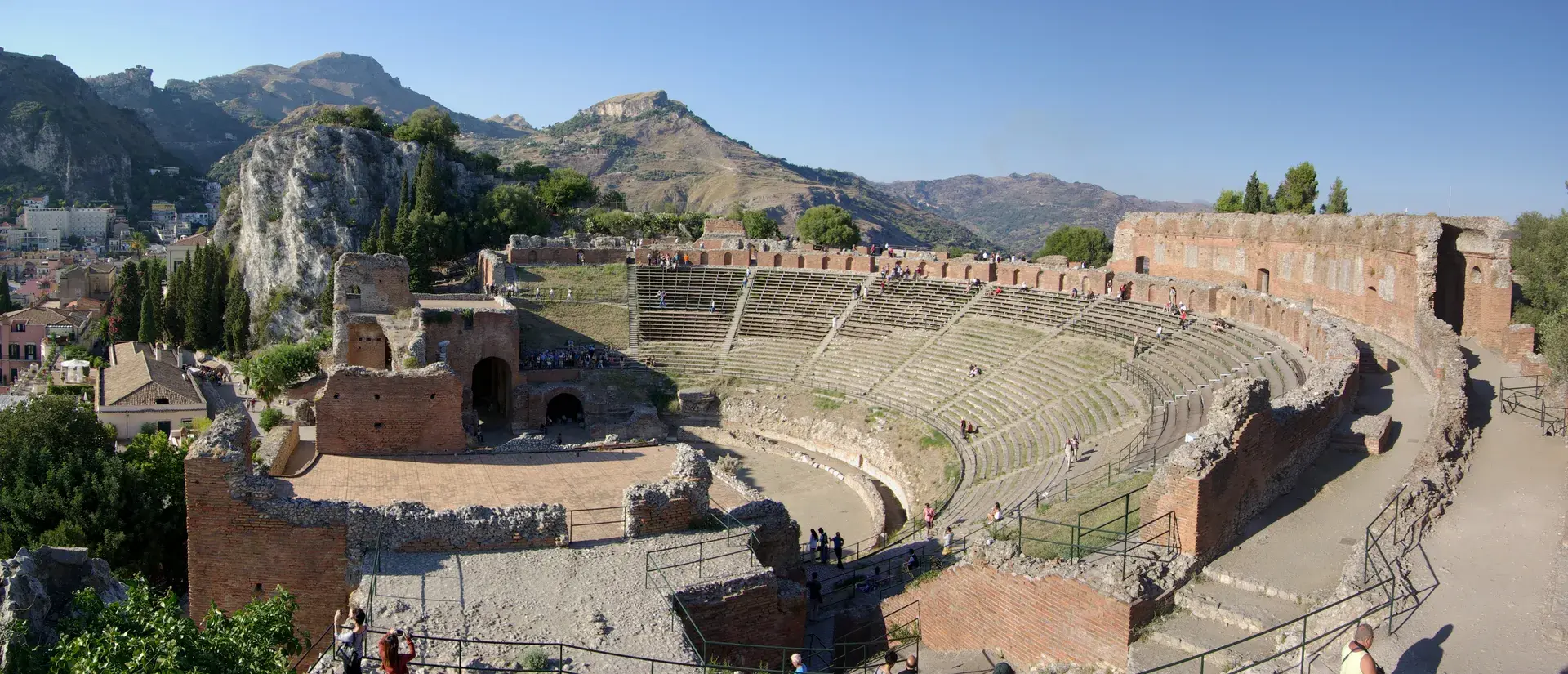
Perched on a natural terrace of Monte Tauro, the Ancient Theatre of Taormina (Teatro Antico di Taormina) stands as Sicily's second-largest classical theatre, surpassed in scale only by the ancient theatre in Syracuse. Managed under the Parco Archeologico di Naxos e Taormina, the structure features a cavea measuring over 100 meters in diameter, which accommodated an estimated 5,000 to 10,000 spectators in antiquity.
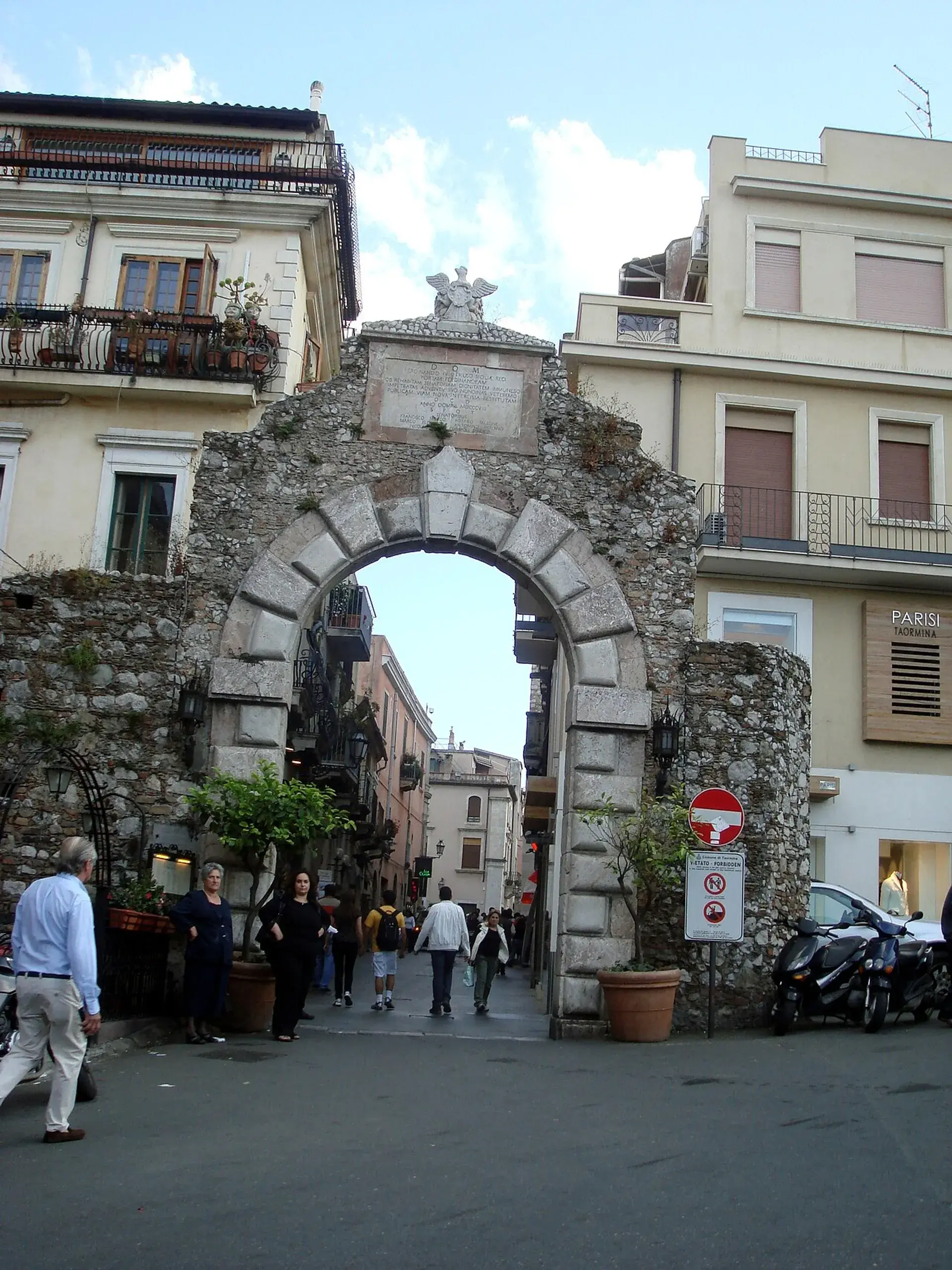
The site preserves the tripartite arrangement characteristic of classical theatres: a rock-cut cavea (tiered auditorium), a semicircular orchestra (central performance floor), and a brick scaenae frons (stage building). Situated at the end of Via Teatro Greco near Porta Messina and Corso Umberto, the theatre serves as the primary landmark anchoring Taormina's historic center.
Hellenistic Origins and Syracusan Roots
The theatre was initially established during the Hellenistic period in the 3rd century BCE, built within the political and cultural sphere of Syracuse during the reign of Hiero II. Greek builders cut the seating directly into the bedrock of Monte Tauro, deliberately aligning the auditorium so that performances framed the sea and the smoking crater of Mount Etna. During this era, the space staged Greek tragedies and comedies and served as a venue for civic assemblies.
Physical evidence confirms this connection to the Syracusan court. Archaeologists discovered seat inscriptions carrying the name of Philistis, the wife of Hiero II, providing a direct epigraphic record linking the original construction phase to Syracusan rule.
Roman Reconstruction and Arena Adaptation
While commonly referred to as the "Greek Theatre" (Teatro Greco), almost all standing visible architecture consists of Roman masonry. During the 1st and 2nd centuries CE, Roman builders extensively reconstructed and enlarged the complex in brick and marble, superimposing their own engineering over the Greek bedrock foundation.
Under imperial administration, the facility was transformed from a theatrical stage into an arena for gladiatorial battles and venationes (wild animal hunts). To support these spectacles, the Romans built vaulted brick corridors (vomitoria), altered the lower seating rows, and erected a two-story brick stage wall lined with marble columns. A deep protective channel carved around the perimeter of the orchestra remains visible today, engineered specifically to safeguard audiences from wild beasts in the arena.
From Medieval Quarrying to the Grand Tour
Following antiquity, the abandoned monument was repurposed as a stone quarry. Workers dismantled its marble revetments and granite columns to build local fortifications and the Taormina Cathedral.
The monument experienced an international revival during the late 18th century as a key stop on the Grand Tour. German writer Johann Wolfgang von Goethe documented his 1787 visit in Italian Journey, observing that no theatre audience in the world had ever enjoyed such a striking natural stage backdrop. This attention prompted 19th-century restoration initiatives that re-erected several of the fallen stage columns, driving the town's evolution from a clifftop settlement into a prominent cultural destination.
Modern Performances and Natural Acoustics
Today, the site operates year-round as a ticketed monument within the Parco Archeologico di Naxos e Taormina, offering daytime visits alongside seasonal late-night illuminations. The geometry of the stone cavea preserves exceptional natural acoustics, focusing sound so that an unamplified voice spoken from the center of the orchestra carries clearly across the upper rows of stone steps.
The theatre also maintains an active calendar as an open-air performance space. Throughout the summer months, it hosts symphonic concerts, ballets, the Taormina Arte summer festival, and the international Taormina Film Fest.
FAQ
Why is the monument called the Greek Theatre if the ruins are Roman?
Although the theatre was originally carved into the bedrock by the Greeks in the 3rd century BCE, nearly all the visible standing structures—including the reddish brickwork, arched passageways, and stage wall—date to Roman reconstructions from the 1st and 2nd centuries CE.
What physical evidence shows the theatre was used for gladiatorial combat?
A deep protective trench cut directly into the rock around the perimeter of the orchestra remains visible today. Roman engineers built this barrier to shield spectators from wild animals during hunts and gladiatorial contests.
What did Johann Wolfgang von Goethe write about the theatre?
Visiting in 1787 during his Italian Journey, Goethe noted that no theatre audience in the world had ever been granted such a dramatic natural backdrop, referencing the panoramic view of the coastline and Mount Etna through the stage wall.