Torre dell'Orologio: Taormina's Historic Gate
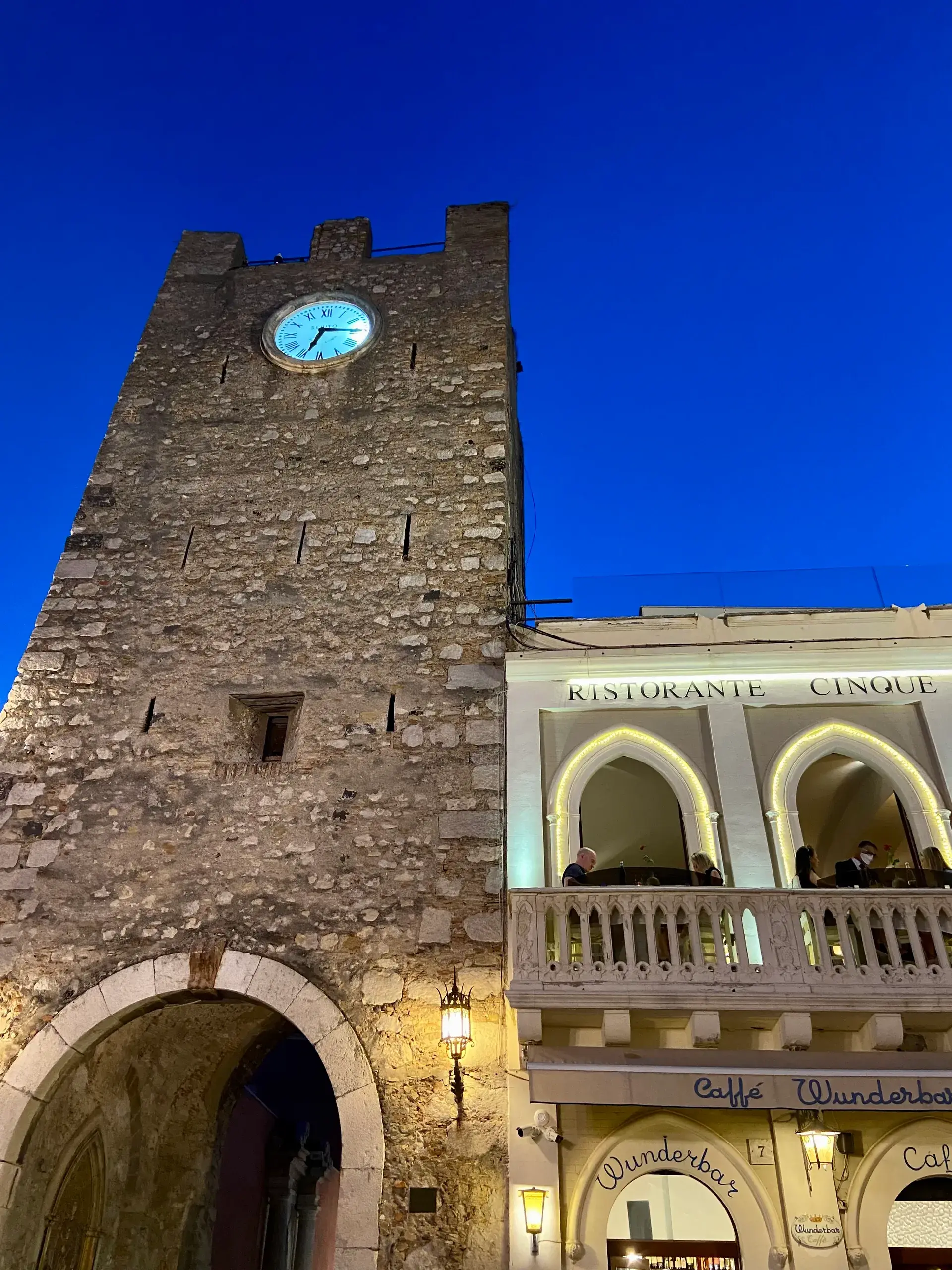
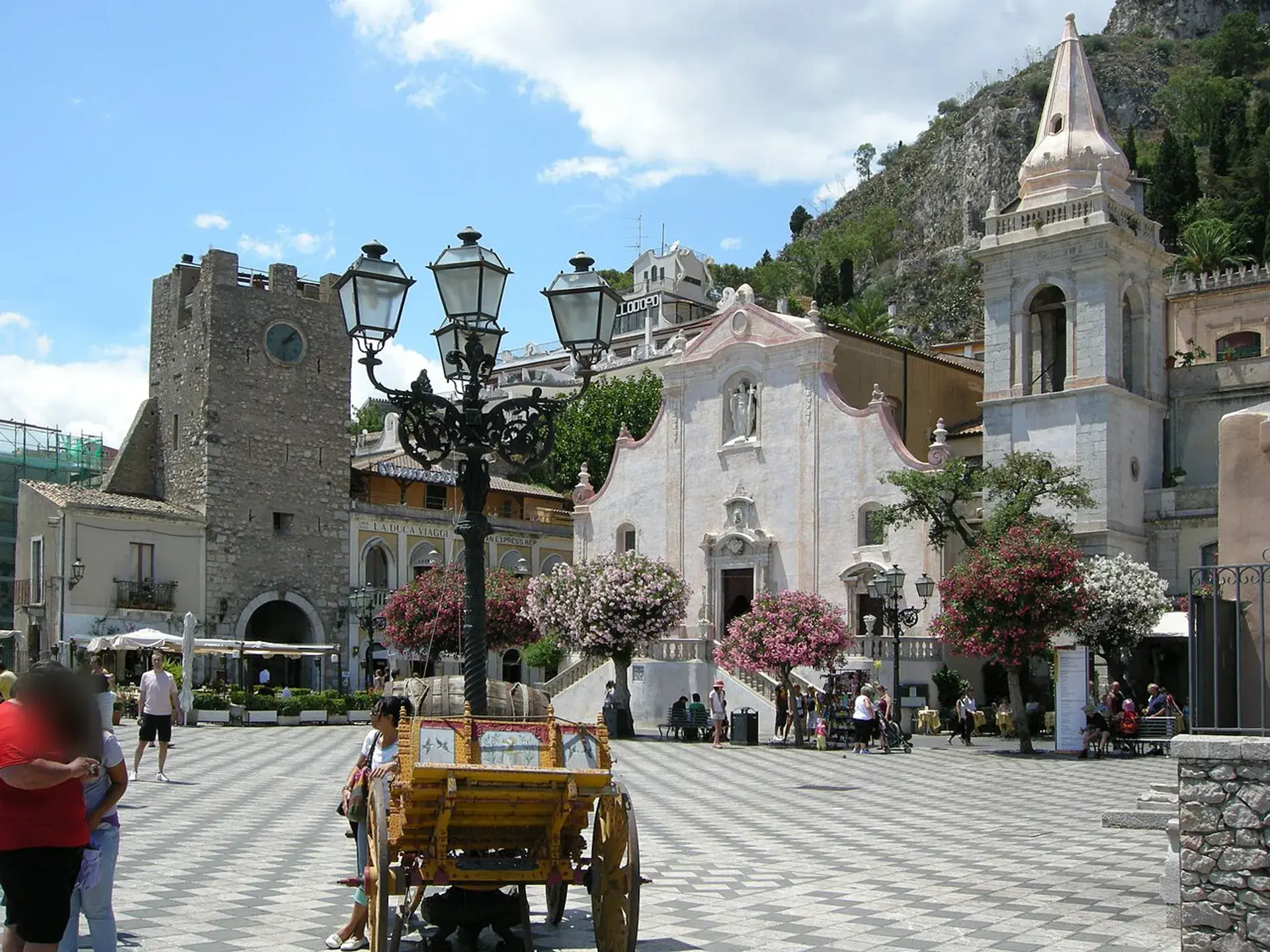
Spanning Corso Umberto I at the western edge of Piazza IX Aprile, the Torre dell'Orologio stands as one of Taormina's primary architectural landmarks. Historically known as the Torre di Mezzo or Porta di Mezzo, this square stone defensive tower served as the physical boundary separating the town's ancient Greco-Roman district from the fortified medieval quarter.
Architectural Features and Setting
The structure features solid stone walls topped with crenellated battlements, an elevated bell gable, and an arched pedestrian portal at its base. Positioned toward the expansive square of Piazza IX Aprile, a prominent public clock face keeps time over the gathering space below. Passing through the arched tunnel creates a pronounced sensory transition, carrying pedestrians abruptly from the bright sunlight and open coastal winds of the piazza into a cool, shadowed, and echoing stone passageway before they emerge into the compressed corridor of the medieval quarter.
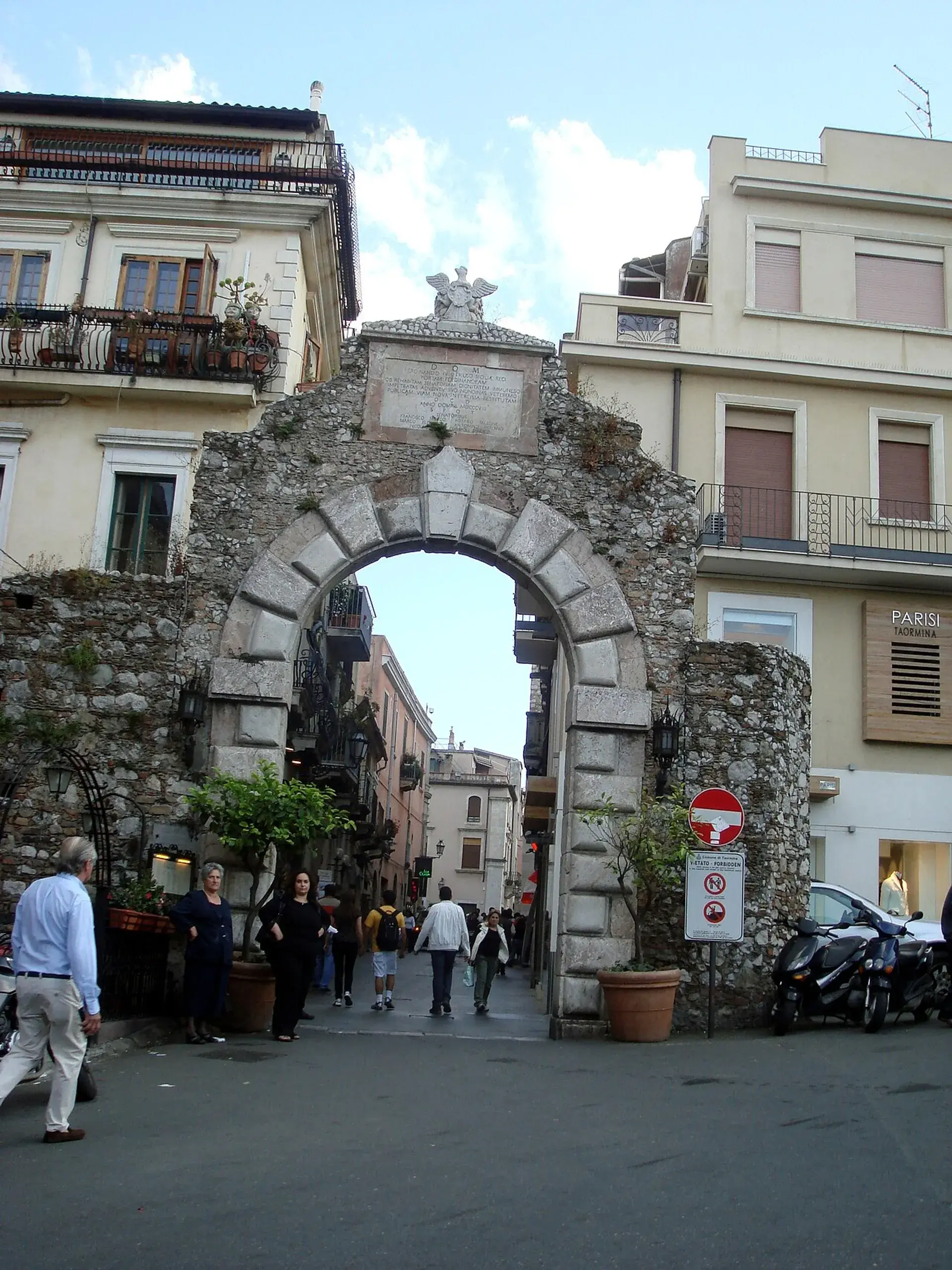
Within the broader urban framework of Taormina, the gate serves as the central anchor of Corso Umberto I. The thoroughfare is historically governed by three fortifications: Porta Messina marking the northern boundary, Porta Catania defining the southern end, and the Torre dell'Orologio marking the midpoint.
Ancient Foundations and Reconstruction
The tower's roots date back centuries before its current appearance. The gateway rests upon defensive wall foundations originally established during Taormina's 4th-century BC founding era. In the 12th century, a fortified gate was erected as part of the city's third defensive ring, which extended uphill to connect with the Saracen Castle.
In 1676, French forces under King Louis XIV laid siege to Taormina, razing the medieval gate tower to the ground. Responding to petitions from local residents, town authorities rebuilt the tower in 1679. During this reconstruction, a public clock was added to the facade facing the square, giving rise to its modern title, Torre dell'Orologio.
Passageway Art and Wartime Salvage
Set inside the walls of the covered pedestrian arch is a decorative niche containing a mosaic of the Madonna and Child. Rendered on a glittering gold ground, the image is inspired by the Byzantine-Norman Madonna della Ciambretta.
The mosaic is set inside an authentic medieval Gothic stone frame. This historic border was salvaged from a building along Corso Umberto I that was destroyed during the Allied aerial bombings of Taormina in 1943, integrating a fragment of modern wartime recovery directly into the ancient gateway.
Civic Role and Bell Traditions
Today, the Torre dell'Orologio remains an essential pedestrian thoroughfare along Corso Umberto I, channeling foot traffic between the central piazza and the historic quarter. While the clock functions regularly for timekeeping, the bells housed in the upper gable are subject to a strict civic tradition. They are not sounded for daily church or civic hours, but are instead rung exclusively for two specific occasions: the formal election of a new mayor of Taormina and the annual July 9 procession honoring the town's patron saint, San Pancrazio.
FAQ
Why is the tower called both Porta di Mezzo and Torre dell'Orologio?
It was originally built in the 12th century as Porta di Mezzo (Middle Gate) because it stood midway between Porta Messina and Porta Catania. After being destroyed in 1676, it was rebuilt in 1679 with a public clock face, giving it the name Torre dell'Orologio (Clock Tower).
When do the bells of the Torre dell'Orologio ring?
The tower's bells do not chime daily. By local tradition, they ring only during the election of a new mayor of Taormina and for the July 9 procession celebrating the town's patron saint, San Pancrazio.
What artwork is displayed inside the gate's archway?
Inside the pedestrian arch is a gold-ground mosaic depicting the Madonna and Child, encased in a medieval Gothic stone frame salvaged from a building on Corso Umberto destroyed during the 1943 Allied bombings.