Castello Gate & Piazza Castello: Vicenza's Historic Entry
The historic Castello Gate marks the point where Corso Andrea Palladio begins its lively path. A transition through this ancient western entrance reveals a towering medieval fortress standing shoulder-to-shoulder with an unfinished Palladian masterpiece.
A Medieval Fortress Turned Gateway
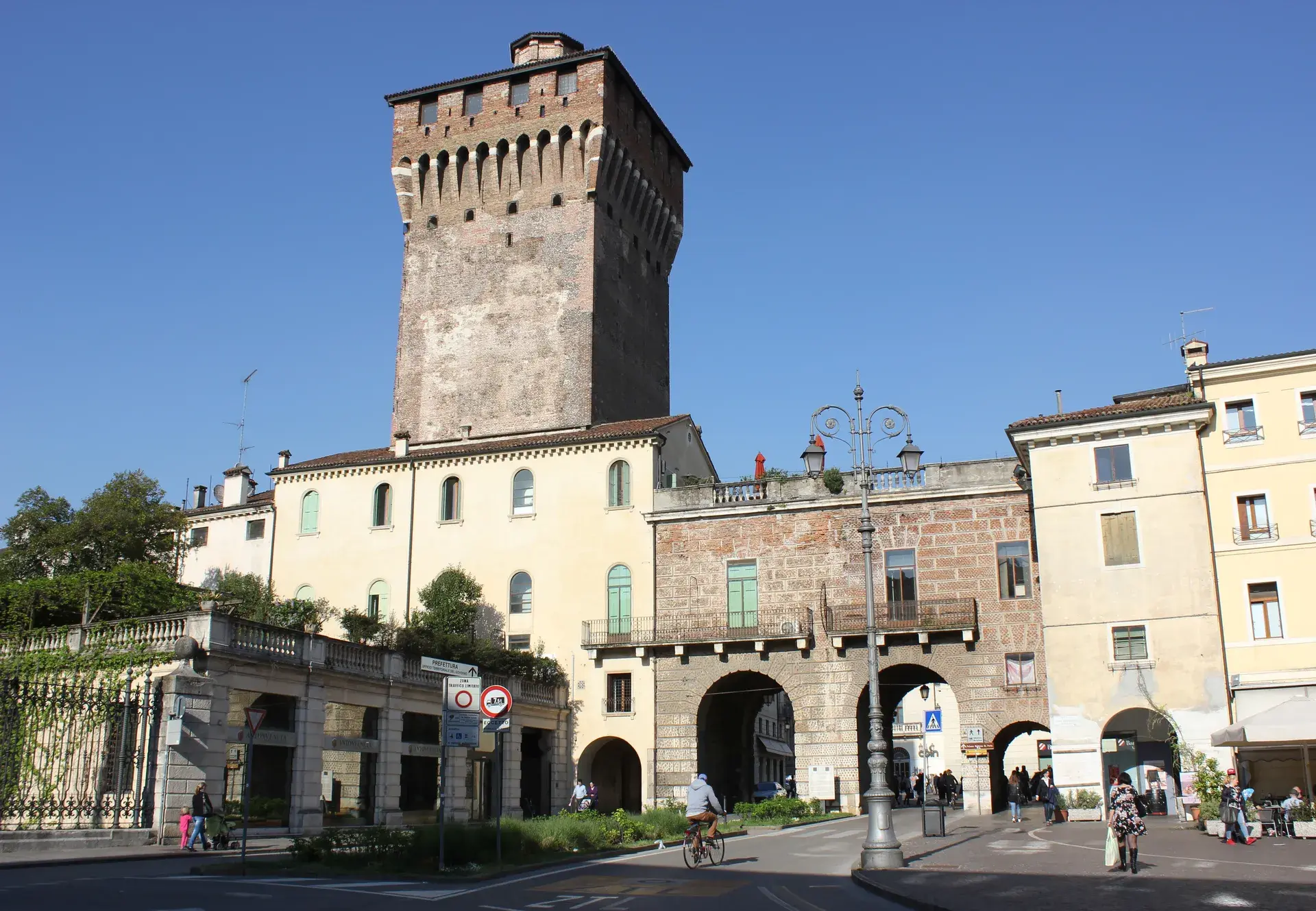
Piazza Castello serves as the grand western entry point to Vicenza's historic center. Fortified towers stood at this entrance by the 12th and 13th centuries. In 1343, under the rule of the Scaligeri from Verona, the area was expanded into a formidable defensive castle.
As military needs declined under the Venetian Republic, parts of the fortress were dismantled in the 19th century. Today, the principal surviving structure is the Torrione di Porta Castello. Its sheer red brickwork and battlements remain a striking reminder of Vicenza's medieval defenses. The Torrione now operates as a contemporary art exhibition space managed by the Fondazione Coppola.
An Unfinished Palladian Masterpiece
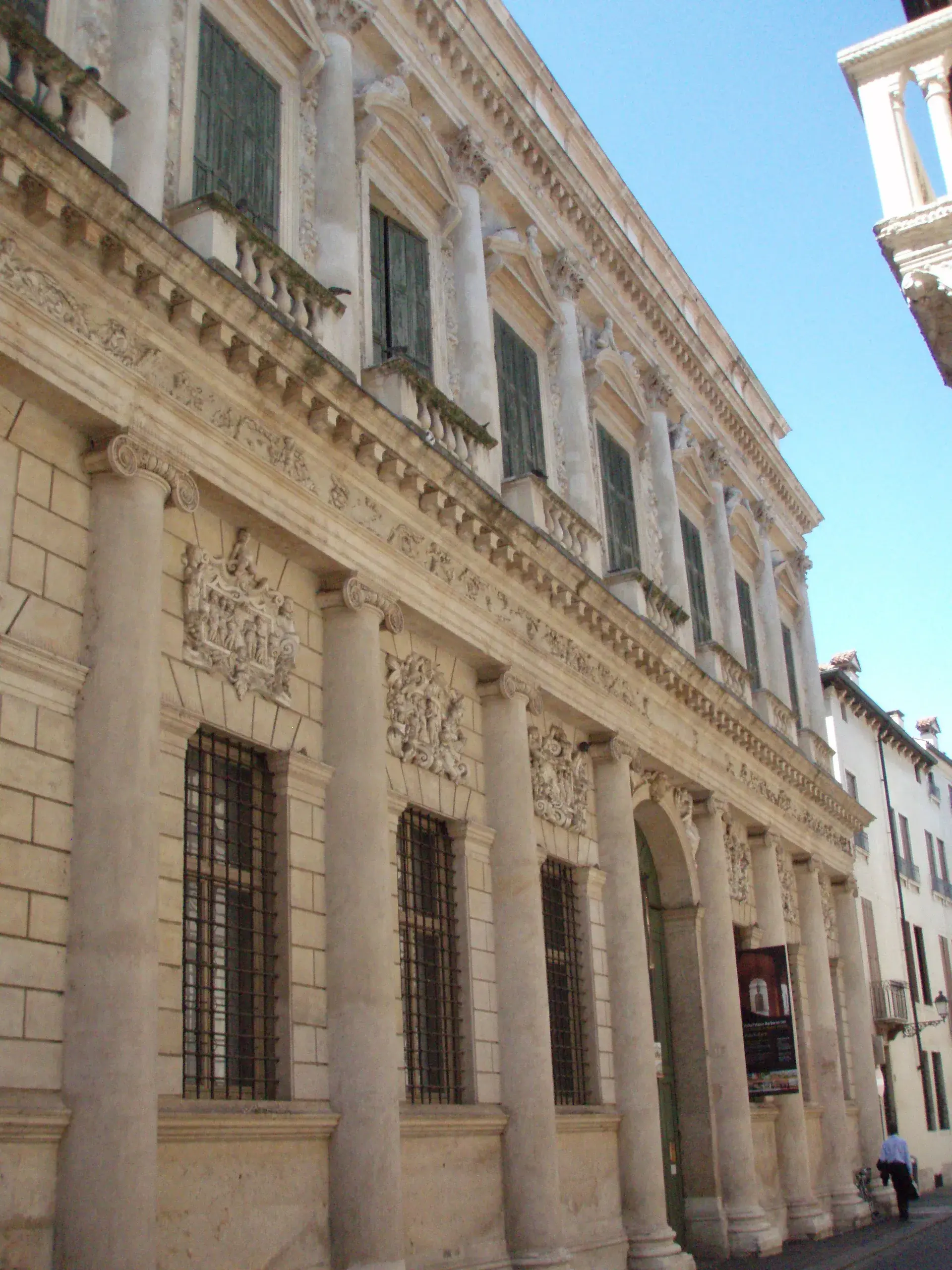
Contrasting sharply with the medieval brickwork is Palazzo Porto Breganze, featuring colossal classical stone columns and carved fruit garlands. Around 1571, Alessandro Porto commissioned architect Andrea Palladio to design a monumental seven-bay palace. This massive scale was partly driven by a family rivalry with Porto's brother-in-law, Francesco Thiene, who lived across the piazza.
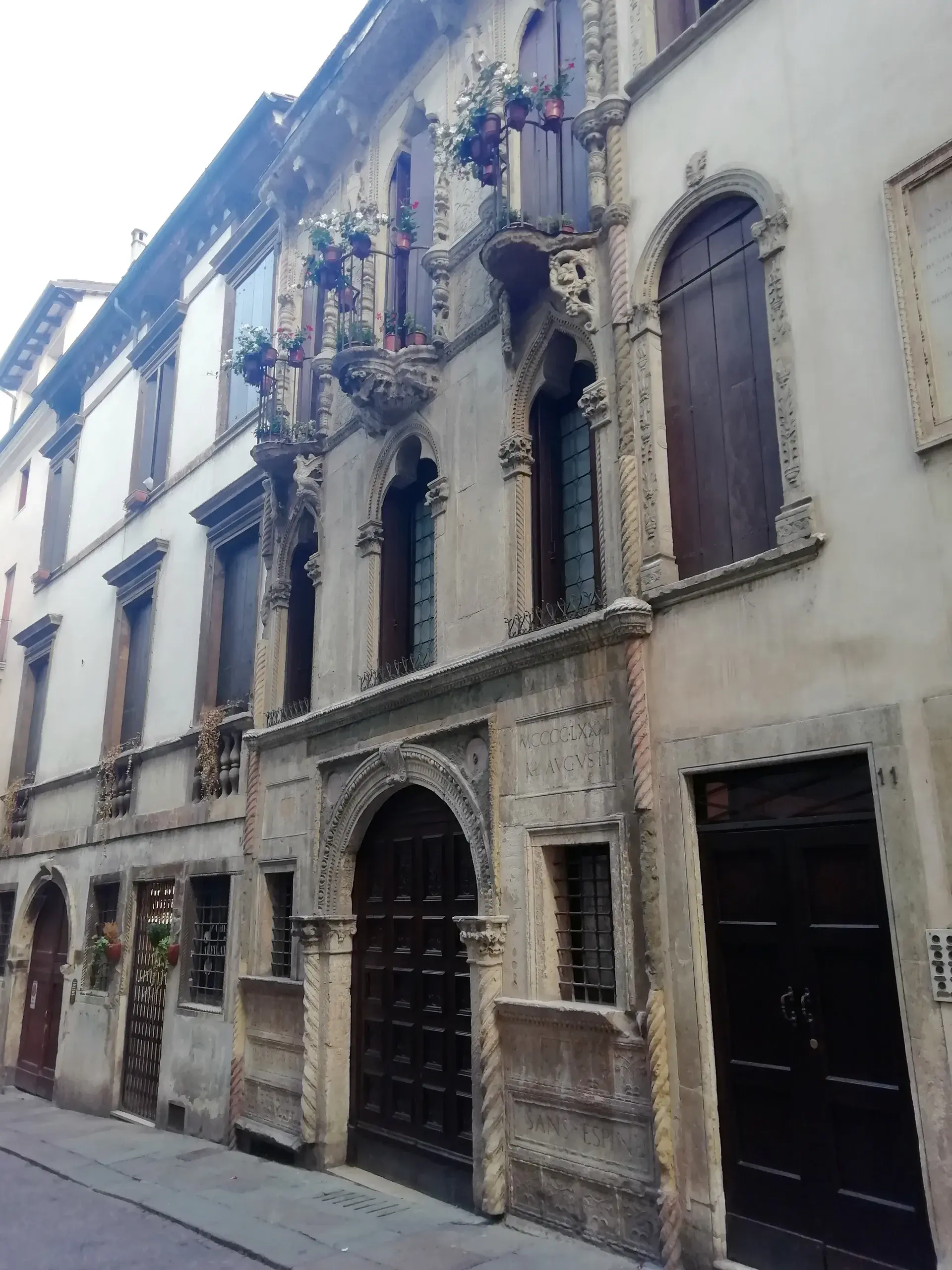
Construction halted unexpectedly after only two bays were completed. The resulting structure is an architectural torso. Immediately to the left of its towering facade stands the modest 15th-century townhouse that the new palace was originally intended to demolish and replace. Palazzo Porto Breganze remains privately owned but is widely admired as a key stop on the UNESCO Palladian architectural itinerary.
Historical Landmarks and City Connections
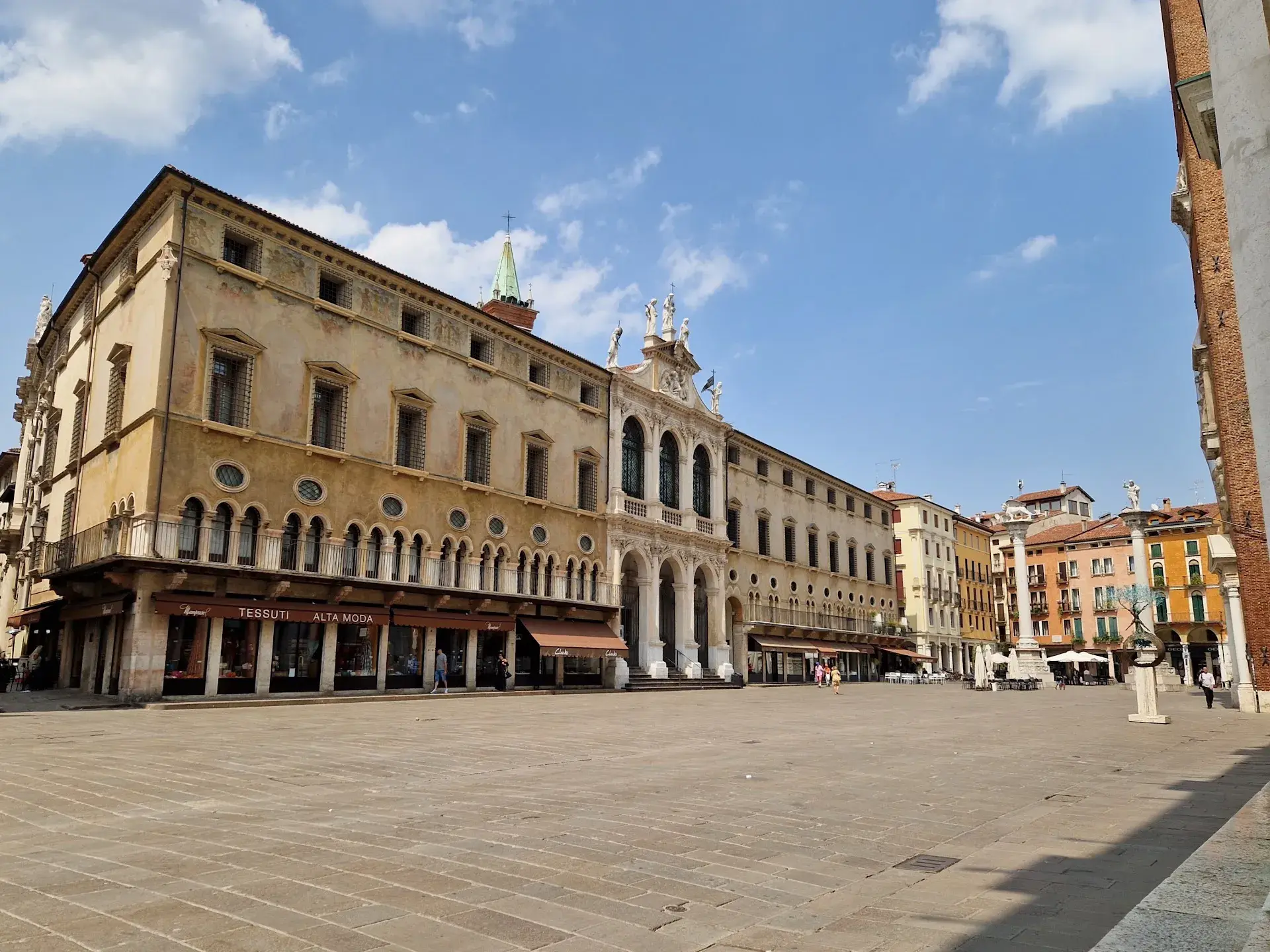
The square features other significant monuments, including Palazzo Thiene Bonin Longare, designed circa 1572 by Palladio and completed by Vincenzo Scamozzi. At the center stands an 1887 monument to Giuseppe Garibaldi, sculpted by Ettore Ferrari. Before taking its modern form, the area was known as Piazza dei Buoi, or Oxen Square, as it historically hosted the city's cattle market.
Piazza Castello establishes the main axis for the historic core. It channels pedestrians directly onto the 700-meter Corso Andrea Palladio. This linear route follows the approximate alignment of the ancient Roman decumanus maximus, also known as the Via Postumia, connecting the western gateway to Vicenza's iconic civic spaces.
FAQ
What is the large brick tower in Piazza Castello?
The structure is the Torrione di Porta Castello, a massive medieval defensive tower dating back to the city's ancient fortified castle complex. It now serves as a contemporary art exhibition space.
Why is Palazzo Porto Breganze unfinished?
Designed by Andrea Palladio for Alessandro Porto, the palace was planned to have seven bays. Construction halted after only two bays were built, leaving the monumental structure incomplete next to the 15th-century townhouse it was originally meant to replace.
What was Piazza Castello historically called?
In the past, the square was known as Piazza dei Buoi (Oxen Square) because it was the site of the city's cattle market.