Piazza dei Signori: Vicenza's Architectural Masterpiece
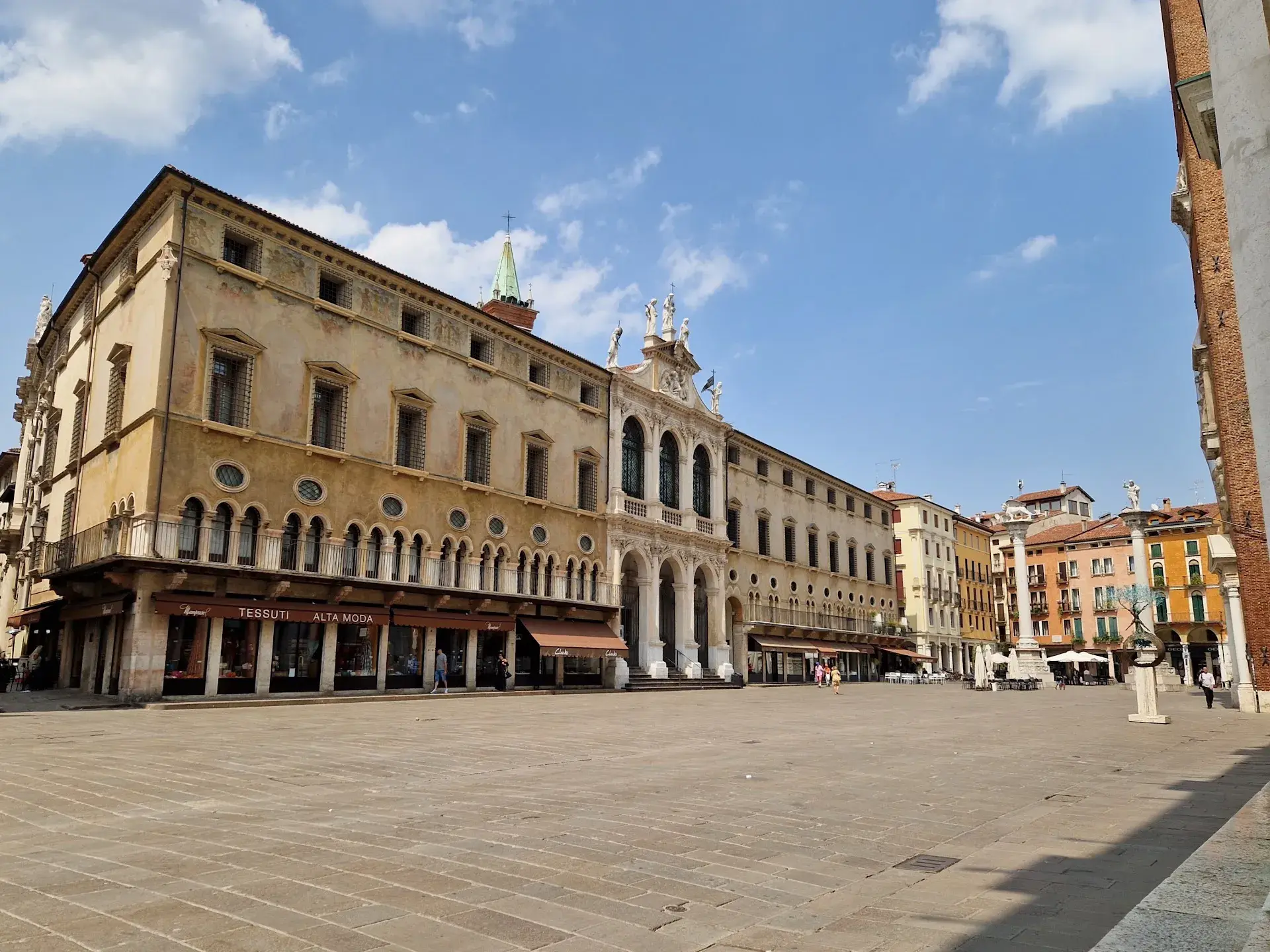
A structural failure in a 15th-century town hall paved the way for an architectural masterpiece that launched Andrea Palladio's career. Today, Piazza dei Signori stands as the vibrant heart of Vicenza, flanked by elegant palaces, grand statue-topped columns, and an imposing Renaissance basilica. Measuring 122 by 28 meters, this historic square anchors the city's 1994 UNESCO World Heritage Site.
The Rise of Palladio
Originally the forum of Roman Vicetia, the site evolved into a medieval commercial center known as Piazza Grande or Perònio. In the 15th century, a Gothic town hall dominated the space. However, a newly added double loggia partially collapsed in 1494, prompting the city government to consult renowned architects for decades to find a solution.
In 1546, the city selected local stonemason Andrea Palladio to stabilize the structure. Palladio wrapped the fragile Gothic core in a self-supporting classical double loggia. By slightly varying the widths of the rectangular openings flanking the arches, he masterfully concealed the irregular misalignments of the older medieval building. Construction began in 1549, cementing Palladio's international reputation and transforming the structure into the famed Basilica Palladiana.
Architectural Monuments
Despite its name, the Basilica Palladiana is not a church. Palladio named it to revive the ancient Roman term for a civic hall of justice and public assembly. Behind the classical white Piovene stone loggias, the original 15th-century diamond-patterned red and yellow Verona marble from the Gothic structure remains visible on the inner walls.
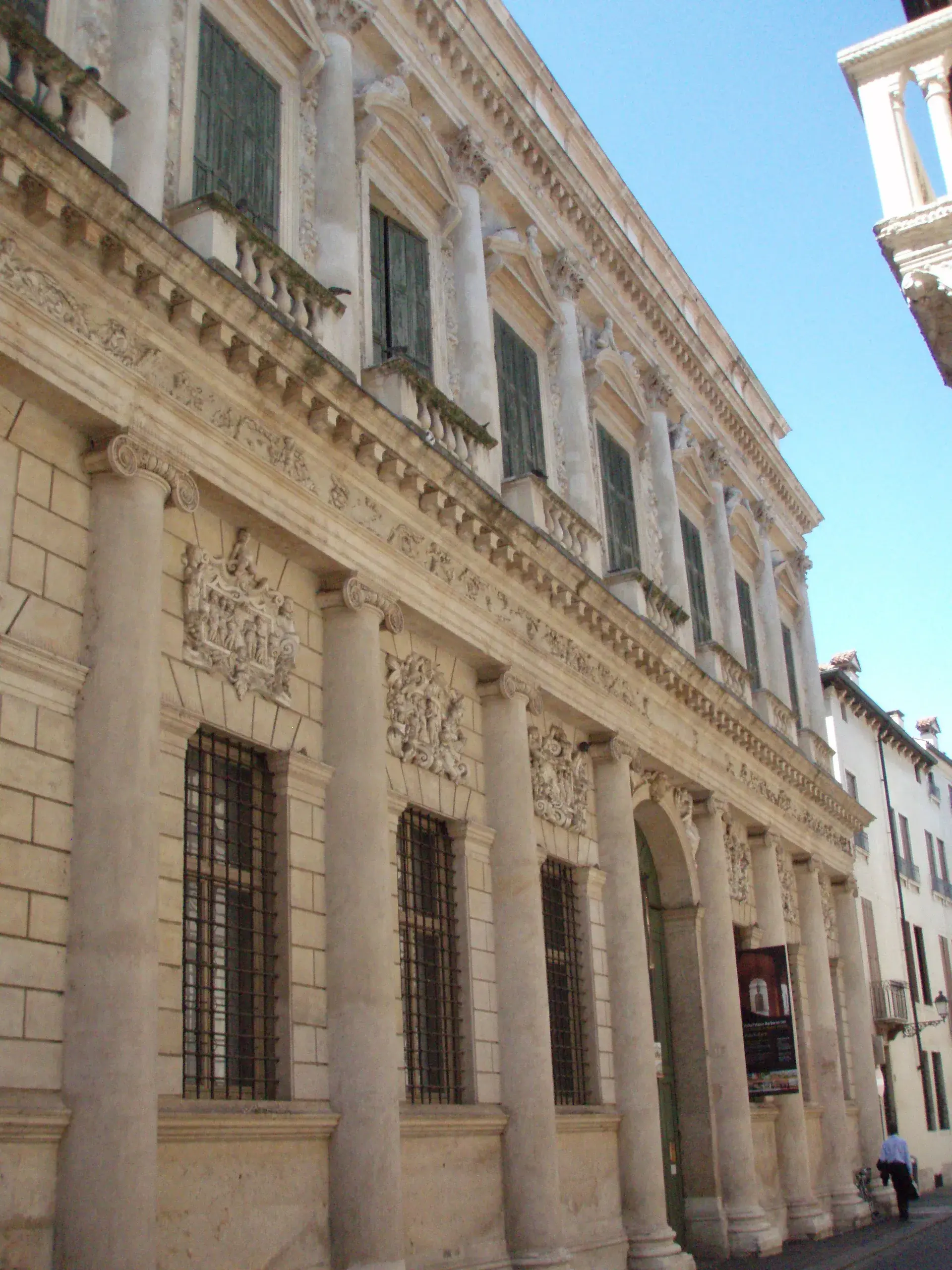
Directly opposite the Basilica stands the Loggia del Capitaniato, another Palladio design from 1565 serving as the Venetian governor's residence. Its exposed red brick, colossal pilasters, and intricate stucco reliefs create a striking visual contrast to the brilliant white stone of the Basilica. The square is also home to the 72-meter-long Palazzo del Monte di Pietà, which integrates the Church of San Vincenzo into its facade.
At the eastern entrance, two Corinthian marble columns stand as symbols of the square's dual identity. One bears the Lion of Saint Mark, representing historic loyalty to the Venetian Republic, while the other features Christ the Redeemer, honoring the local citizenry.
Torre Bissara
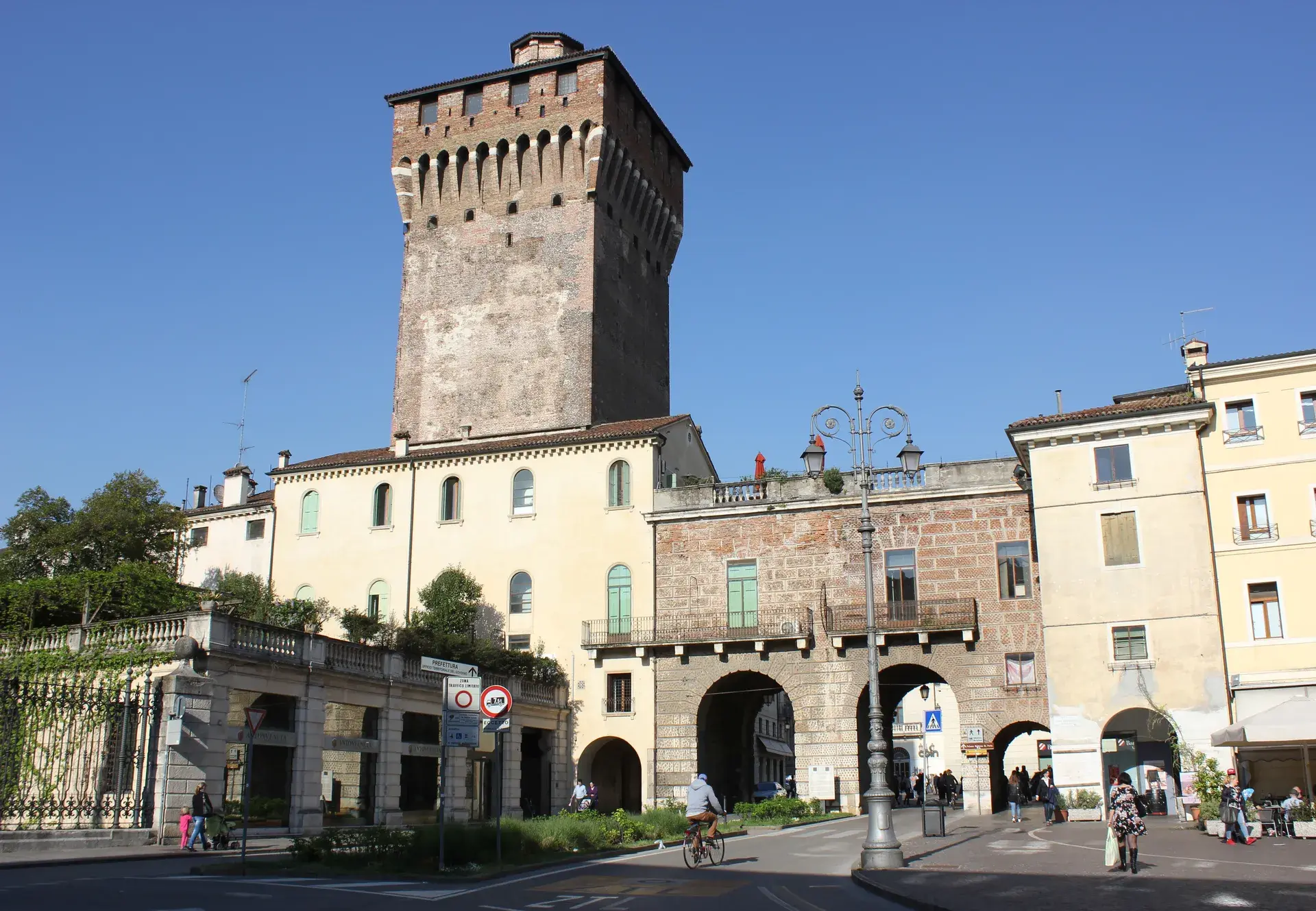
Rising 82 meters above the stone pavers, Torre Bissara punctuates the square's elongated horizontal expanse. This medieval civic clock tower originally dates to 1174. Its top section was meticulously reconstructed using historic drawings after it caught fire during a World War II bombardment. Today, the echoing chimes from the tower's five bells ring out over the piazza.
A Living Civic Center
Under Venetian rule, the space was renamed Piazza dei Signori. It continues to function as Vicenza's primary gathering space. The sounds of cafe chatter and clinking glassware fill the air during evening apertivo hours.
The piazza hosts seasonal festivals, outdoor concerts, and a bustling open-air market every Tuesday and Thursday. Meanwhile, the interior of the Basilica Palladiana serves as a venue for international art exhibitions, with its public upper loggias and distinctive inverted ship's hull copper roof remaining a focal point for the city.
FAQ
Is the Basilica Palladiana a church?
No, the Basilica Palladiana was never a religious building. Architect Andrea Palladio named it a 'basilica' to revive the ancient Roman term for a civic hall of justice and public assembly.
Why does the Loggia del Capitaniato look different from the Basilica?
While the Basilica Palladiana features white stone and rhythmic classical arches, the Loggia del Capitaniato, also designed by Palladio, contrasts it with exposed red brick, colossal columns, and intricate stucco reliefs.
What do the two tall columns in Piazza dei Signori represent?
The column topped with the Lion of Saint Mark symbolizes the city's historical loyalty to the Venetian Republic, while the column featuring a statue of Christ the Redeemer honors the local citizens of Vicenza.
Was Torre Bissara damaged in World War II?
Yes, the top of the 82-meter medieval clock tower caught fire during an Anglo-American bombardment in World War II. It was later meticulously reconstructed according to historic drawings.
Discover Vicenza like never before
Dive into Vicenza hidden stories and secret spots with Ciceru interactive tours.
Explore tour
Audioguide
Quizzes
Maps
Solo
Couples
Groups & families

© Photo by Steve Cundy via Google Maps · Google Places