Alberta Street: Riga's Art Nouveau Showcase
An Architectural Corridor in Riga's Quiet Centre
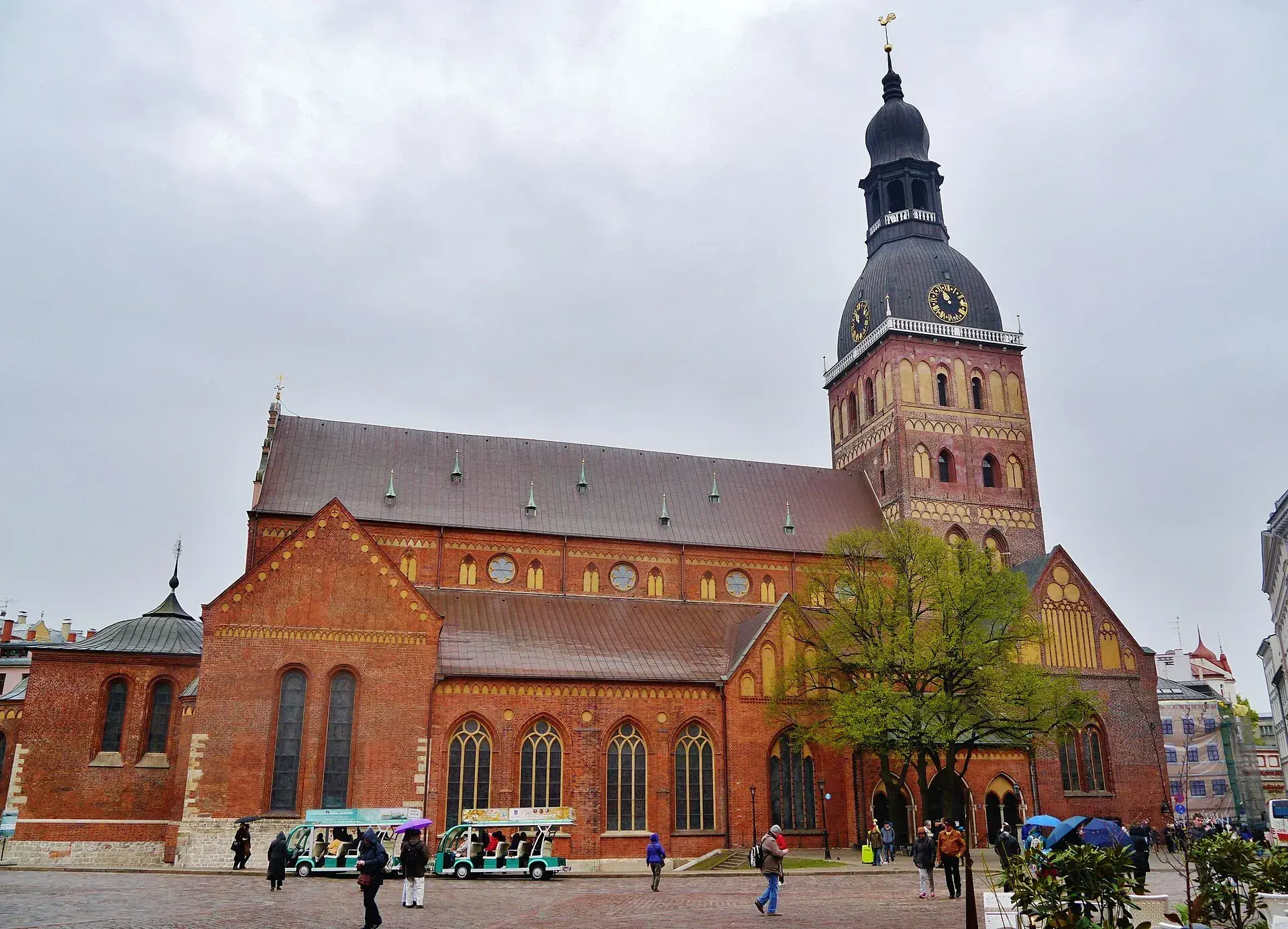
Alberta iela (Alberta Street) is located in Riga's embassy district, a neighborhood commonly known as the Quiet Centre (Klusais centrs). Situated roughly one kilometer north of the Freedom Monument, the street forms a key focal point of the city's early-20th-century development. Riga contains around 800 Art Nouveau structures, making up roughly one-third of the central city's buildings and representing the highest concentration of Jugendstil architecture in Europe. In 1997, Alberta Street was recognized internationally when its surrounding area was inscribed as part of the UNESCO World Heritage Site "Historic Centre of Riga."
Today, the street canyon remains sheltered from heavy traffic. Light vehicle flow leaves the sound of footfall distinct along the stone sidewalks, creating an environment defined by continuous multistory frontages and eight designated national architectural monuments.
Riga walking tour with audio and quizzes: Old Town to Art Nouveau
2 hours9 stopsAudio guideStart any day, at your own paceTicket on your phone · 30-day refundRapid Construction and Historic Origins
Alberta Street was plotted between 1900 and 1901 and named in honor of Bishop Albert von Buxthoeven, the founder of Riga, in celebration of the city's 700th anniversary. During this era, Riga experienced a substantial economic and industrial expansion as a major Baltic port within the Russian Empire. Municipal building regulations mandated high-density masonry apartment blocks of four to five storeys, transforming the newly laid corridor into an avenue of grand residential rental properties.
Remarkably, the street transformed from open land into an intact architectural ensemble in roughly seven years. The majority of the facades were erected between 1901 and 1908, creating an open-air display of early-20th-century European design trends.
Contrasting Art Nouveau Styles and Architects
The street showcases two distinct stylistic philosophies positioned directly across from one another. More than a third of the street's facades—specifically numbers 2, 2a, 4, 6, 8, and 13—were designed by Mikhail Eisenstein in an Eclectic Art Nouveau style. Eisenstein was not a full-time architect, but rather a civil servant serving as the head of the provincial governorate's traffic department, as well as the father of film director Sergei Eisenstein. His theatrical facades feature sculpted mascarons, sphinx-like figures, gargoyles, wrought-iron balconies, and glazed tiles set against pale plaster and rough-cast stone.
In contrast to Eisenstein's ornamental, German-influenced Jugendstil, the building at Alberta iela 12 represents Latvian National Romanticism. Co-designed by Konstantīns Pēkšēns and his student Eižens Laube, the structure avoids overt theatrical ornamentation, utilizing textured local materials, steep gables, and regional botanical motifs. Other notable architects who shaped the street during this construction surge include Heinrich Scheel, Hermann Hilbig, and Paul Mandelstamm.
Changing Names and 20th-Century Survival
While Art Nouveau districts in many European cities suffered extensive destruction during World War II, Alberta Street survived the conflict largely intact. However, its political designations shifted multiple times over the course of the 20th century.
In 1941, the Soviet administration renamed the street Friča Gaiļa iela after communist activist Fricis Gailis, following accounts that he died after falling from a fourth-floor window at No. 13 in a staged suicide during the interwar republic. Under Nazi German occupation from 1942 to 1944, the road was designated Hollanderu iela, before the Soviet authorities reinstated Friča Gaiļa iela following the war. In 1990, just prior to the restoration of Latvian independence, the original name of Alberta iela was officially restored.
Contemporary Institutions and the Art Nouveau Centre
Alberta Street functions today as a mixed diplomatic, educational, and residential corridor. Number 13 houses the Riga Graduate School of Law, while the street also hosts diplomatic facilities, including the Embassy of Belgium, alongside satellite facilities associated with the Stockholm School of Economics in Riga.
At Alberta iela 12, the Riga Art Nouveau Centre (Rīgas Jūgendstila centrs) operates as an interior museum. Opened in 2009 inside the restored 1903 apartment of architect Konstantīns Pēkšēns, the museum features authentic turn-of-the-century living spaces, period furnishings, original wall paintings, and a historic kitchen. The building is also celebrated for its monumental spiral stairwell, featuring curved iron balustrades and an ornate ceiling mural adorned with local floral patterns.
FAQ
When was Alberta Street constructed?
Alberta Street was laid out between 1900 and 1901 and constructed almost entirely between 1901 and 1908 during a turn-of-the-century economic boom.
Who designed the distinctive facades on Alberta Street?
Mikhail Eisenstein designed numbers 2, 2a, 4, 6, 8, and 13 in an Eclectic Art Nouveau style, while Konstantīns Pēkšēns and Eižens Laube designed number 12 in the Latvian National Romantic style. Architects Heinrich Scheel, Hermann Hilbig, and Paul Mandelstamm also contributed designs.
What is located at Alberta iela 12?
Number 12 houses the Riga Art Nouveau Centre, an interior museum established in 2009 inside the restored 1903 apartment of architect Konstantīns Pēkšēns.
Why was Alberta Street renamed during the Soviet era?
Soviet authorities renamed the street Friča Gaiļa iela in 1941 after communist activist Fricis Gailis, based on accounts that he died in an alleged staged suicide from a fourth-floor window at No. 13.