The Three Brothers in Riga: Historic Medieval Houses
Riga's Oldest Stone Residential Ensemble
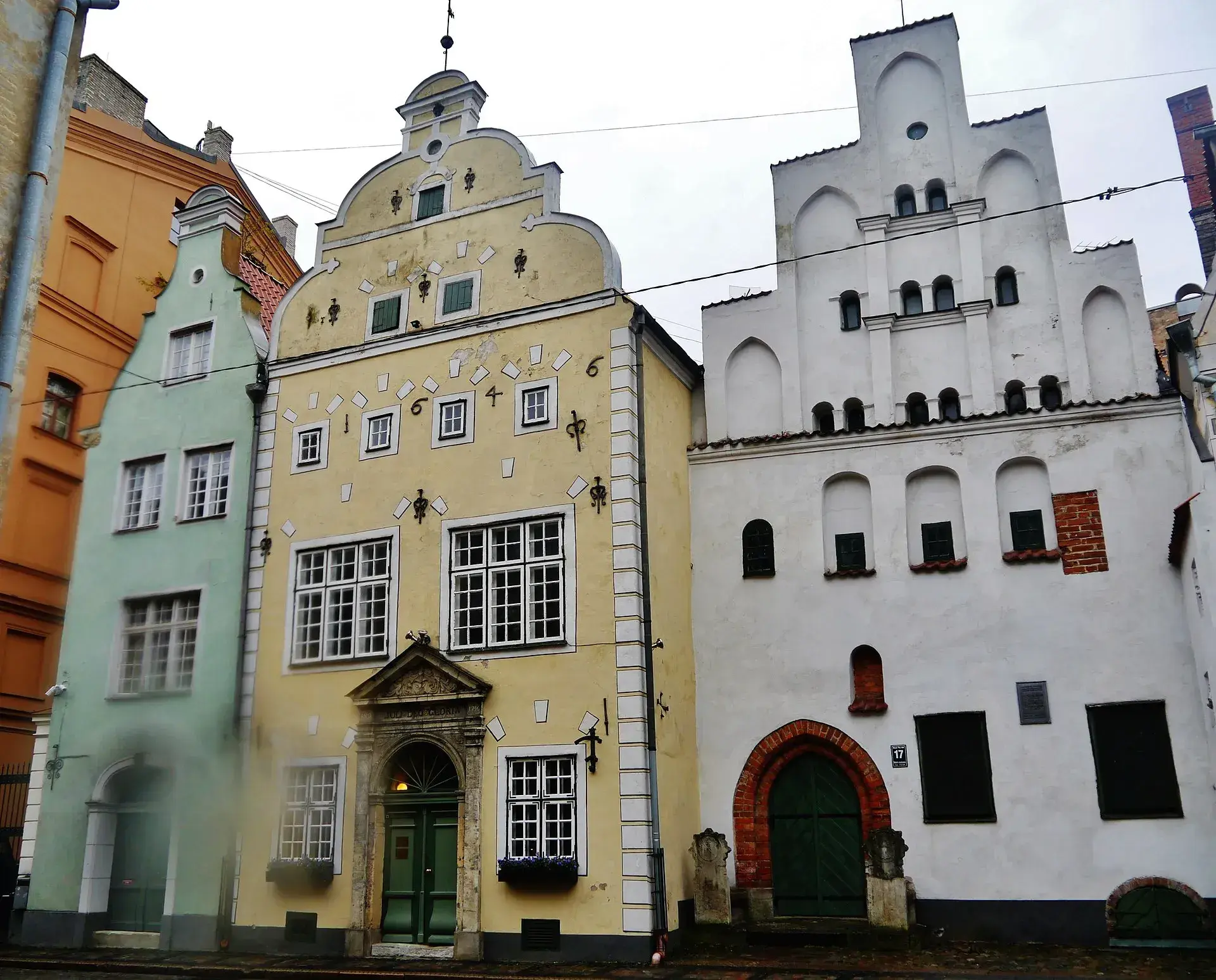
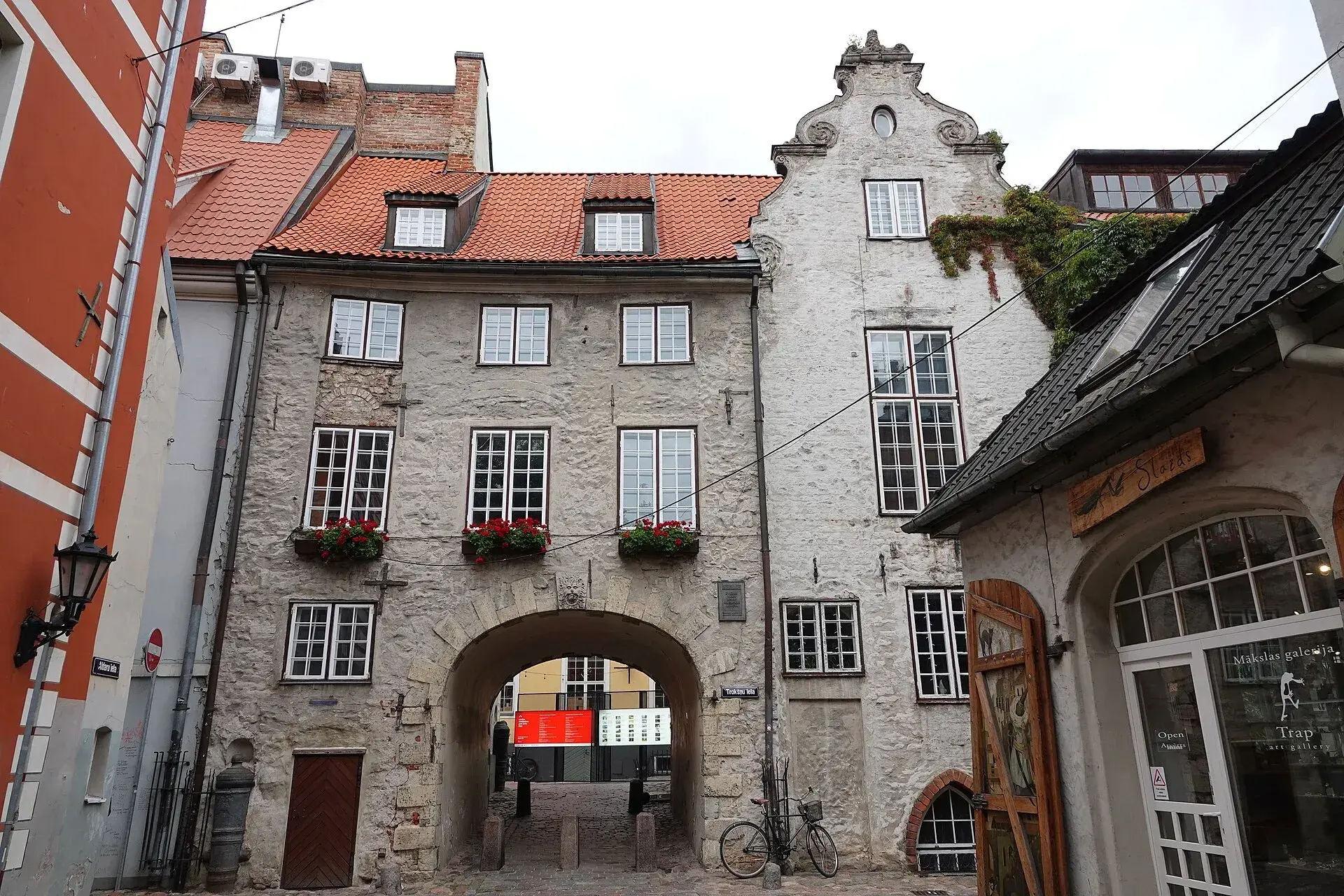
Situated along Mazā Pils iela in the heart of Old Riga, the Three Brothers (Trīs brāļi) constitutes the city's oldest surviving residential masonry complex. Numbered 17, 19, and 21, the three contiguous houses form an unbroken street wall linking Dome Square and Riga Castle. Together, they represent an architectural timeline spanning late medieval to early modern Baltic urban living.
While central Riga is celebrated for its 19th-century boulevards and Art Nouveau quarters, the Three Brothers preserves the physical domestic scale, Hanseatic lot constraints, and commercial spatial planning of the medieval core. The ensemble forms part of Riga's UNESCO World Heritage listing and carries the European Heritage Label.
Riga walking tour with audio and quizzes: Old Town to Art Nouveau
2 hours9 stopsAudio guideStart any day, at your own paceTicket on your phone · 30-day refundThree Successive Centuries of Architecture
The layout of Mazā Pils iela reflects Hanseatic urban taxation systems, which assessed properties based on street frontage. To optimize street space, craftsmen and merchants built on deep, narrow parcels. The Three Brothers clearly illustrates the progression of domestic tastes across three centuries:
- No. 17 (Late 15th Century): Dating to circa 1490, this is the oldest surviving residential stone house in Riga. It displays a late Gothic stepped gable, blind niches, and thick walls punctuated by small, defensive-style windows. Internally, it initially featured a single expansive ground-floor room revolving around an open mantle chimney kitchen that combined residential, artisanal, and commercial activities below an attic warehouse.
- No. 19 (1646): Reflecting growing merchant prosperity, the middle house features a Dutch Mannerist facade inspired by pattern books by Hans Vredeman de Vries. It is topped with a scrolled gable and anchored by an ornate stone portal added in 1746 bearing the Latin inscription “Soli Deo Gloria!” ("Glory to God alone"). The interior accommodated larger windows and dedicated living apartments separated from utility areas.
- No. 21 (Late 17th Century): The narrowest building in the row dates from the late 17th century and features a simplified Baroque curved gable. Its interior was partitioned into compact, multi-level living and working quarters. High on its facade sits a small carved stone mask, mounted by past occupants as an apotropaic charm to ward off evil spirits.
Post-War Restoration and the Salvaged Lapidarium
Between 1953 and 1957, architect Pēteris Saulītis directed a comprehensive restoration of the ensemble. Guided by preservation principles established in interwar independent Latvia, the project removed later urban intrusions, such as a 1697 bakery wing at No. 17, to re-establish the historic street profile.
Saulītis also unified the rear courtyard into an outdoor lapidarium. During the post-war cleanup of Old Riga, architectural fragments, carved stone portals, and a historical Riga coat of arms rescued from structures destroyed in World War II were immured directly into the courtyard's brick walls, creating a sanctuary of recovered heritage.
Current Purpose and Public Access
Today, the Three Brothers houses the headquarters of Latvia's National Cultural Heritage Administration (Nacionālā kultūras mantojuma pārvalde). Building No. 19 accommodates the Latvian Museum of Architecture (Latvijas Arhitektūras muzejs), established in 1994 to exhibit architectural drawings and temporary displays on Baltic design.
The exterior facades can be viewed from Mazā Pils iela at any time. Visitors can access the museum gallery spaces and the interior courtyard during standard museum operating hours.
FAQ
Why are the buildings called the Three Brothers?
The name stems from an urban legend asserting that the three residences were constructed across generations by three men of the same merchant family. It also arose as a local counterpart to Tallinn's medieval warehouse ensemble known as the Three Sisters.
Which of the Three Brothers is the oldest?
Building No. 17 is the oldest, built around 1490. It features a late Gothic stepped gable and is the oldest surviving residential masonry house in Riga.
Can the interior of the Three Brothers be visited?
The street facades are visible from the street, and the unified rear courtyard along with the exhibition rooms of the Latvian Museum of Architecture in No. 19 are accessible during museum operating hours.