Palace of the Inquisition: A History in Mexico City
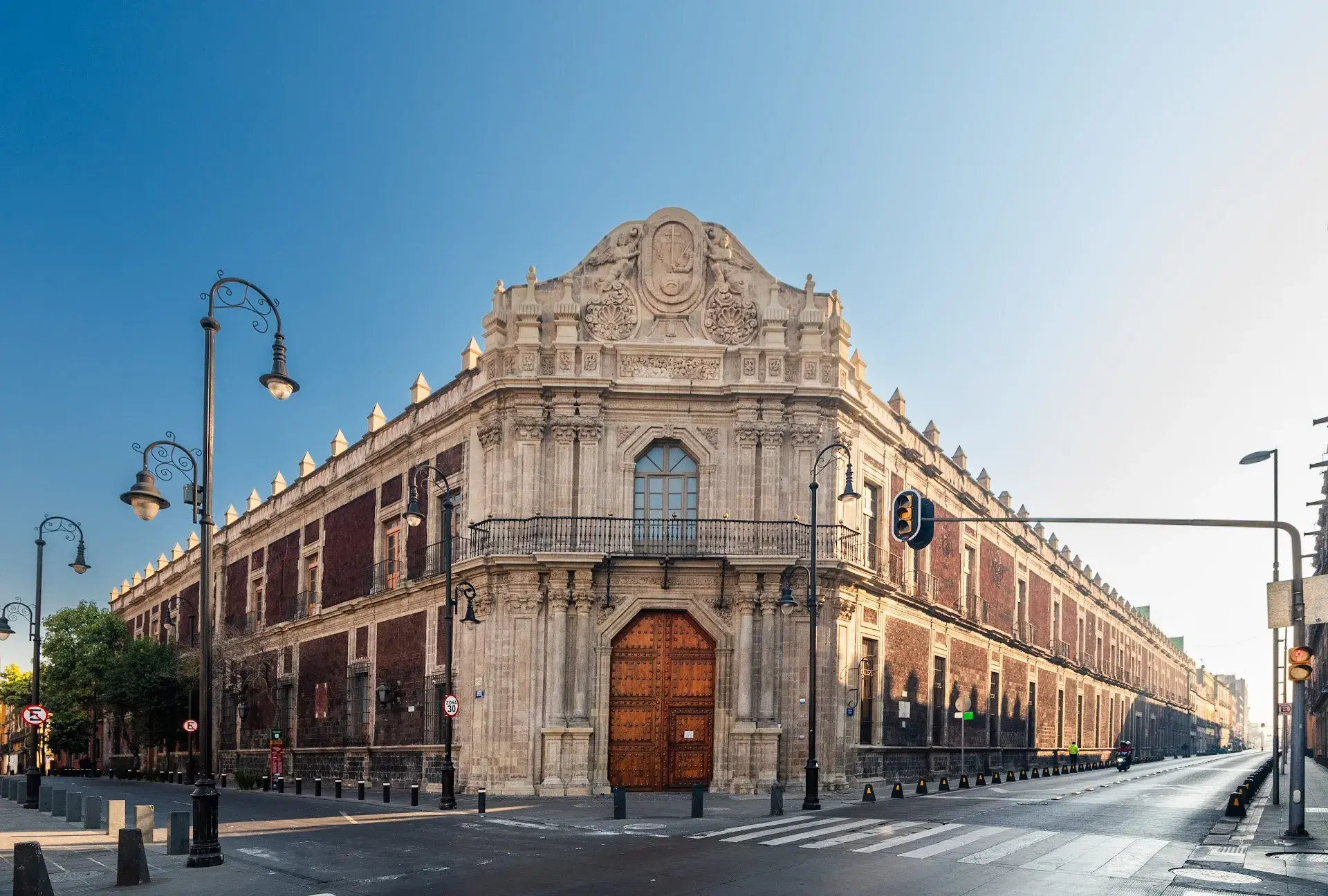
The Antiguo Palacio de la Santa Inquisición stands as a formidable example of New Spanish Baroque architecture. Constructed between 1732 and 1736 by the renowned architect Pedro de Arrieta, the palace's imposing facade overlooks the historic Santo Domingo Plaza, a tangible reminder of the Spanish colonial era.
The Seat of the Holy Office
This site served as the headquarters for the Inquisition in New Spain almost from the start of the colonial period. The formal Tribunal of the Holy Office was officially established here in 1571 by order of King Philip II. This move was partly a response to a 1566 conspiracy led by Martín Cortés, son of Hernán Cortés, to declare New Spain's independence. For nearly 250 years, the tribunal conducted trials against individuals accused of being "Judaizers," practicing "witchcraft," being political rebels, or challenging religious doctrine. The building's jail earned the grim name "la cárcel de la perpetua" (the prison of an eternity), as few who entered ever left. Indigenous populations, however, were largely exempt from its jurisdiction, being considered "new converts."
Architectural Features
The palace is popularly known as "Casa Chata" (Flat-faced House). This nickname comes from its innovative canted southwest corner, which is cut off to face the plaza—a unique feature for viceregal palaces that were typically square. Despite his significant contributions to the city's architecture, including parts of the Metropolitan Cathedral, the palace's architect, Pedro de Arrieta, reportedly died broke shortly after its completion, having earned a modest daily wage of just two pesos.
From Persecution to Healing
Following the abolition of the Inquisition in Mexico in 1820, the building's dark past made it difficult to repurpose. It stood abandoned for years before serving various functions, including as a lottery office, a boarding school, and military barracks. A dramatic transformation began in 1854 when the building was acquired by the National School of Medicine. The very spaces once used for interrogation and imprisonment were converted into classrooms and laboratories for medical education and the advancement of healing.
The Museum of Mexican Medicine Today
In 1980, the building was inaugurated as the Museum of Mexican Medicine (Museo de la Medicina Mexicana), now part of the National Autonomous University of Mexico (UNAM). The museum preserves and displays the history of medicine in Mexico, from pre-Hispanic herbalism to 20th-century medical advancements. Exhibits include an original 19th-century pharmacy, wax anatomical models, and a unique embryology room featuring real human embryos and fetuses in various stages of development. Today, it serves as a vital cultural and educational institution.
FAQ
What is the Antiguo Palacio de la Inquisición used for today?
It houses the Museum of Mexican Medicine (Museo de la Medicina Mexicana), which is part of the National Autonomous University of Mexico (UNAM). The museum showcases the history of medicine in Mexico.
When was the Palace of the Inquisition built?
The current building was constructed between 1732 and 1736. It was designed by architect Pedro de Arrieta in the New Spanish Baroque style.
Why is the building called "Casa Chata"?
The palace is nicknamed "Casa Chata" (Flat-faced House) because its southwest corner is uniquely canted, or cut off, to face the Santo Domingo Plaza, an architectural innovation for its time.
Did the Inquisition prosecute indigenous people in New Spain?
No, the indigenous populations were largely exempt from the Inquisition's direct jurisdiction because they were considered "new converts" to Christianity.
Discover Mexico-city like never before
Dive into Mexico-city hidden stories and secret spots with Ciceru interactive tours.
Explore tour
Audioguide
Quizzes
Maps
Solo
Couples
Groups & families

© Photo by Arq. Alejandro López via Google Maps · Google Places