Church of San Francisco: Aztec Zoo to Colonial Icon
The Church of San Francisco in Mexico City is a profound symbol of the region's layered history, standing on land once occupied by Emperor Moctezuma II's Aztec zoo. This location embodies the overlay of Spanish colonial power onto the heart of the former Aztec capital, Tenochtitlan.
A Foundation of Conquest
The Franciscan mission was established on this site in 1524, led by the first twelve Franciscan friars under Martín de Valencia, who arrived with papal authority to evangelize New Spain. The church and its associated monastery were built directly over Moctezuma II's zoological gardens, known as the Casa de las Fieras or Totocalli. This imperial Aztec site was notable for housing not only jaguars, wolves, reptiles, and exotic birds, but also a collection of humans with deformities.
Architectural Evolution and Challenges
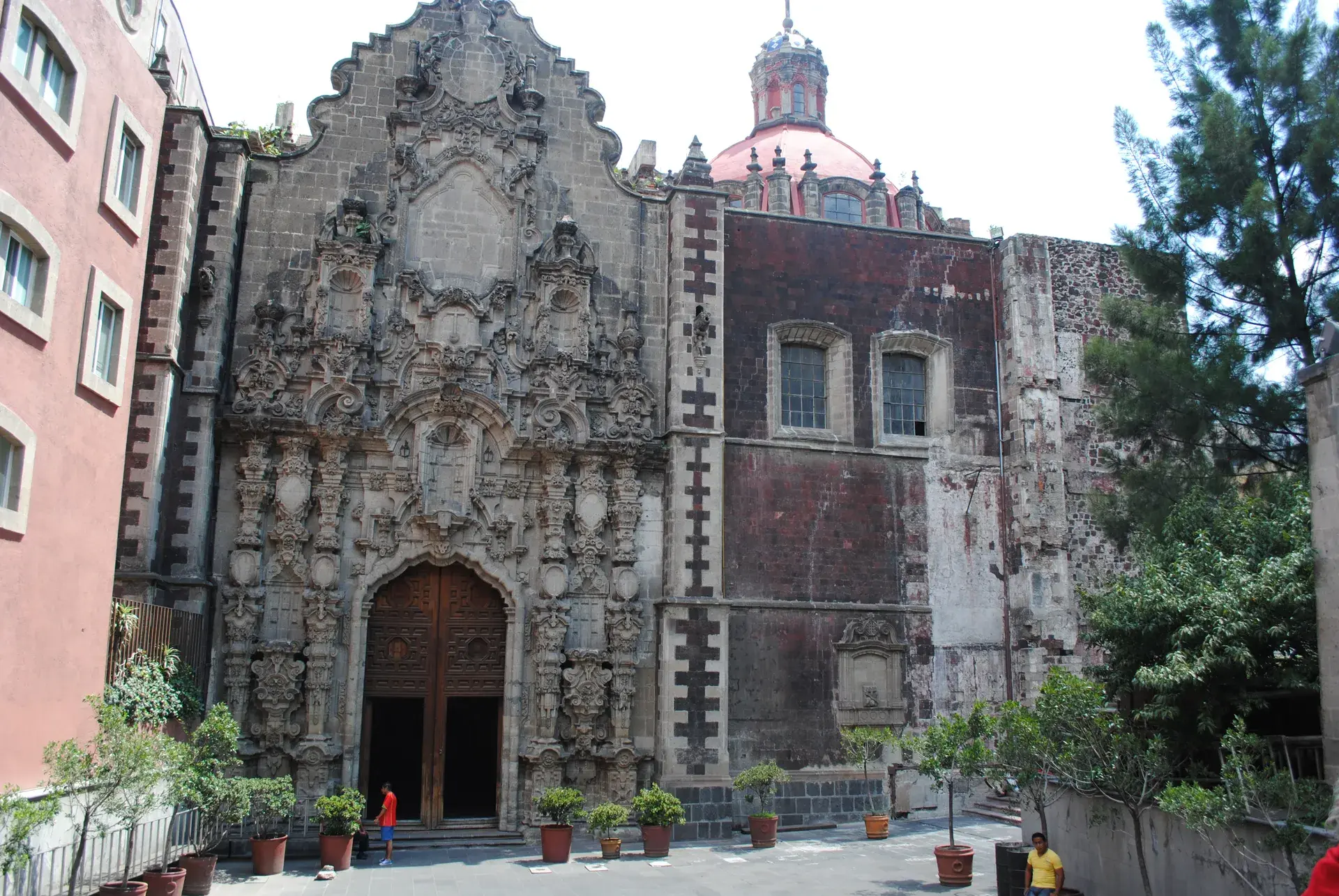
The current church is the third to be built on this plot. Constructed between 1710 and 1716, it replaced two earlier structures that sank into Mexico City's soft subsoil and were demolished. Even the existing building has sunk considerably, a fact evidenced by the steps leading down into the entrance. The ornate façade, which belongs to the Balvanera Chapel and now serves as the main entrance, was completed in 1766. Attributed to architect Lorenzo Rodríguez, it showcases a Baroque style with Neoclassical touches, featuring decorative volutes, estipite columns, and sculpted foliage.
A Center of Historical Events
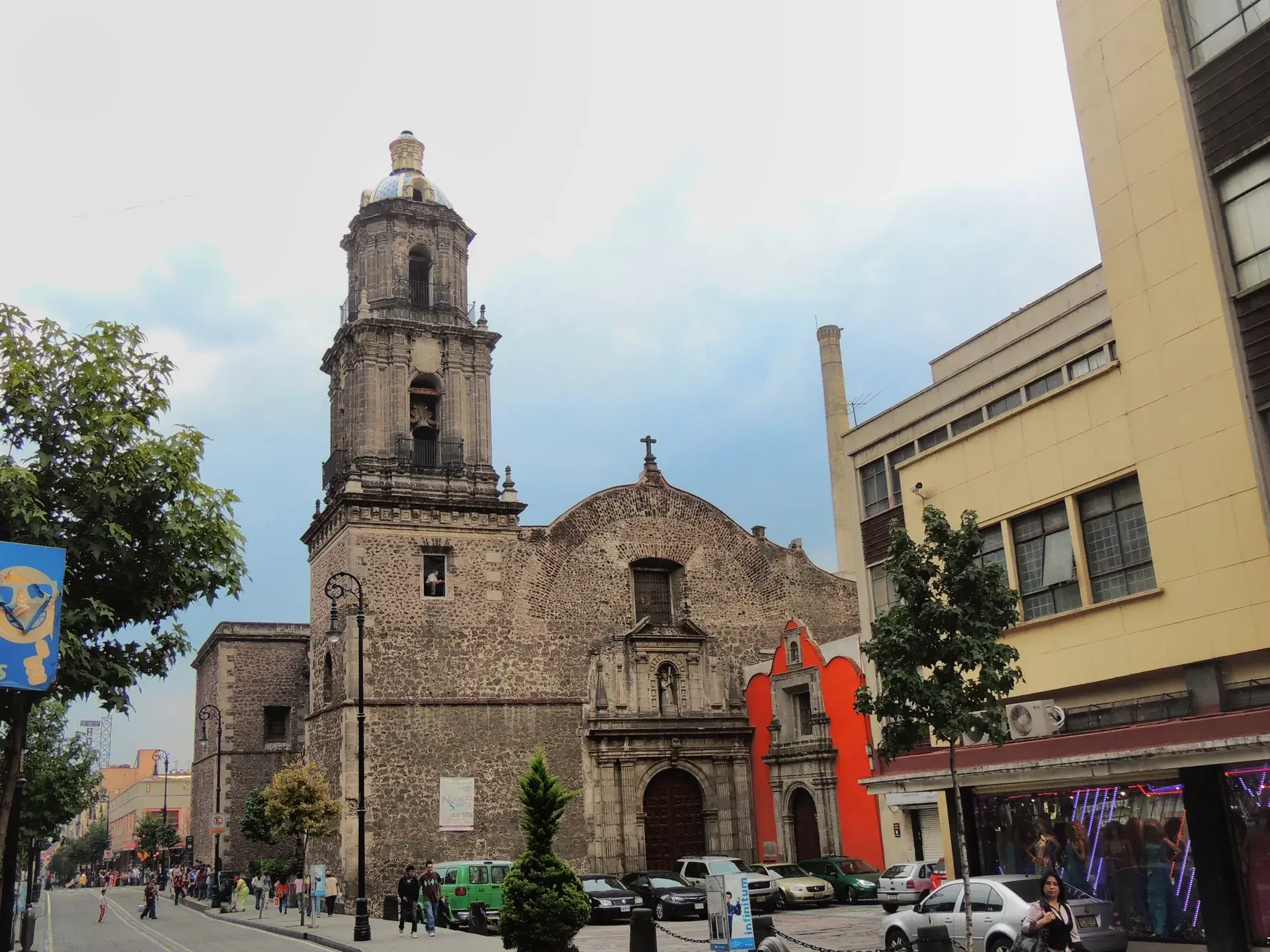
Throughout its history, the Church and Monastery of San Francisco were central to life in the city. A funeral mass for Hernán Cortés was held here when he was incorrectly presumed to have died in Central America. In 1692, during a major city rebellion, the Count of Galve and his wife sought refuge within the monastery's walls. The end of the Mexican War of Independence was marked here with a Te Deum as Agustín de Iturbide's Trigarante Army marched past.
From Sprawling Monastery to Solitary Church
At its greatest extent, the Franciscan monastery complex was one of the largest and most influential in Latin America, covering an enormous 32,224 square meters (approximately 8 acres). This changed dramatically following the Reform War of 1858-1861, when the monastery was dissolved and the government appropriated most of its property. Today, parts of the former complex have been repurposed, housing a Methodist church on Gante Street and bakeries like Panadería Ideal on 16 de Septiembre Street.
The Church Today
Currently, only the church building itself remains in the hands of the Catholic Church. It functions as an active place of worship, holding regular masses and religious ceremonies for the local community. The old atrium of the Balvanera Chapel is also occasionally used as a space for temporary exhibitions.
FAQ
Why was the Church of San Francisco built on that specific site?
It was built directly on the land of Moctezuma II's former zoological gardens, the Casa de las Fieras. This strategic placement physically and symbolically represented the Spanish and Christian conquest of the Aztec capital, Tenochtitlan.
Is the current Church of San Francisco the original building?
No, the current church, constructed between 1710 and 1716, is the third structure on the site. The first two churches sank into Mexico City's soft subsoil and had to be demolished.
What happened to the original Franciscan monastery complex?
At its peak, the monastery covered about 8 acres. However, following the Reform War in the mid-19th century, the monastery was dissolved and most of its property was seized by the government. Today, only the church building remains, with other parts of the former complex now housing different businesses and even another church.
What was unusual about Moctezuma's zoo, which was on this site?
Moctezuma II's zoo, the 'Casa de las Fieras,' was unique because in addition to a vast collection of animals like jaguars and exotic birds, it also housed a collection of humans with various physical deformities.