Estatua Ecuestre de Carlos IV: El Caballito in Mexico City
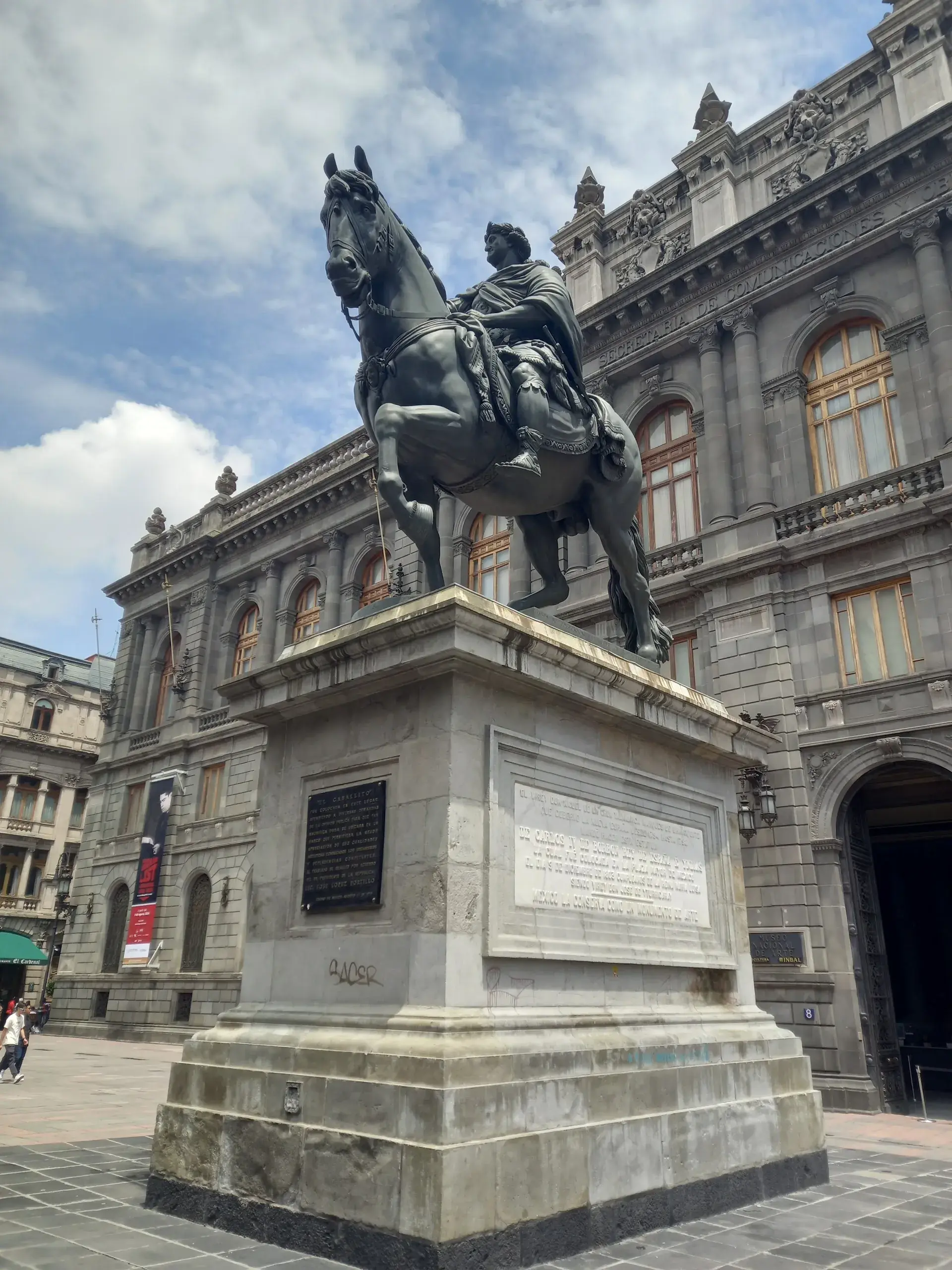
In the heart of Mexico City stands the Equestrian Statue of Charles IV, a monumental bronze sculpture popularly known as 'El Caballito' (The Little Horse). This imposing Neoclassical work represents a complex chapter of the city's history, transitioning from a symbol of imperial power to a celebrated monument of artistic achievement.
The Creation of a Masterpiece
Commissioned in 1796 by Viceroy Miguel de la Grúa Talamanca, the statue was the masterwork of Valencian architect and sculptor Manuel Tolsá, a leading figure of Neoclassicism in New Spain. The sculpture depicts King Charles IV of Spain attired as a Roman emperor, mounted on a trotting horse. Cast in a single, massive operation, the statue was completed and unveiled on December 9, 1803.
The bronze figure measures approximately 4.88 meters high and 5.40 meters long, with weight estimates ranging from 13 to 26 tons. Its technical and artistic quality was immediately recognized. The famed naturalist and geographer Alexander von Humboldt, who witnessed its unveiling, declared it second in artistic merit only to the equestrian statue of Marcus Aurelius in Rome.
A Turbulent History
The statue's existence has been marked by political upheaval. Ironically, just five years after its grand inauguration, King Charles IV was forced to abdicate in 1808, turning his monument into a tribute to a deposed monarch. Following Mexico's independence in 1821, strong anti-Spanish sentiment led to calls for the statue to be melted down for cannons or coins.
To save the sculpture from destruction, statesman Lucas Alamán had it moved in 1824 from its original location in the Zócalo to the courtyard of the Royal and Pontifical University of Mexico. As tensions eased, it was relocated in 1852 to a prominent intersection on the Paseo de la Reforma. Its final move came in 1979, placing it in its current home in the plaza named for its creator.
El Caballito Today: A Monument to Art
Today, 'El Caballito' stands in Plaza Manuel Tolsá, a public square in the city's historic center. It is fittingly situated in front of the National Museum of Art (MUNAL) and the Palacio de Minería, another of Tolsá's architectural triumphs. The statue's pedestal, designed by Lorenzo de la Hidalga in 1852, bears a crucial inscription.
This text clarifies that Mexico preserves the statue not as an homage to a Spanish king, but "as a monument to art." This conscious reinterpretation transforms the piece from a colonial symbol into a testament to human creativity, integrating it into the nation's evolving cultural identity. The statue also faced modern challenges, suffering irreversible damage during a botched restoration in 2013, which required an extensive federal project to repair between 2016 and 2017.
FAQ
Why is the statue of a Spanish king still in Mexico City?
After Mexico's independence, the statue was preserved not as an homage to King Charles IV, but "as a monument to art." An inscription on its base clarifies this, re-framing it as a testament to artistic skill rather than a symbol of colonial rule.
Who created the 'El Caballito' statue?
The statue was created by the Valencian architect and sculptor Manuel Tolsá. It was commissioned in 1796 and unveiled in 1803. Tolsá was a key figure who introduced Neoclassicism to New Spain.
How large is the Equestrian Statue of Charles IV?
The bronze statue is approximately 4.88 meters high, 5.40 meters long, and weighs between 13 and 26 tons. It is renowned for having been cast in a single piece.
Where is 'El Caballito' located now?
The statue is located in Plaza Manuel Tolsá in the historic center of Mexico City, directly in front of the National Museum of Art (MUNAL) and the Palacio de Minería.
Discover Mexico-city like never before
Dive into Mexico-city hidden stories and secret spots with Ciceru interactive tours.
Explore tour
Audioguide
Quizzes
Maps
Solo
Couples
Groups & families

© Photo by Alejandro Dolo via Google Maps · Google Places