MUNAL: Mexico's National Art Museum in a Historic Palace
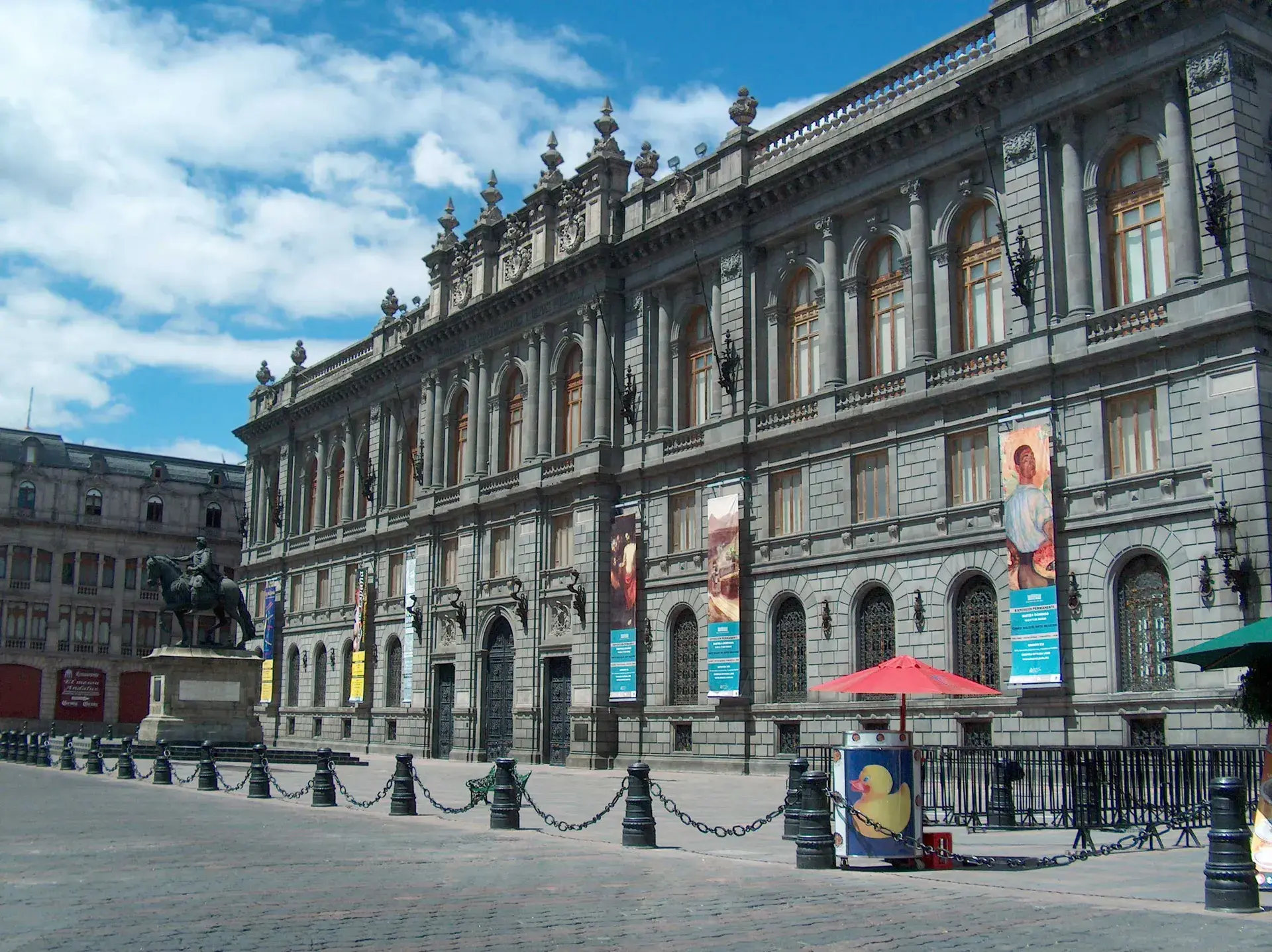
In the heart of Mexico City's Historic Center stands the Museo Nacional de Arte (MUNAL), a cultural institution housed within a magnificent palace. The building itself is a testament to the city's layered history, a symbol of early 20th-century modernization built upon land that has witnessed centuries of transformation, from the Aztec capital of Tenochtitlan to the colonial era.
A Palace for a New Century
The structure that now contains MUNAL was originally commissioned as the Palace of Communications and Public Works. Constructed between 1904 and 1911, it was intended to be a symbol of Mexico's commitment to modernization. The Italian architect Silvio Contri designed the building in an eclectic style blending neoclassical and 'modernismo' elements, utilizing new construction techniques and decorative metalwork. Its construction took place on the former site of the colonial-era San Andres and Gonzalez Echeverria hospitals, demonstrating the continuous evolution of this urban space.
During its time as a government building, President Porfirio Díaz frequently used the grand Reception Hall for public declarations and to host foreign dignitaries. The ornate decorative elements, including door knockers, window frames, leaded crystal, and furniture, were all meticulously crafted by the Coppedé family of Florence, Italy, adding to the palace's opulence.
From Government Hub to Art Sanctuary
Before becoming a museum, the building served various roles. After its initial function as the Secretariat of Communications, it later housed the General Archive of the Nation. In 1982, the building was transformed into the National Art Museum. It underwent a significant period of remodeling and technical upgrades, reopening to the public in the year 2000.
Today, MUNAL is the national art museum of Mexico. Its permanent collection comprises over 3,000 pieces, tracing the history of Mexican art from the 16th century to the mid-20th century. The collection's origins can be traced back to the founding of the Academy of San Carlos in 1783, the first art school in the Americas. The museum's 5,500 square meters of exhibition space host both permanent and temporary exhibitions. The opulent Reception Hall and the Patio de los Leones continue to be used for cultural events like concerts and book-signings.
The Journey of 'El Caballito'
Standing prominently in the plaza outside the museum is the equestrian statue of Charles IV of Spain. Known as 'El Caballito,' this bronze sculpture was created by the renowned Neoclassical artist Manuel Tolsá in 1796. The statue has a notable history of its own, having been relocated three times since Mexican independence. These moves were often made not due to political objections to the colonial figure, but for the statue's preservation as a significant work of art.
FAQ
What was the MUNAL building originally used for?
The building was originally the Palace of Communications and Public Works, constructed between 1904 and 1911 as a symbol of Mexico's modernization.
What kind of art is in the National Art Museum?
MUNAL's collection includes over 3,000 pieces of Mexican and international artworks, with a focus on the period from the 16th century to the mid-20th century.
What is the statue in front of the National Art Museum?
The statue is a bronze equestrian monument of Charles IV of Spain, known as 'El Caballito.' It was sculpted by Manuel Tolsá in 1796.
Who designed the National Art Museum building?
The building, formerly the Palace of Communications, was designed by Italian architect Silvio Contri. The ornate decorative elements were crafted by the Coppedé family of Florence, Italy.