Panorama Mesdag: A 19th-Century Masterpiece in The Hague
Panorama Mesdag in The Hague stands as a unique cultural-historical monument, but its existence today is owed to a remarkable act of artistic preservation. The creator, Hendrik Willem Mesdag, purchased his own masterpiece after the commissioning company went bankrupt, sustaining it at a personal financial loss for decades to ensure its survival.
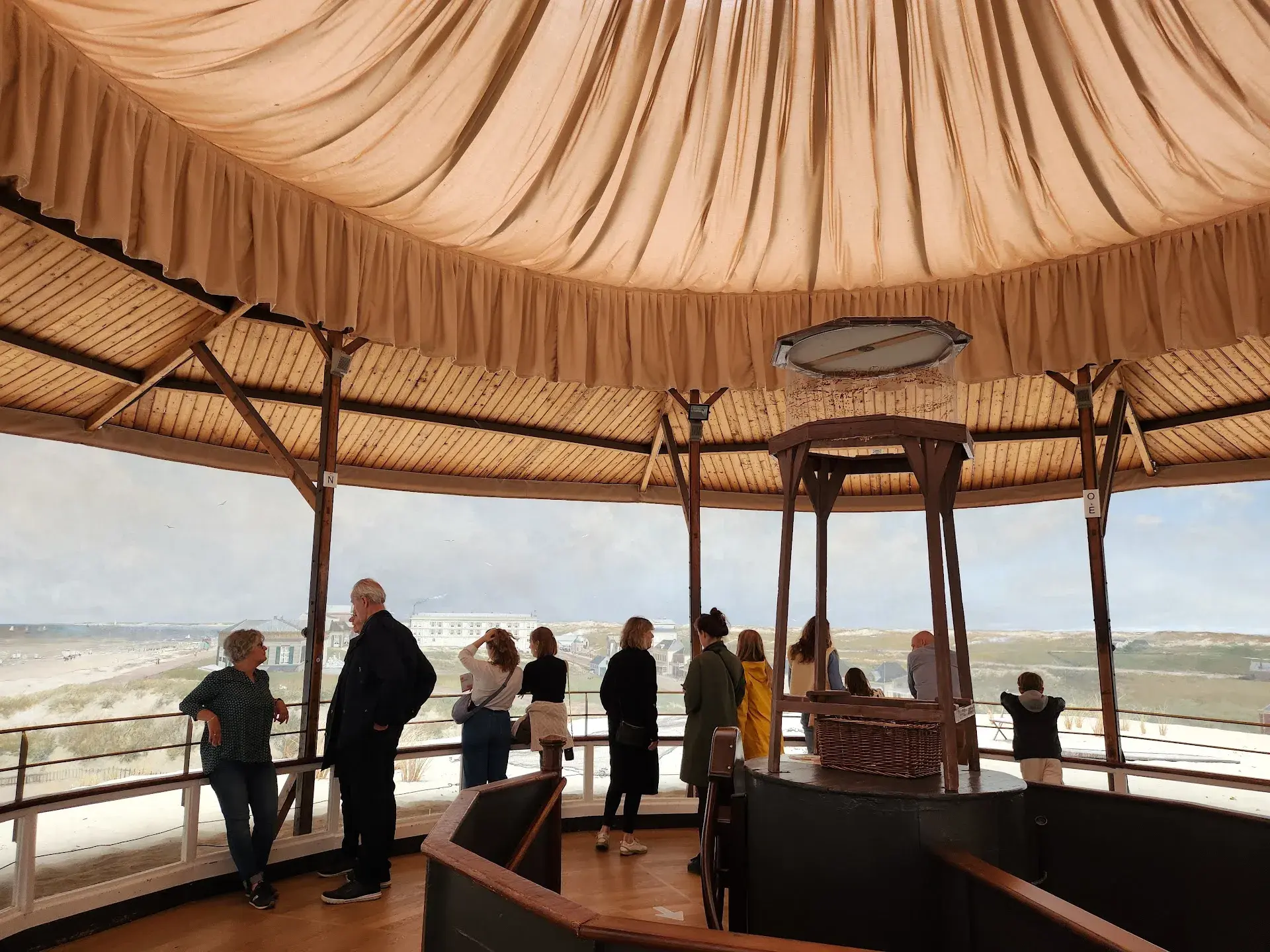
Today, it is celebrated as the world's oldest panorama still situated in its original location and the last surviving maritime panorama in the Netherlands, offering a tangible link to 19th-century visual entertainment that predated film.
A Monumental Creation
Constructed between 1880 and 1881, the Panorama of Scheveningen was born from the 19th-century 'panorama craze.' A Belgian company commissioned Hendrik Willem Mesdag, a prominent marine painter of The Hague School, to create a 'painting without borders.' In a remarkable feat, Mesdag and his team completed the monumental circular painting in just four months.
The canvas measures an impressive 114.5 meters in circumference and 14.6 meters high. Mesdag led a team of fellow artists, including his wife Sientje Mesdag-van Houten, Théophile de Bock who painted the sky and dunes, George Hendrik Breitner who rendered the village details with photographic accuracy, and Bernard Blommers who added figures to the beach scenes.
An Artist's Sacrifice
Despite opening to the public on August 1, 1881, the panorama faced financial trouble. High ticket prices led to low visitor numbers, and the Belgian company that commissioned it went bankrupt by 1886. To prevent the destruction of what he considered his most important work, Mesdag purchased the entire panorama and its purpose-built industrial building.
For the rest of his life, Mesdag operated the museum at a considerable financial loss, driven by a desire to preserve the appearance of Scheveningen for posterity. In 1910, he established a family business to secure its future beyond his lifetime. It wasn't until the municipality of The Hague rented the complex from 1918 to 1934 that visitor numbers significantly increased.
Artistic Details and Secrets
The painting is renowned for its immersive quality, enhanced by hidden skylights in the roof that manipulate natural light, creating ever-changing visual effects. The pursuit of realism was paramount; Mesdag and Breitner utilized preparatory sketches and photographs to ensure the topographical accuracy of Scheveningen's buildings and shadows.
Instead of a traditional signature, Mesdag included a subtle personal mark: a depiction of his wife, Sientje, painting on the beach under a white parasol. The work also received high praise from another famous artist. After a visit in August 1881, Vincent van Gogh wrote to his brother Theo that the painting's "only fault is not to have any faults."
The Panorama Today
Panorama Mesdag operates as a museum and a major cultural attraction in The Hague. Its central feature remains the iconic 360-degree panorama. The museum also holds a permanent collection of other paintings by Hendrik Willem Mesdag and Sientje Mesdag-van Houten, alongside a rotating program of temporary exhibitions. The venue also offers its historic space for lectures and private events.
FAQ
Who painted the Panorama Mesdag?
Hendrik Willem Mesdag was the principal creator, leading a team of artists. His wife, Sientje Mesdag-van Houten, along with fellow Hague School artists Théophile de Bock, George Hendrik Breitner, and Bernard Blommers, all contributed to the final painting.
How large is the Panorama Mesdag painting?
The circular painting is a monumental work, measuring 114.5 meters in circumference and 14.6 meters in height, offering a complete 360-degree view of Scheveningen in 1881.
What is special about the Panorama Mesdag?
It is the world's oldest panorama still housed in its original, purpose-built location. Its survival is owed to the artist, Hendrik Willem Mesdag, who bought it back after the commissioning company went bankrupt and operated it at a personal loss for decades.
Did Vincent van Gogh see the Panorama Mesdag?
Yes, Vincent van Gogh visited in August 1881 and was deeply impressed. He wrote to his brother Theo that the painting's 'only fault is not to have any faults,' showing his immense respect for the work.
Discover The-hague like never before
Dive into The-hague hidden stories and secret spots with Ciceru interactive tours.
Explore tour
Audioguide
Quizzes
Maps
Solo
Couples
Groups & families

© Photo by N O via Google Maps · Google Places