Peace Palace: A Symbol of Justice in The Hague
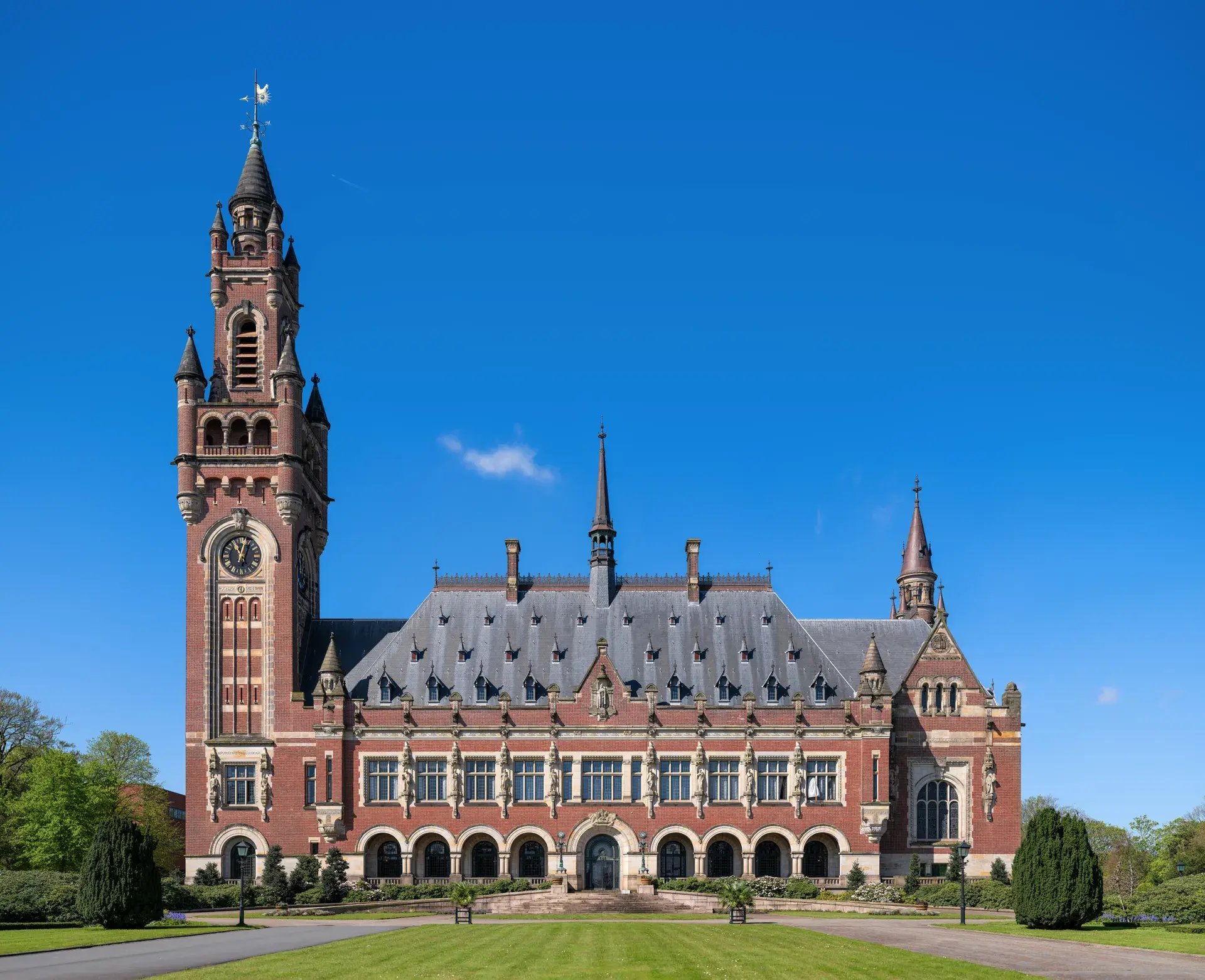
The Peace Palace (Vredespaleis) in The Hague stands as a magnificent, Neo-Renaissance symbol of international law and justice. Officially opened in 1913, this iconic building serves as the home of the International Court of Justice, solidifying The Hague's identity as the 'International City of Peace and Justice'.
A Vision for Peace
The idea for the Peace Palace grew from a late 19th-century peace movement aimed at preventing large-scale conflict. Russian Czar Nicholas II initiated the First Hague Peace Conference in 1899, which led to the creation of the Permanent Court of Arbitration (PCA). To provide a worthy home for this new body, Scottish-American philanthropist Andrew Carnegie donated US$1.5 million for the construction of a 'Temple of Peace'. The foundation stone was laid during the Second Hague Peace Conference in 1907, with 44 countries participating.
Architectural Marvel and Global Contributions
Designed by French architect Louis M. Cordonnier with Dutch associate J.A.G. van der Steur, the Peace Palace is a stunning example of Neo-Renaissance architecture, featuring an iconic clock tower that rises 80 meters. The building itself is a testament to global cooperation. Following a proposal by French delegate Baron d'Estournelles de Constant, nations from around the world contributed materials. The interior showcases Italian marble, Japanese silk tapestries, a porcelain fountain from Denmark, a large rug from Türkiye, and monumental vases from China. Even the clock in the tower was a gift from Switzerland.
The Heart of International Law
Today, the Peace Palace is a central hub for international law. It houses two of the world's most important legal bodies: the Permanent Court of Arbitration (PCA) and the International Court of Justice (ICJ), the principal judicial organ of the United Nations. The palace also contains the prestigious Peace Palace Library of International Law and hosts The Hague Academy of International Law. Managed by the Carnegie Foundation, the building facilitates the peaceful settlement of disputes through numerous hearings each year.
Grounds and Symbols of Peace
Set within seven hectares of parkland, the grounds of the Peace Palace offer their own symbols of global unity. Near the entrance, the Eternal Peace Flame, inaugurated in 2002, burns continuously. It is encircled by the World Peace Path, a mosaic composed of 196 stones from 196 different countries, including a piece of the Berlin Wall and a stone from Robben Island. While access to the palace interior is limited to guided tours, the Visitors Centre and the surrounding grounds are publicly accessible points of interaction.
A Surprising Detail
Despite its secular mission and Andrew Carnegie's vision of a non-religious 'Temple of Peace', the building holds a surprising element. On its second floor, a statue of Christ is displayed, a notable exception within the otherwise secular design of this global institution.
FAQ
What important courts are in the Peace Palace?
The Peace Palace houses the International Court of Justice (ICJ), which is the principal judicial body of the United Nations, and the Permanent Court of Arbitration (PCA).
Who paid for the construction of the Peace Palace?
The construction was funded by a US$1.5 million donation from Scottish-American industrialist and philanthropist Andrew Carnegie.
Can the public visit the Peace Palace?
The public can visit the grounds, the Visitors Centre, and see the Eternal Peace Flame. However, access to the interior of the palace is only possible through guided tours, which must be booked in advance.
When was the Peace Palace built?
The groundbreaking for the Peace Palace was in 1907, and it officially opened on August 28, 1913.