Sigismund's Column: Warsaw's Historic Landmark
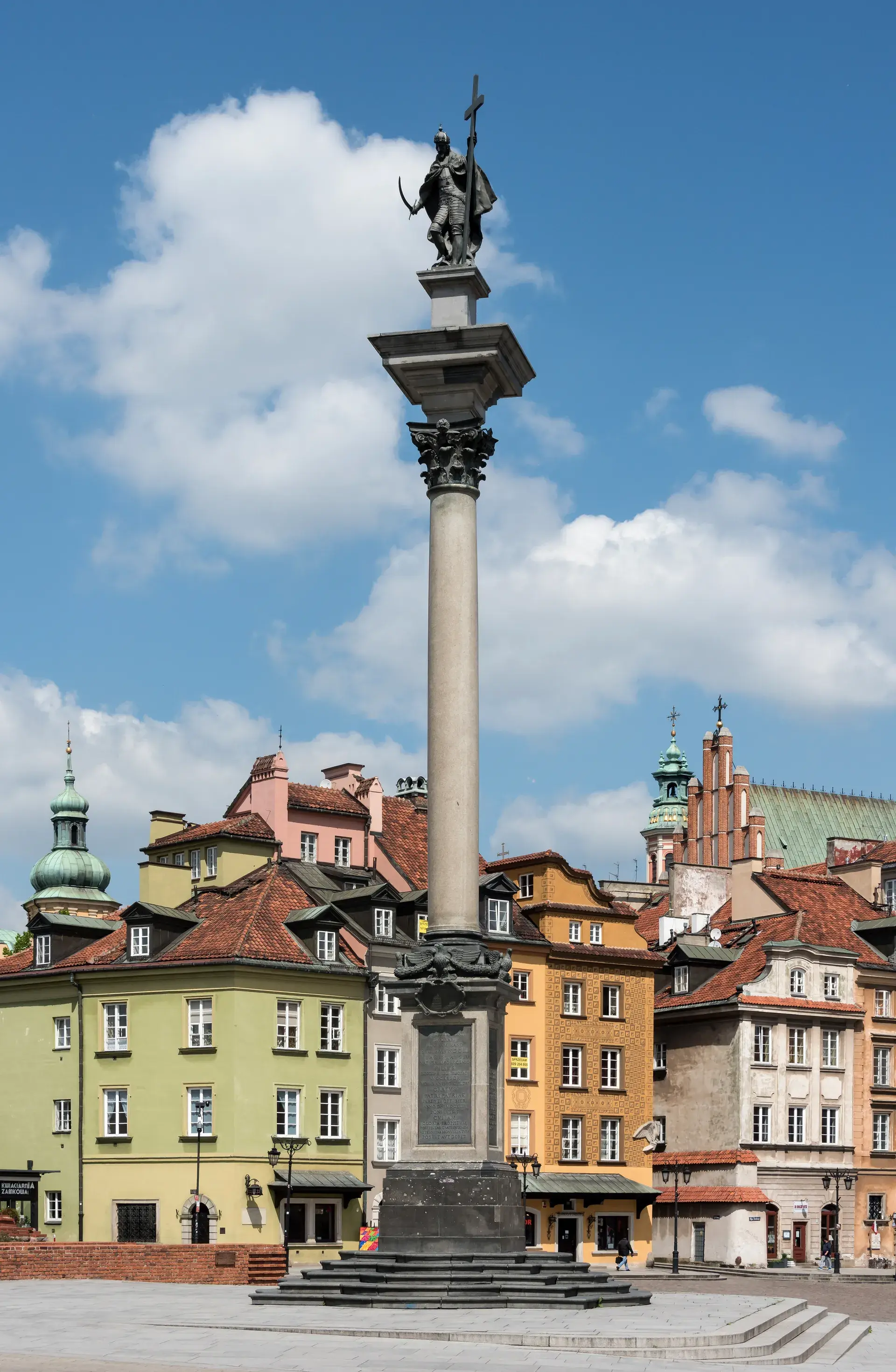
Dominating Castle Square in Warsaw, Sigismund's Column is a striking 17th-century monument that serves as a popular meeting point and a powerful symbol of the city's history. Topped with a bronze statue of King Sigismund III Vasa, the column commemorates a pivotal moment in Polish history and stands as a testament to Warsaw's enduring spirit.
A Royal Tribute and Controversial Design
Erected in 1644, the monument was commissioned by King Władysław IV Vasa to honor his father, King Sigismund III Vasa. The tribute marks Sigismund III's significant decision to relocate the Polish capital from Kraków to Warsaw in 1596. This move fundamentally reshaped Warsaw's destiny, elevating it to national prominence.
The Baroque-style Corinthian column was designed by Agostino Locci and Constantino Tencalla, with the statue sculpted by Clemente Molli and cast by Daniel Tym. Its unveiling on November 24, 1644, was not without controversy. As the first secular monument in the form of a column in modern European history, it sparked a dispute with papal nuncio Mario Filonardi, who protested honoring a non-religious figure in a form traditionally reserved for emperors or saints.
Destruction and Miraculous Survival
The column has faced numerous challenges throughout its history, including damage during 17th and 18th-century Swedish invasions. Its most dramatic moment occurred on September 1, 1944, during the Warsaw Uprising. A German tank demolished the column's shaft, sending the monument crashing to the ground.
Miraculously, the bronze statue of King Sigismund survived the fall with only minor damage. It was carefully transported to the nearby St. Anne's Church for safekeeping while the city faced immense devastation.
A Symbol of Resilience
After World War II, Sigismund's Column became a key symbol of Warsaw's identity as the 'Phoenix City'—rebuilt from ashes. A special committee was formed in 1945 to oversee its restoration, with architect Stanisław Żaryn designing the reconstruction.
In 1949, the original statue was placed atop a new granite column, sourced from the Strzegom mine. It was re-erected a few meters from its original location. As a tangible link to the past, fragments of the original, war-damaged column are deliberately displayed near the southern wall of the Royal Castle.
The Column Today
Today, Sigismund's Column is one of Warsaw's most recognizable landmarks and a central hub in the bustling Castle Square. It serves as a popular meeting point for locals and tourists and is often the starting point for tours of the Royal Castle and the Old Town.
The square surrounding the column is a lively public space, hosting various street concerts, festivals, and public events. It has also been the site of significant political gatherings, reflecting its continuing importance in the city's civic life.
FAQ
Why was Sigismund's Column built?
Sigismund's Column was commissioned in 1644 by King Władysław IV Vasa to honor his father, King Sigismund III Vasa, who relocated the Polish capital from Kraków to Warsaw in 1596.
What happened to Sigismund's Column during World War II?
During the Warsaw Uprising on September 1, 1944, the column was destroyed by a German tank. The bronze statue of the king, however, survived the fall with only minor damage.
Is the current Sigismund's Column the original one?
The bronze statue is the original, but the column is a reconstruction. The current granite column was erected in 1949 to replace the one destroyed in WWII. Fragments of the older, damaged column are on display near the Royal Castle.