St. Anne's Church, Warsaw: History & Views
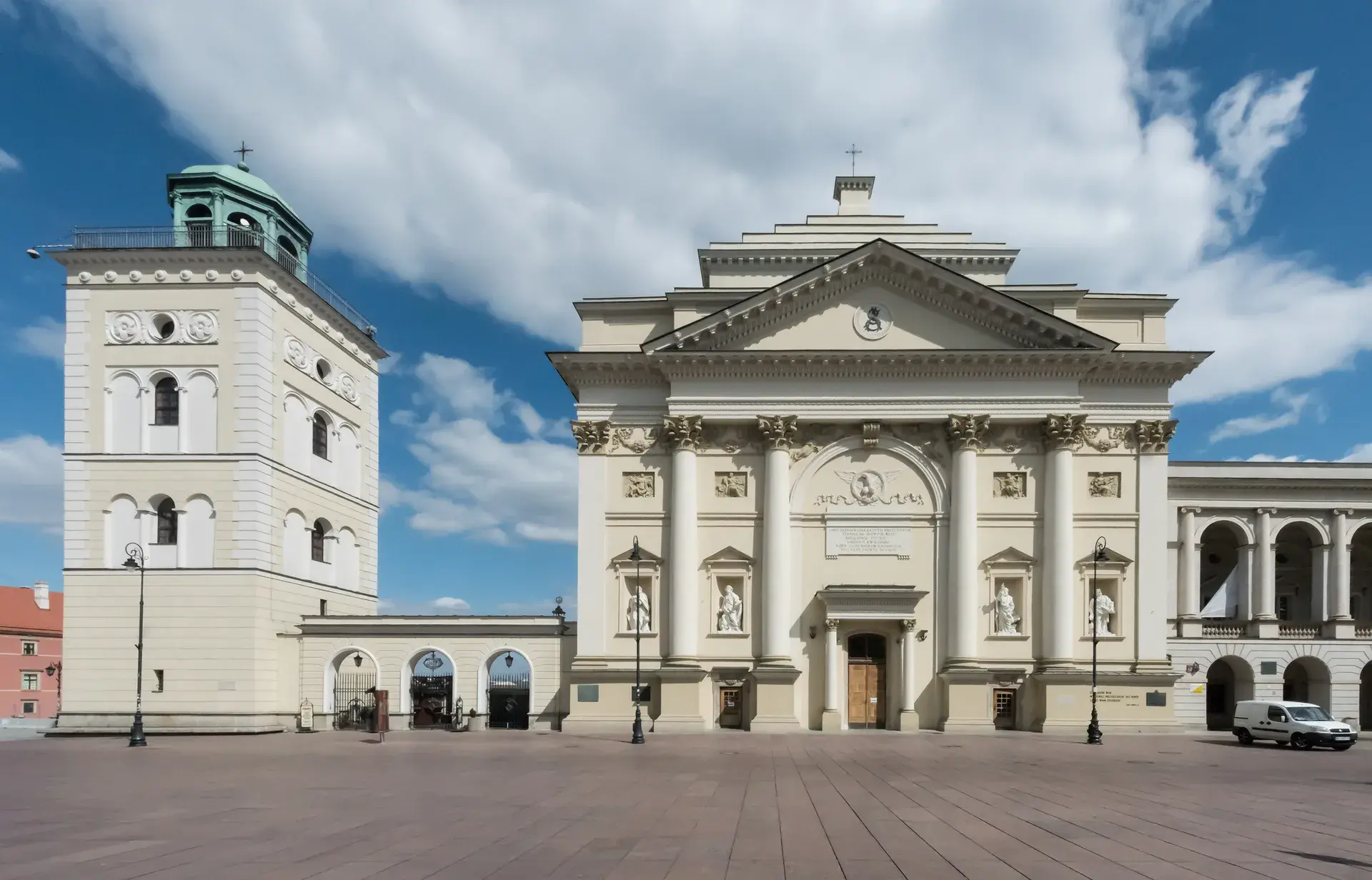
Marvel at the imposing 18th-century Neoclassical facade of St. Anne's Church, known in Polish as Kościół św. Anny, standing grandly at the gateway to Warsaw's Old Town. Located at Krakowskie Przedmieście 68, this church is a pivotal landmark on the Royal Route and a testament to the city's enduring history.
A History of Resilience
Founded in 1454 by Duchess Anna Fiodorowna, St. Anne's was initially a Gothic structure built for Franciscan friars. Over the centuries, it has undergone numerous transformations. A significant reconstruction between 1786 and 1788, ordered by King Stanisław August Poniatowski, gave the church its elegant Neoclassical facade, designed by architect Piotr Aigner, which remains its defining feature.
The church and the adjacent Castle Square have been central to Polish history. The square was the site of patriotic demonstrations before the 1863 January Uprising, where Russian forces shed blood in 1861. During the Warsaw Uprising of 1794, Bishop Józef Kossakowski, deemed a traitor, was publicly executed in front of the church.
Despite heavy damage during World War II, particularly to its roof which was destroyed by fire in 1944, the church's walls and bell tower largely survived. This makes it a rarity, as much of the Old Town was almost completely demolished. By 1962, St. Anne's was meticulously reconstructed to its 1788 appearance, symbolizing Warsaw's resilience.
Architectural and Artistic Highlights
The church's exterior is adorned with statues of the Four Evangelists, sculpted by Jakub Monaldi and Franciszek Pinck. In contrast to the Neoclassical facade, the interior is a lavish display of Baroque style. It features magnificent frescoes by Bernardine priest Walenty Żebrowski, completed around 1750, which depict scenes from the life of Saint Anne.
The church also houses an impressive Baroque organ crafted by Fryderyk Rudolf in the late 18th century. Its excellent acoustics make it a prime venue for music. A hidden architectural treasure is the cloister leading to the sacristy, which contains the only surviving diamond vault in Warsaw, dating back to 1514.
The Church and Bell Tower Today
Since 1928, St. Anne's has served as an academic church, the main parish for Warsaw's academic community. It is the starting point for the annual Warsaw Academic Metropolitan Pilgrimage. The church frequently hosts organ concerts, which are often held daily at noon during the summer months.
The separate bell tower, added in the 16th century, is now a popular observation terrace known as Taras Widokowy. It provides panoramic views of the UNESCO-listed Old Town, the Royal Castle, and the Vistula River, making it a major attraction for both locals and tourists.
FAQ
What is special about St. Anne's Church in Warsaw?
St. Anne's Church is notable for its blend of a Neoclassical facade and a rich Baroque interior. Uniquely, its original walls and bell tower largely survived WWII, and it was restored to its 1788 appearance, unlike much of the Old Town which was rebuilt from scratch.
Can you go up the tower at St. Anne's Church?
Yes, the separate bell tower adjacent to the church serves as an observation terrace called Taras Widokowy. It offers panoramic views of Warsaw's Old Town, the Royal Castle, and the Vistula River.
What is the oldest surviving feature of St. Anne's Church?
The cloister leading to the sacristy contains the only surviving diamond vault in Warsaw, an architectural feature that dates back to 1514. The church itself was originally founded in 1454.
What is St. Anne's Church used for today?
It serves as the main Roman Catholic academic church for Warsaw's university community. It also hosts regular organ concerts, and its bell tower is a popular tourist observation deck.