The Royal Castle in Warsaw: A Reborn National Symbol
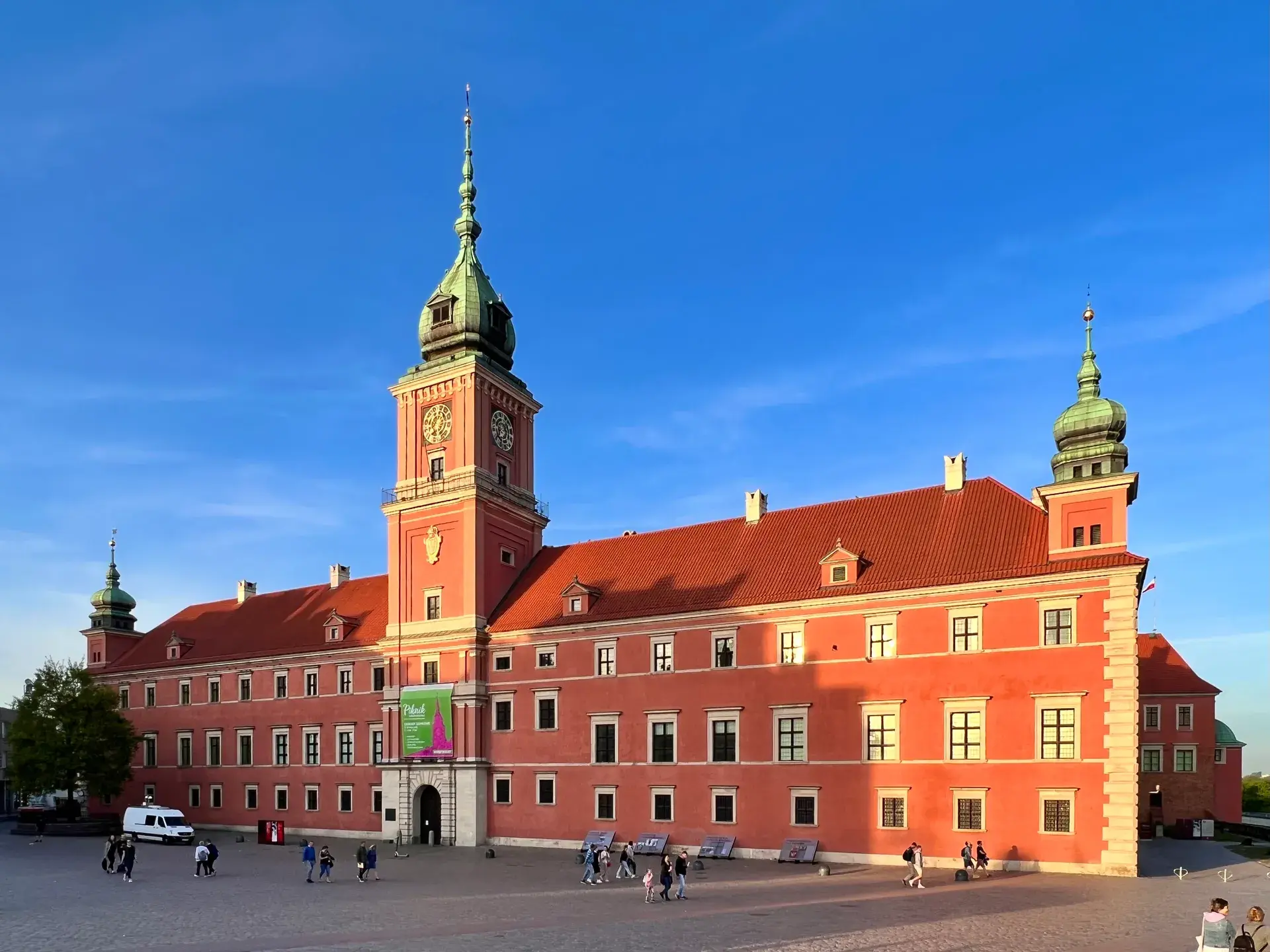
The Royal Castle in Warsaw stands majestically over Castle Square, a powerful symbol of Polish sovereignty and resilience. Though its origins trace back to a 14th-century tower for the Dukes of Masovia, the castle's grand Mannerist-Baroque form was established between 1598 and 1619 under King Sigismund III Vasa, who moved Poland's capital to Warsaw. Later, during the reign of King Stanisław August Poniatowski, elegant early classicism was introduced to its interiors.
A Center of Polish History
The castle has been at the heart of pivotal moments in the nation's history. After the 1569 Lublin Union, it became a regular meeting place for the Polish Parliament (Sejm). It was a cultural hub, hosting the first Polish opera in 1628. On May 3, 1791, the castle witnessed the drafting and adoption of Europe's first codified national constitution. Napoleon Bonaparte resided here from 1806-1807, deciding to establish the Duchy of Warsaw within its walls. In 1831, during the November Uprising, the Sejm met in the castle to dethrone Tsar Nicholas I as the Polish king.
Destruction During World War II
The castle's greatest tragedy occurred during World War II. It suffered damage from Luftwaffe bombing in September 1939. Subsequently, German forces systematically stripped the building of its valuable elements, including floors, marble, and sculptures, which were shipped to Germany or stored in Kraków. Following the failed Warsaw Uprising, Adolf Hitler personally ordered the castle's complete demolition. In September 1944, German sappers blew up the structure, leaving it in ruins as part of a plan to erase Warsaw's cultural identity.
A Monumental Reconstruction
Despite its total destruction, the spirit of the castle endured. Professor Stanisław Lorentz of the National Museum had played a crucial role in salvaging art and architectural elements during the war, anticipating its eventual rebirth. The official decision to rebuild was made in January 1971. The monumental reconstruction effort, which lasted until 1984, was largely funded by voluntary public donations from across the nation.
The restoration was a feat of historical accuracy, guided by architects like Jan Zachwatowicz. Incredibly, the detailed 18th-century cityscapes by painter Bernardo Bellotto, known as Canaletto, served as indispensable architectural blueprints. In a deeply symbolic act in 1974, the clock on Sigismund's Tower was restarted, set to the exact time the first bombs struck Warsaw in 1939. This act of reconstruction was so exceptional that the castle and Old Town were named a UNESCO World Heritage Site in 1980.
The Royal Castle Today
Today, the Royal Castle serves as a state museum and a national historical monument. It is Poland's second most visited art museum, welcoming millions of visitors to its meticulously restored royal apartments and state rooms, including the Throne Room, Ballroom, and Senate Hall. These rooms house significant collections of Polish and European art. The castle remains a vibrant cultural center, hosting exhibitions, concerts, and state ceremonies. Its gardens offer recreational space with views over the Vistula River.
FAQ
Is the Royal Castle in Warsaw the original building?
No, the Royal Castle is a meticulous reconstruction. The original structure was deliberately demolished by German forces in 1944 during World War II. The rebuilding effort took place from 1971 to 1984 and was financed largely by public donations.
How was the Royal Castle rebuilt so accurately after its destruction?
The reconstruction relied heavily on detailed 18th-century paintings of Warsaw created by the artist Bernardo Bellotto, known as Canaletto. His precise cityscapes served as architectural blueprints for the restoration of the castle and the surrounding Old Town.
Why is the Royal Castle a UNESCO World Heritage Site?
The Royal Castle and the Warsaw Old Town were designated a UNESCO World Heritage Site in 1980. The recognition was granted specifically because of the exceptional and comprehensive reconstruction after its near-total destruction in World War II, which stands as a testament to national resilience and cultural preservation.
What is the Royal Castle in Warsaw used for today?
Today, the Royal Castle functions as a state museum, a national historical monument, and a vibrant cultural center. It houses art collections, hosts exhibitions and concerts, and is used for official state ceremonies. Visitors can explore the restored royal apartments and gardens.