Palácio de Seteais: Sintra's Neoclassical Palace
Beneath a towering triumphal arch, a neoclassical estate offers sweeping views and a staged echo originally designed to astonish 19th-century royalty. Situated along the classic route connecting Sintra's historic town center to the Palace of Monserrate, Palácio de Seteais provides a stylistic pivot between the region's medieval core and the sweeping 19th-century Romanticism that defines the mountain.
Neoclassical Origins and High Society
The estate was commissioned in the 1780s by Daniel Gildemeester, the Dutch consul in Portugal, who originally named it Quinta da Alegria. Built during the Age of Enlightenment, the property reflected a neoclassical restraint that contrasted sharply with Sintra's Manueline and Gothic traditions. Gildemeester was known for his lavish lifestyle, famously keeping a resident violinist on the property to ensure continuous music filled the corridors during his gatherings.
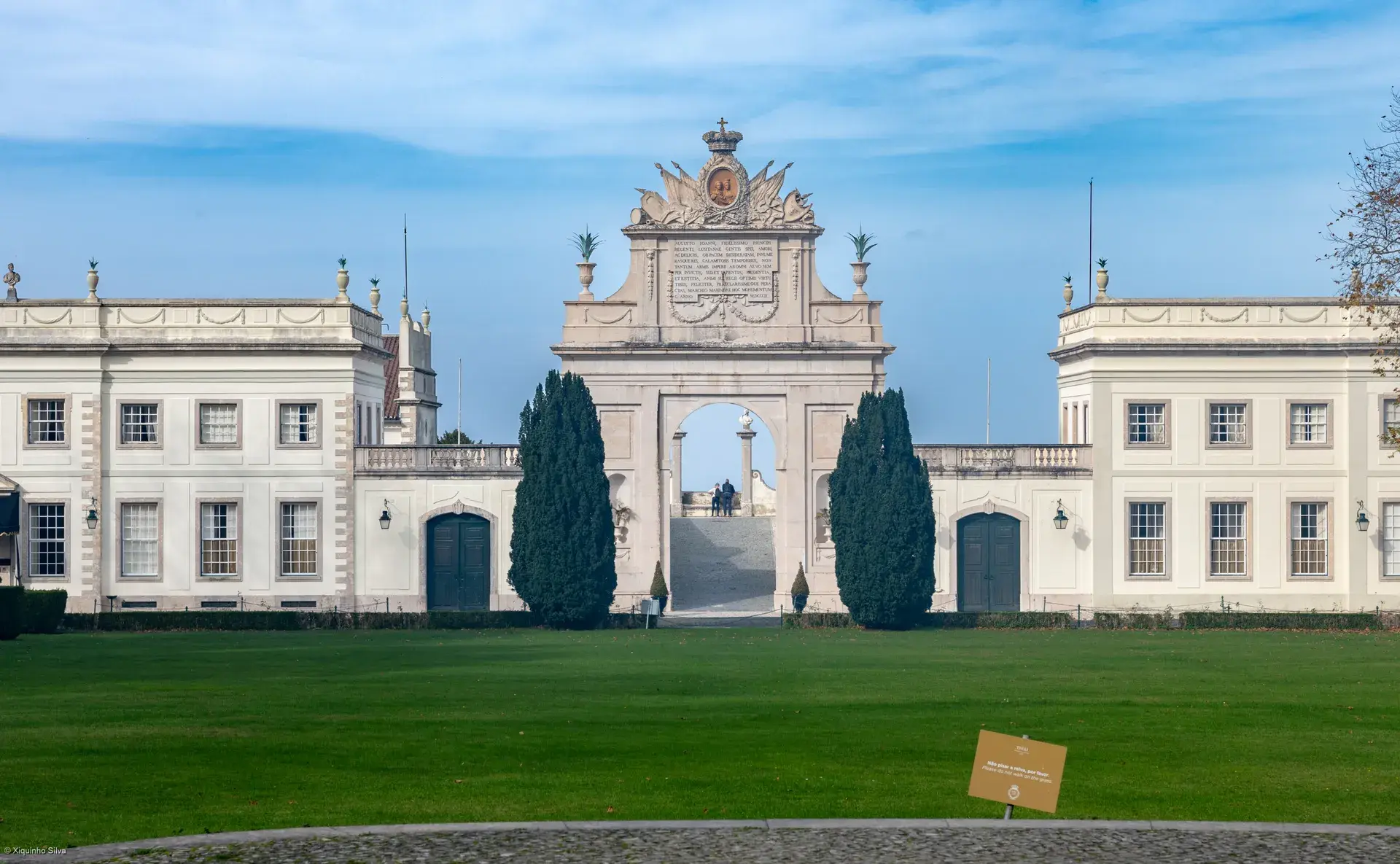
In 1797, the 5th Marquis of Marialva acquired the property. Under his ownership, the estate became a prominent center for high-society banquets. The Marquis doubled the building's footprint, expanding it into an elegant U-shaped layout that emphasized symmetry and balance.
The Triumphal Arch and Framed Vistas
The architectural centerpiece of Palácio de Seteais is the Neoclassical triumphal arch built in 1802. Attributed to architect Francisco Leal Garcia, the arch connects the symmetrical residential wings. It was constructed to commemorate a royal reception for Prince Regent João and Princess Carlota Joaquina, and is topped with their effigies alongside the Portuguese royal coat of arms.
Standing beneath this central arch creates a remarkable physical frame. On one side, it perfectly aligns with vistas of the lush Sintra mountains, the Moorish Castle, and the peaks around Pena Palace. On the opposing side, sweeping sightlines showcase sloping valleys extending toward the Atlantic coast.
Folklore and the Seven Sighs
The estate's name, "Seteais," is shrouded in both romantic folklore and historical anecdote. According to local tradition, the name refers to a captive Moorish princess who was cursed to die upon uttering her seventh sigh, or "sete ais."
Another historical tale claims that the Marquis of Marialva once secretly stationed seven servants throughout the garden labyrinth. To impress visiting guests, the servants were instructed to shout "Ai!" in sequence, artificially creating a stunning seven-fold echo. Despite these theatrical legends, a manuscript preserved in the Sintra Municipal Library suggests a more practical origin, noting the name stems from "Centeais," referring to fields of rye that once covered the surrounding slope.
A Modern Luxury Heritage Retreat
Following periods of neglect in the 19th century, the Portuguese state purchased the palace in 1946. In the mid-1950s, renowned architect Raúl Lino oversaw a careful restoration, transforming the property into an upscale heritage hotel. Today, it operates as the 5-star luxury Valverde Sintra Palácio de Seteais.
While guest rooms remain private, the estate frequently welcomes non-resident visitors. The grounds feature manicured boxwood hedges cut into geometric patterns and lemon trees, offering a quiet, formal contrast to Sintra's wild, mist-covered forests. Inside, the public staterooms showcase exquisite hand-painted trompe-l'œil murals and frescoes attributed to French painter Jean-Baptiste Pillement and his workshop.
FAQ
Can non-guests visit Palácio de Seteais?
Yes. While the hotel's guest rooms are private, non-resident visitors can access the manicured hedge gardens, outdoor terrace, and dining venues. The property also frequently serves as a venue for classical music recitals and weddings.
How did Palácio de Seteais get its name?
The name's origin is debated. A practical theory based on a municipal manuscript suggests it stems from "Centeais," meaning fields of rye. However, romantic folklore links it to a captive Moorish princess who died upon her seventh sigh ("sete ais"), and another anecdote involves a staged seven-fold echo created by hidden servants.
Who built Palácio de Seteais?
The estate was originally commissioned in the 1780s by Dutch consul Daniel Gildemeester. It was later acquired in 1797 by the 5th Marquis of Marialva, who doubled its footprint into the current U-shaped layout and added the property's iconic triumphal arch in 1802.