Darvas-La Roche House: Oradea's Art Nouveau Museum
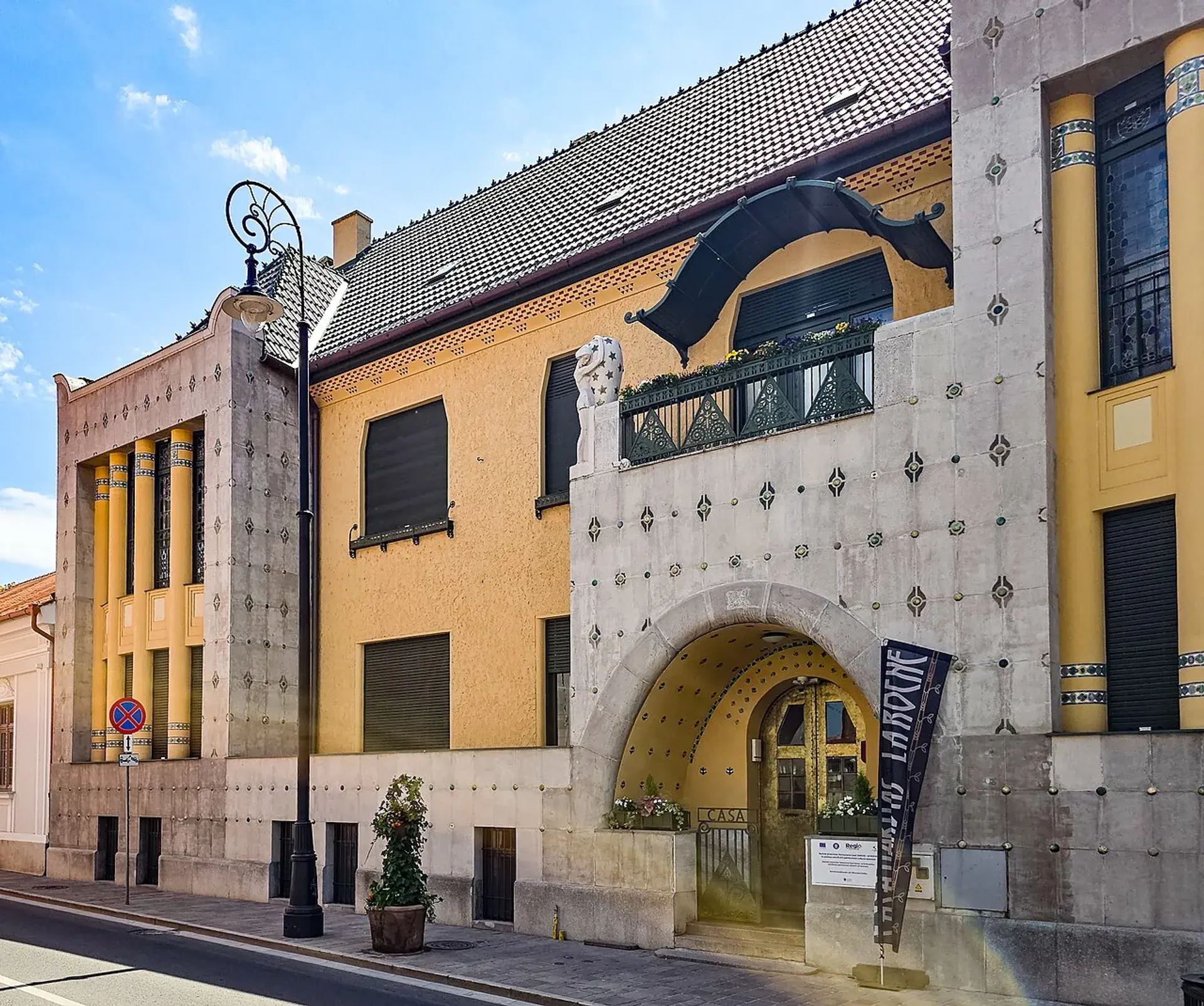
The Darvas-La Roche House in Oradea, Romania, stands as a premier example of Art Nouveau architecture and a testament to the city's vibrant history. Constructed between 1909 and 1912, this architectural gem now serves as Romania's first Art Nouveau Museum, inviting visitors to explore the opulent lifestyle of the early 20th-century bourgeoisie.
Architectural Vision
The house was designed by the Oradea-born architect brothers József and László Vágó. Their design is a masterpiece of the geometric Viennese Secession style, blended with elements of Hungarian vernacular and Nordic architecture. The project was commissioned by Imre Darvas, a wealthy timber industrialist, and the building was intended to be both a family home and the office for his company.
Attention to detail is evident throughout the structure. The architects meticulously integrated the owner's monogram, 'DI' (for Darvas Imre), into bespoke elements like door handles and window cremones. For its era, the residence was exceptionally modern, equipped with advanced features such as central heating and a car lift in its garage, making it one of the most sophisticated private homes in Oradea at the time.
A History of Fortune and Misfortune
The story of the Darvas-La Roche House is one of grand ambition followed by sudden tragedy. Imre Darvas, a prominent Jewish entrepreneur, purchased the land in 1908. His business, the 'La Roche and Darvas forestry company,' was a massive enterprise with its own industrial railway, co-owned with Swiss banker Alfred La Roche. Darvas specifically requested that his villa's terrace overlook the Neolog Synagogue, reflecting his role in the local Jewish community.
Tragically, Darvas died in 1913, only about a year after the house's completion. His company subsequently faced bankruptcy, and the magnificent property was sold in 1916. The house's history continued through the turmoil of the 20th century. During World War II, it was occupied by the Simon family, some of whom were deported. In the communist era, parts of the building were nationalized and repurposed, notably serving as the headquarters for the FC Bihor football club, which led to significant structural damage.
The Art Nouveau Museum Today
Following a comprehensive restoration, the Darvas-La Roche House reopened to the public in August 2020 as a sub-section of the Oradea City Museum. It is the first and only museum in Romania dedicated entirely to the Art Nouveau style. The interior offers an immersive experience of the 'Belle Époque,' displaying period furniture, decorative arts, and artifacts that reflect the life of Oradea's elite.
Beyond its permanent exhibits, the ground floor hosts temporary exhibitions and includes a souvenir shop. The house also functions as a dynamic cultural center, using its garden and conference facilities for workshops, conferences, and private gatherings. It stands as a key landmark of Oradea's 'Golden Age' and its identity as the 'Art Nouveau capital of Romania.'
FAQ
What is the Darvas-La Roche House today?
Today, the Darvas-La Roche House is Romania's first and only Art Nouveau Museum. It operates as part of the Oradea City Museum, showcasing 'Belle Époque' interiors and hosting various cultural events.
Who designed the Darvas-La Roche House?
The house was designed by the architect brothers József and László Vágó between 1909 and 1912. The style is primarily Viennese Secession, a form of Art Nouveau.
Why is the history of the house's first owner tragic?
The original owner, industrialist Imre Darvas, died in 1913, just one year after the house was completed. His company went bankrupt shortly after, and the family was forced to sell the property in 1916.
Was the Darvas-La Roche House modern for its time?
Yes, it was one of Oradea's most modern private residences when built, featuring advanced amenities such as central heating and a car lift in the garage.