Oradea Fortress: A Millennium of Romanian History
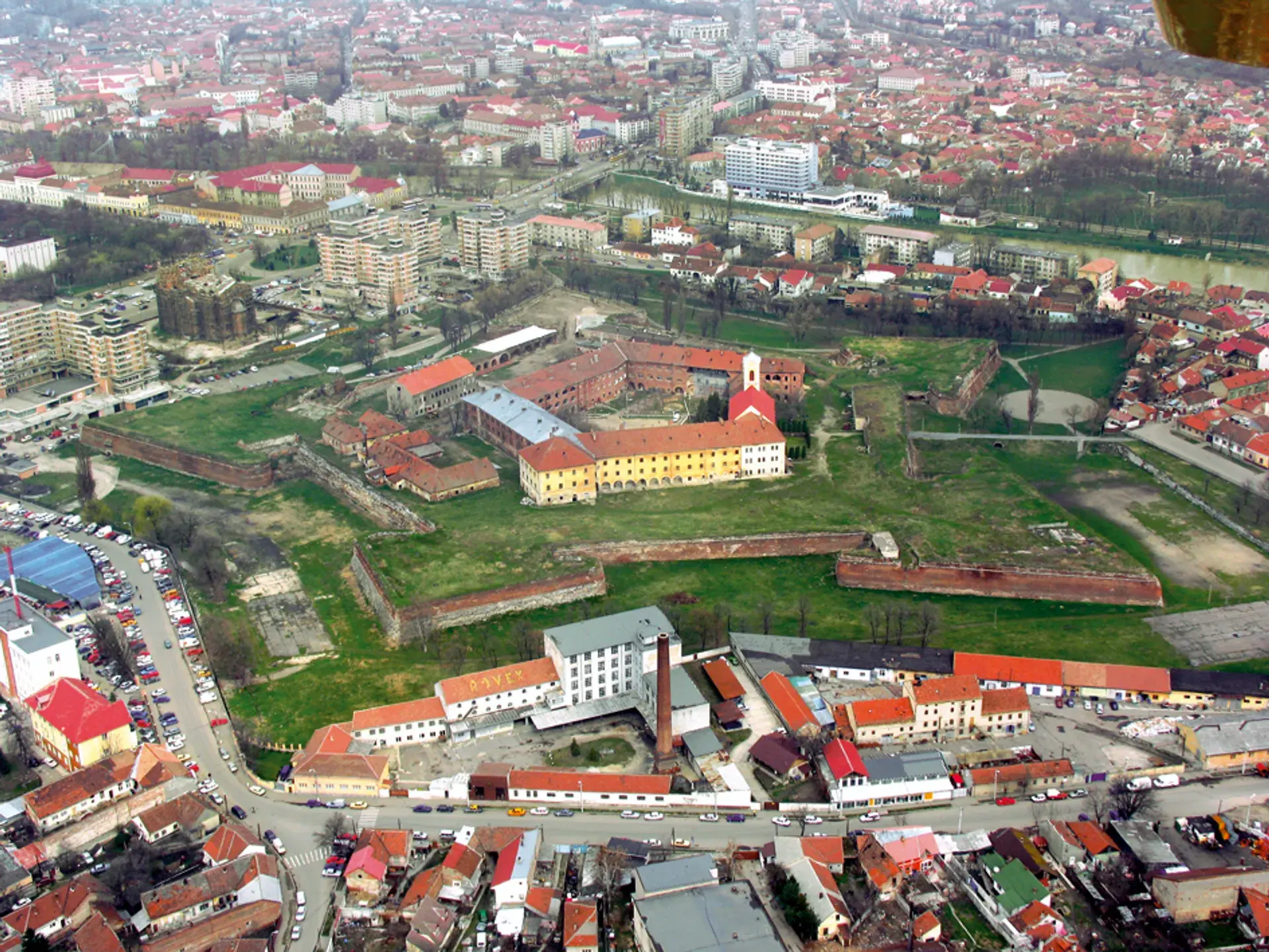
The Oradea Fortress, a pentagonal stronghold, stands as the historical heart from which the city of Oradea grew. For nearly a thousand years, it has been a silent witness to conflict, trade, and cultural exchange under the shifting powers of Hungarian, Ottoman, and Habsburg rule.
From Monastery to Military Stronghold
The fortress's story begins in the late 11th century when King Ladislaus I of Hungary founded a monastery on the site. This initial settlement was fortified but later devastated during the Mongol invasion of 1241. In response, it was rebuilt with stronger Gothic stone structures. By 1557, its role had shifted from a religious center, which had been the residence of the Roman Catholic Bishopric since 1092, to a strategic military stronghold.
Renaissance Architecture and Epic Sieges
Between 1570 and 1618, the fortress was transformed into its distinctive pentagonal shape, a masterpiece of Italian Renaissance design featuring prominent bastions. Architects like Giacomo Resti and Lodovico Marini guided its development, with Prince Stephen Báthory overseeing the construction of the Western Gate in 1573. Despite its formidable defenses, which included a 50-meter-wide moat, the fortress fell three times in its history. The most notable of these was a 45-day siege in 1660 that resulted in its capture by the Ottomans, who held it until the Habsburgs reclaimed it in 1692.
A Center of Science and Royalty
Beyond its military significance, the fortress was a pivotal European center for Humanism and the Renaissance during the 15th century. It housed a substantial library and, remarkably, an astronomical observatory. Here, physicist Georg von Peuerbach fixed the zero meridian for maps, placing Oradea at the center of the cartographical world for centuries before Greenwich. The fortress also became the final resting place for seven crowned heads, including its founder King Ladislaus I and Sigismund of Luxembourg, the only Holy Roman Emperor buried outside Germany.
An Ingenious Defense System
The defensive moat surrounding the fortress was an engineering marvel. It was supplied by both the thermal waters of the Peța river and the cold water of the Crișul Repede river. This mixture maintained a constant flow and temperature that prevented the moat from freezing in winter, ensuring the fortress remained impregnable year-round.
The Fortress Today
Following extensive restoration between 2009 and 2015, the Oradea Fortress has been reborn as a vibrant cultural and educational center. It is home to the Museum of Oradea City, which showcases local history, and the Faculty of Visual Arts of the University of Oradea. The historic walls now enclose craftsman's workshops, restaurants, and a Wedding House. The fortress grounds serve as a popular venue for medieval festivals, summer theater, and open-air movie nights, while the former moat has been transformed into a scenic promenade.
FAQ
Why is the Oradea Fortress significant?
The Oradea Fortress is significant for its nearly thousand-year history, its unique pentagonal Italian Renaissance architecture, and its role as a major cultural and scientific center. For several centuries, its observatory was the site of the prime meridian for world maps.
Who is buried in the Oradea Fortress?
The fortress's Catholic church and cemetery were the final resting place for seven crowned individuals, most notably King Ladislaus I of Hungary and Holy Roman Emperor Sigismund of Luxembourg.
What can you do at the Oradea Fortress today?
Today, the fortress is a cultural hub housing the Museum of Oradea City, the Faculty of Visual Arts, restaurants, and artisan workshops. It hosts numerous cultural events like festivals and summer theater, and its surrounding moat is a public promenade.
How many times was the Oradea Fortress conquered?
Despite numerous sieges throughout its long history, the Oradea Fortress was conquered only three times. Notable conquests include the Ottoman siege in 1660 and the subsequent recapture by the Habsburgs in 1692.