Ullmann Palace: Oradea's Art Nouveau Jewish Heritage
A Testament to Secessionist Architecture
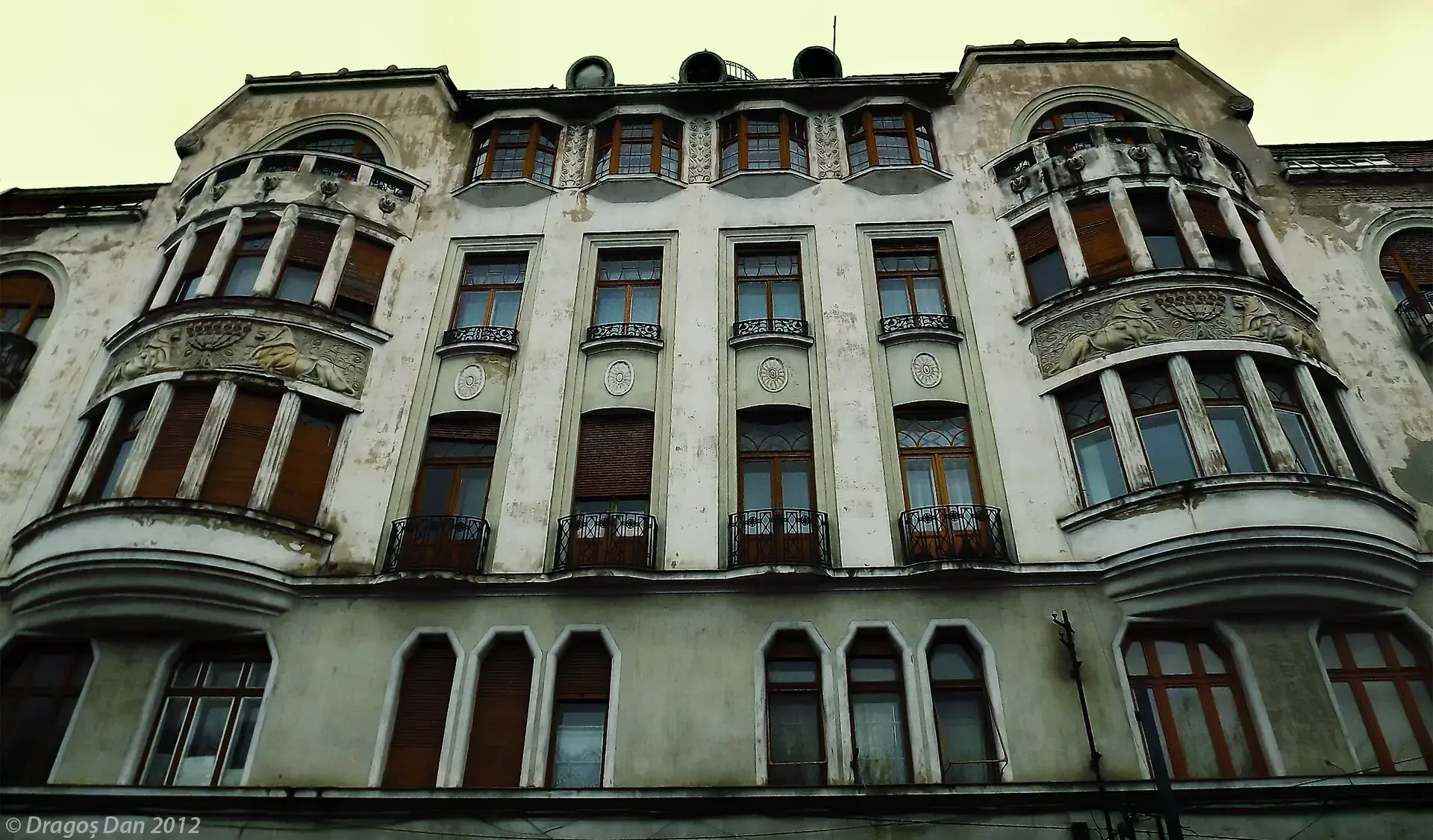
The Ullmann Palace, located at Piața 1 Decembrie 9 in Oradea, Romania, is a defining landmark of the city's rich architectural landscape. Completed in 1913 based on a 1912 design, the building is a magnificent example of the Viennese Secession style, a local variant of Art Nouveau. It was designed by architect Ferenc Löbl for Sándor Ullmann, a prominent merchant and the president of the Orthodox Jewish Community of Oradea.
Unique Symbolism on a Grand Facade
A striking and highly unusual feature of the Ullmann Palace is the prominent religious symbolism on its exterior. The facade is adorned with a large, seven-armed menorah flanked by the Lions of Judah. Crafted from pyrogranite by the renowned Zsolnay company, these sacred Jewish symbols make the Ullmann Palace the only civil building in Oradea to display such iconography, marking a powerful connection between the city's Jewish community and its architectural identity.
An Elaborate and Functional Design
The palace was conceived as a multi-purpose building. Original plans designated the ground floor for shops and a large warehouse for the Kurländer and Ullmann firm, which dealt in groceries and exotic goods. The upper floors contained private apartments. The entire second floor was the extensive residence of Sándor Ullmann himself. His apartment was designed to accommodate his faith, including a dedicated prayer room, a ritual bath (mikvah), and a space for a Sukkot tent.
A Turbulent History and Lasting Legacy
The history of the Ullmann Palace reflects the changing fortunes of Oradea's Jewish community. Its construction represented a period of prosperity and influence. However, during World War II, the building's story took a tragic turn when it was incorporated into the Jewish ghetto in 1944. The architect, Ferenc Löbl, also met a tragic fate; after a failed attempt to emigrate, he was deported to a concentration camp in Izbica, Poland, where he died in 1942.
The Palace Today
After the war, the Ullmann Palace reverted to its residential function. Today, it continues to house private apartments and has become a creative hub, with the attic serving as studios for visual artists. The original prayer room, for instance, is now used as a creative space by a local ceramic artist. The building has been the subject of ongoing urban rehabilitation and renovation efforts by the municipality to preserve its historical and architectural grandeur.
FAQ
Why is the Ullmann Palace significant in Oradea?
The Ullmann Palace is significant as a prime example of Viennese Secession architecture and as the only civil building in Oradea featuring prominent Jewish religious symbols, such as a menorah, on its facade.
Who commissioned the Ullmann Palace?
The palace was commissioned by Sándor Ullmann, a wealthy merchant and the president of Oradea's Orthodox Jewish Community. It was designed by architect Ferenc Löbl and completed in 1913.
What was the original purpose of the Ullmann Palace?
Originally, the ground floor housed shops and a warehouse, while the upper floors contained private residences. The entire second floor was the apartment of the owner, Sándor Ullmann, which included a prayer room and a ritual bath.
What is the Ullmann Palace used for today?
Currently, the Ullmann Palace is a residential building with private apartments. Its attic also contains studios for visual artists. The building is undergoing municipal renovation to restore its facade.