Oradea's Zion Neolog Synagogue: History & Culture
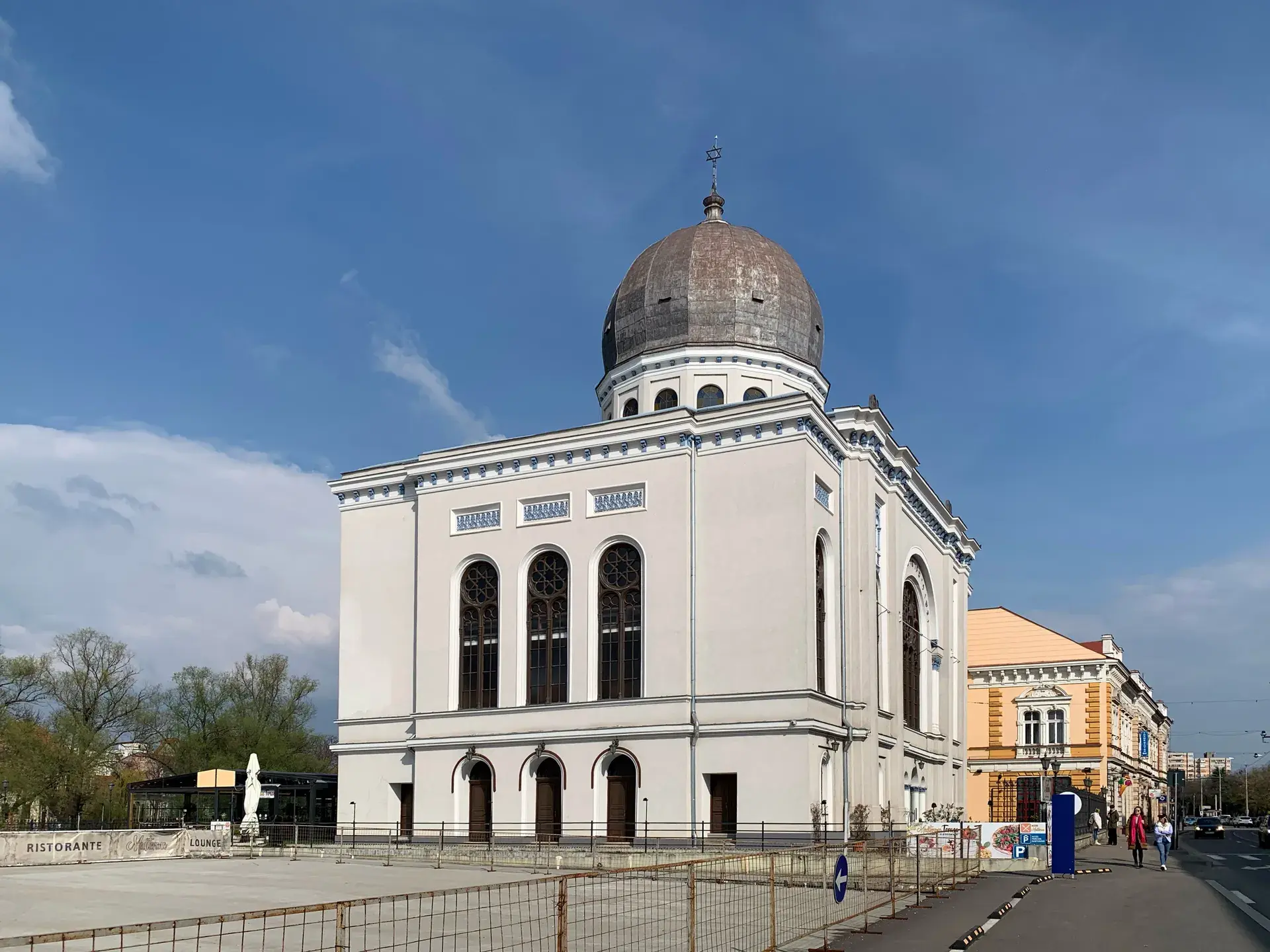
The Zion Neolog Synagogue stands in Oradea as a testament to the city's once-thriving and progressive Jewish community. Constructed between 1877 and 1878, this architectural gem with its grand dome and Moorish-inspired design has been beautifully restored, bridging its historic past with a dynamic present.
A Symbol of Progressive Judaism
The synagogue's origins lie in an 1870 split within Oradea's Jewish population, which saw a group of Reform (Neolog) Jews separate from the Orthodox community. This new congregation sought more progressive religious practices, including conducting services in Hungarian. The resulting synagogue, built with a capacity for 1,000 worshippers, became a symbol of Israelite emancipation and the liberal spirit of the era. Its importance was underscored by the leadership of Chief Rabbi Dr. Lipot Kecskemeti, a distinguished literary historian and Bible scholar.
Architectural Design and Influences
The synagogue was designed by Busch Dávid, Oradea's chief architect and a member of the Jewish community. Its construction was overseen by the renowned architect Kálmán Rimanóczy Senior. The building's eclectic, Neo-Moorish style is complemented by interior frescoes painted by Mór Horovitz. The design was conceived as a simplified, modern replica of the Nuremberg Synagogue, which was later demolished in 1938. Additionally, the compact central section of the exterior is said to evoke the architecture of the Dome of the Rock on the Temple Mount.
A Message from the Past
During a comprehensive restoration project between 2014 and 2015, a remarkable discovery was made. A hermetically sealed bottle from 1878 was found within the structure. It contained a message from the original builders, articulating their hope that services within its walls would be "worthy of religiosity that is pure and informed by progress."
A New Life as a Cultural Hub
Following its extensive restoration, the Zion Neolog Synagogue no longer serves as an active place of worship. It has been repurposed as a vibrant cultural venue and tourist information center. The building, which remains the property of the Jewish community, is managed by the city's heritage department and hosts a wide array of events, including concerts, art exhibitions, book launches, and conferences. The synagogue is typically open to visitors from Tuesday to Sunday, preserving the memory of a community decimated during the Holocaust while serving the contemporary cultural life of Oradea.
FAQ
When was the Zion Neolog Synagogue built?
The Zion Neolog Synagogue was constructed between 1877 and 1878, with the foundation stone laid on April 9, 1877.
Is the Zion Neolog Synagogue still an active place of worship?
No, following its restoration in 2014-2015, the synagogue was repurposed as a cultural center. It now hosts concerts, exhibitions, and other events, and also functions as a tourist information point.
Who designed the Zion Neolog Synagogue?
The synagogue was designed by Busch Dávid, who was the chief architect of Oradea and a member of the Jewish community at the time.
What is the architectural style of the synagogue?
The synagogue features a Neo-Moorish and eclectic style with some Italian Renaissance influences. It was also designed as a simplified replica of the Nuremberg Synagogue.