Albert Huet Square: Historic Heart of Sibiu's Citadel
Albert Huet Square represents the foundational heart of Sibiu's old citadel. As one of the city's three primary medieval squares, it marks the genesis of urban development in what is now one of Romania's best-preserved medieval centers. The plaza connects Sibiu's Upper and Lower Towns via the Stairs Passage, reflecting the city's evolution from a defensive stronghold to a cultural hub.
A Foundation of Fortifications
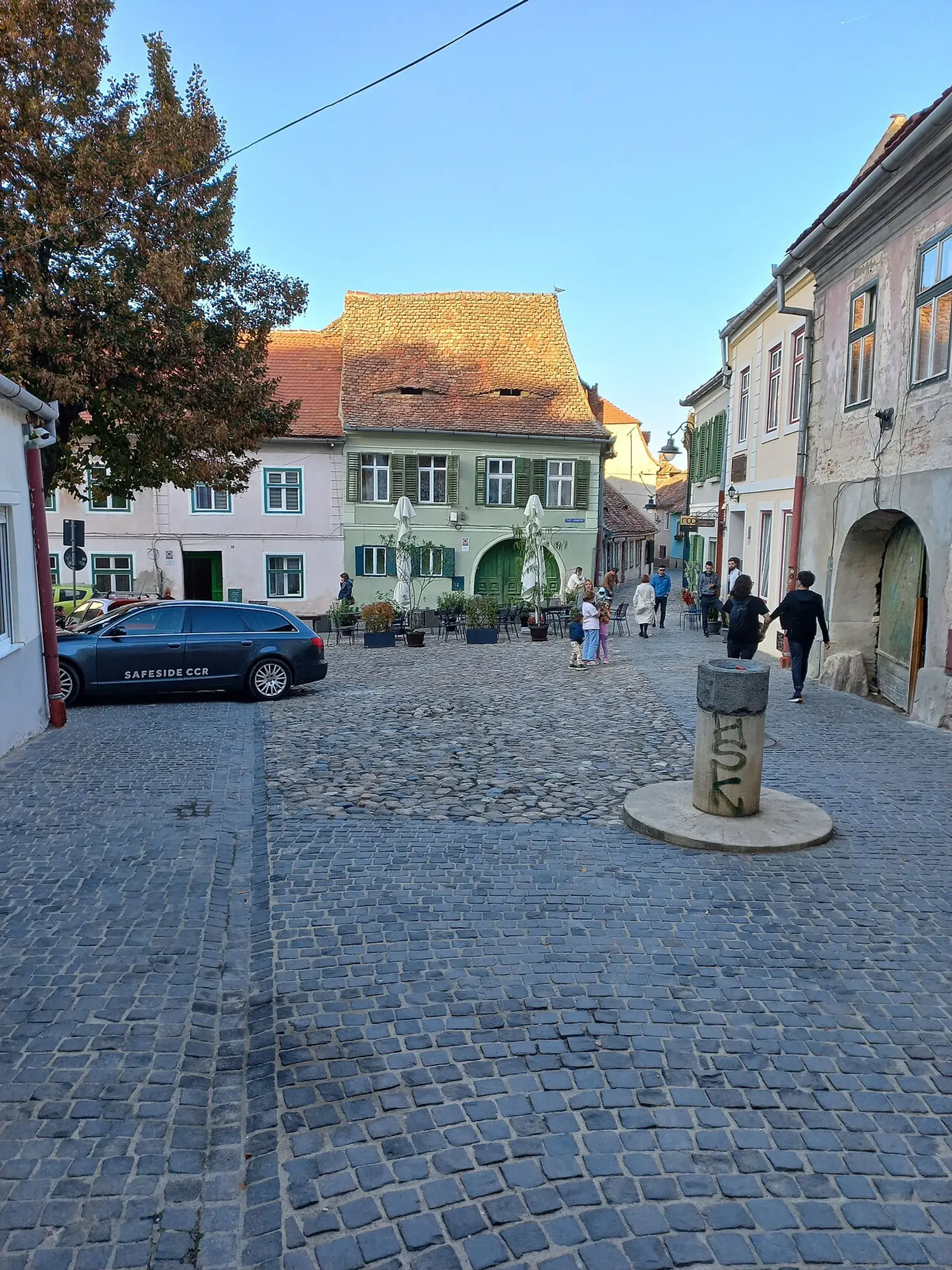
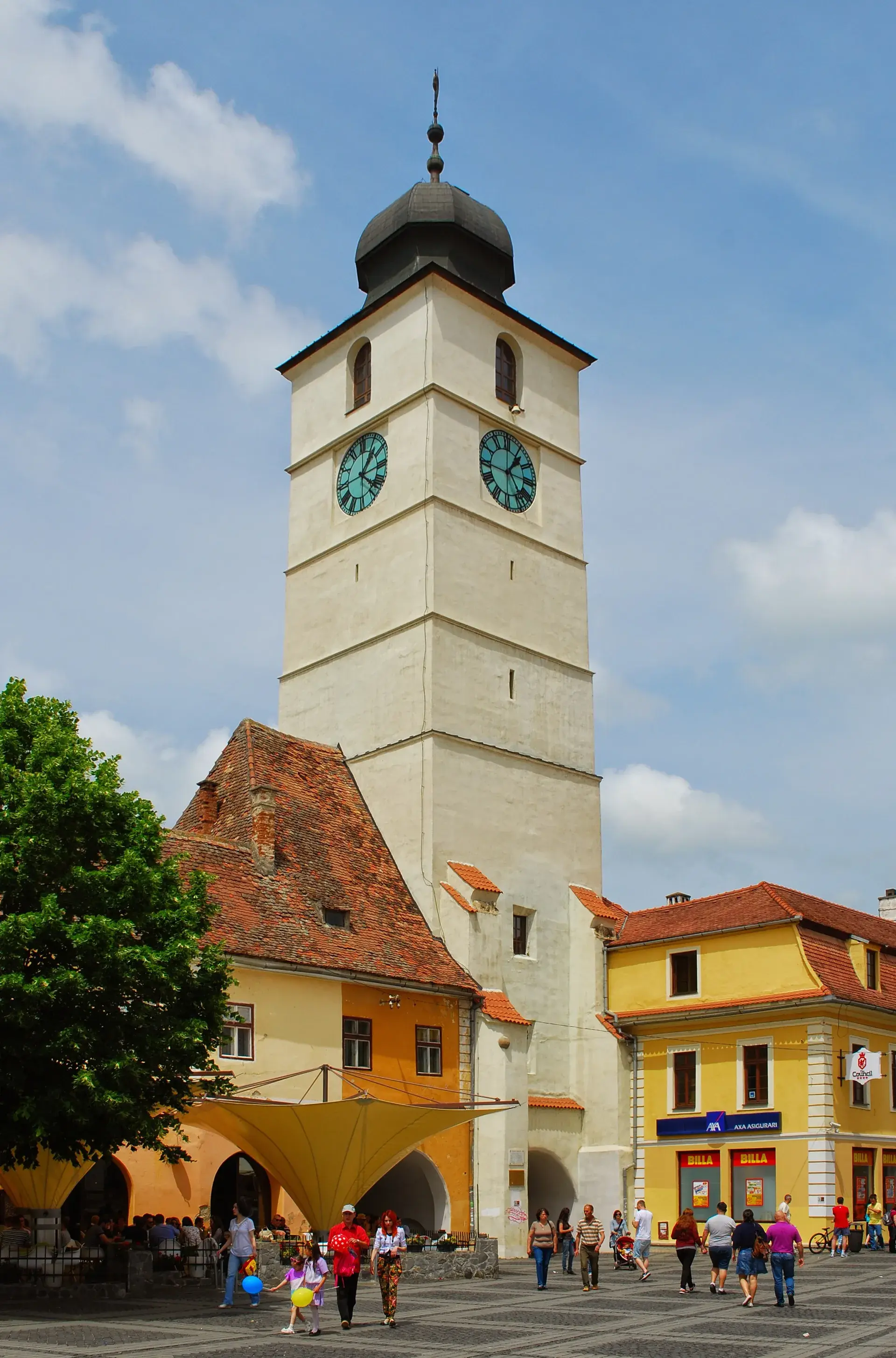
A surprising detail of Albert Huet Square is that it is built directly upon the vestiges of Sibiu's first fortified precinct, which dates to the 12th century. After these defensive walls lost their military purpose in the mid-14th century, buildings were constructed on their foundations. The 13th-century Stairs Tower, a Roman construction, is a rare surviving element of this initial defense belt. Over the centuries, the square has seen significant changes, including being paved in 1868 and the demolition of structures like the Priests Tower in 1898 to improve access to the Small Square.
Architectural and Historical Landmarks
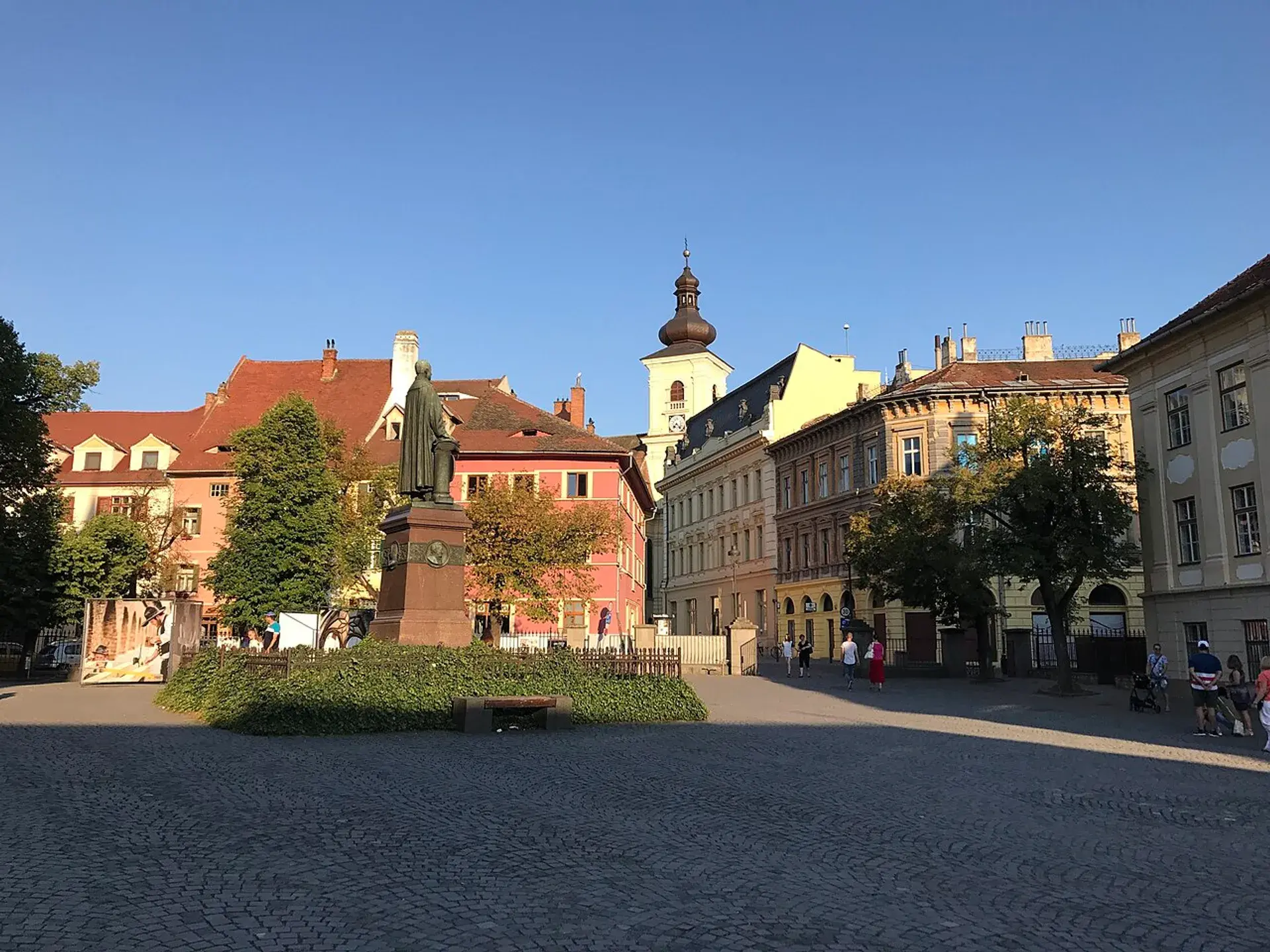
The square is dominated by the Evangelical Church, a Gothic edifice completed in the 14th century. Its steeple, reaching a height of 73.34 meters, is a prominent feature of the Sibiu skyline. Nearby stands the Samuel von Brukenthal High School, completed in 1781 on the foundations of an older school. An inscription above its main entrance reads "ERVDITIONI. VIRTVTI. AC. EXEMPLIS. SACRA," meaning "A place for culture, virtues and models."
Other historical points of interest include a brass statue of Bishop Georg Daniel Teutsch, erected in 1899, and the Rest Home Church, which stands on the presumed site of the oldest documented hospital in Romania, mentioned in records from 1292. Pavement stones in the square also mark the outlines of former structures, including the Graf's Chapel and a chapel dedicated to Saint Jacob or Saint Ladislau.
An Educational and Civic Legacy
The square is named for Alderman Albert Huet, a Royal Judge of Sibiu who established an ecclesiastic and school library here in 1592. This built upon an educational tradition in the area that began with a school existing nearby since 1380. The square also hosted Sibiu's first city hall from 1470 to 1549. Notable alumni of the local school include humanist Nicolaus Olahus, pedagogue Stefan Ludwig Roth, and Samuel von Brukenthal, a former Governor of Transylvania who later became a benefactor of the school and church.
A Vibrant Modern Hub
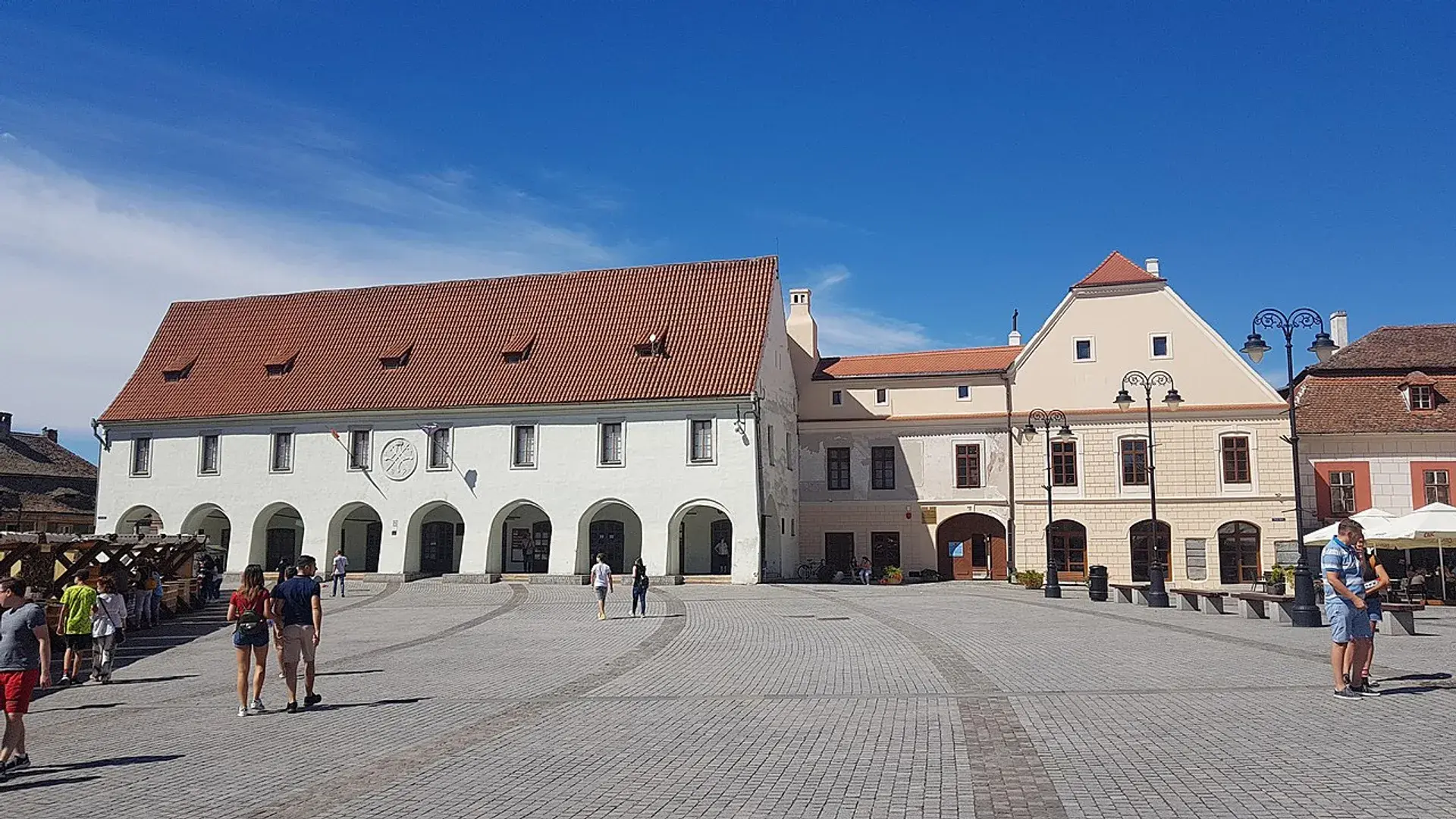
Today, Albert Huet Square is a bustling center for culture and local experiences. It frequently hosts gastronomic, crafting, and cultural events. Every Friday, it is home to the "Green Friday" market, featuring organic producers from Sibiu County. During the summer, traveling journeymen set up open workshops to showcase traditional crafts.
The square's lively atmosphere is enhanced by outdoor cafes, special concerts, and exhibitions. The Evangelical Church remains an active landmark, hosting organ concerts in the summer, and visitors may sometimes hear the rehearsals of the Bach Choir. The Samuel von Brukenthal High School continues its educational mission, with its students sharing the historic space with locals and tourists.
FAQ
Why is Albert Huet Square significant?
Albert Huet Square is significant as it is the original core of Sibiu's old citadel, built upon the city's first 12th-century fortifications. It has been a center for religion, education, and administration for centuries.
What are the main landmarks in Albert Huet Square?
The main landmarks include the 14th-century Evangelical Church with its 73.34-meter steeple, the Samuel von Brukenthal High School, the 13th-century Stairs Tower, and a statue of Bishop Georg Daniel Teutsch.
What is the oldest historical site related to the square?
The square itself is built on the path of Sibiu's first fortified precinct from the 12th century. Additionally, the Rest Home Church is located on the presumed site of Romania's oldest documented hospital, mentioned in 1292.