Piața Mică: Sibiu's Historic Small Square
Piața Mică, or the Small Square, is a historic and architectural cornerstone of Sibiu, Romania. Originating on the city's second fortification belt, its unique circular layout reflects its medieval past. For centuries, it served as a vital center for craft and commerce, a role that shaped its distinctive character. The square has been known by many names throughout its history, including the Small Ring, Kleiner Ring, and Prinz Carls Ring, before officially reverting to Piața Mică in 1990.
Architectural Heritage
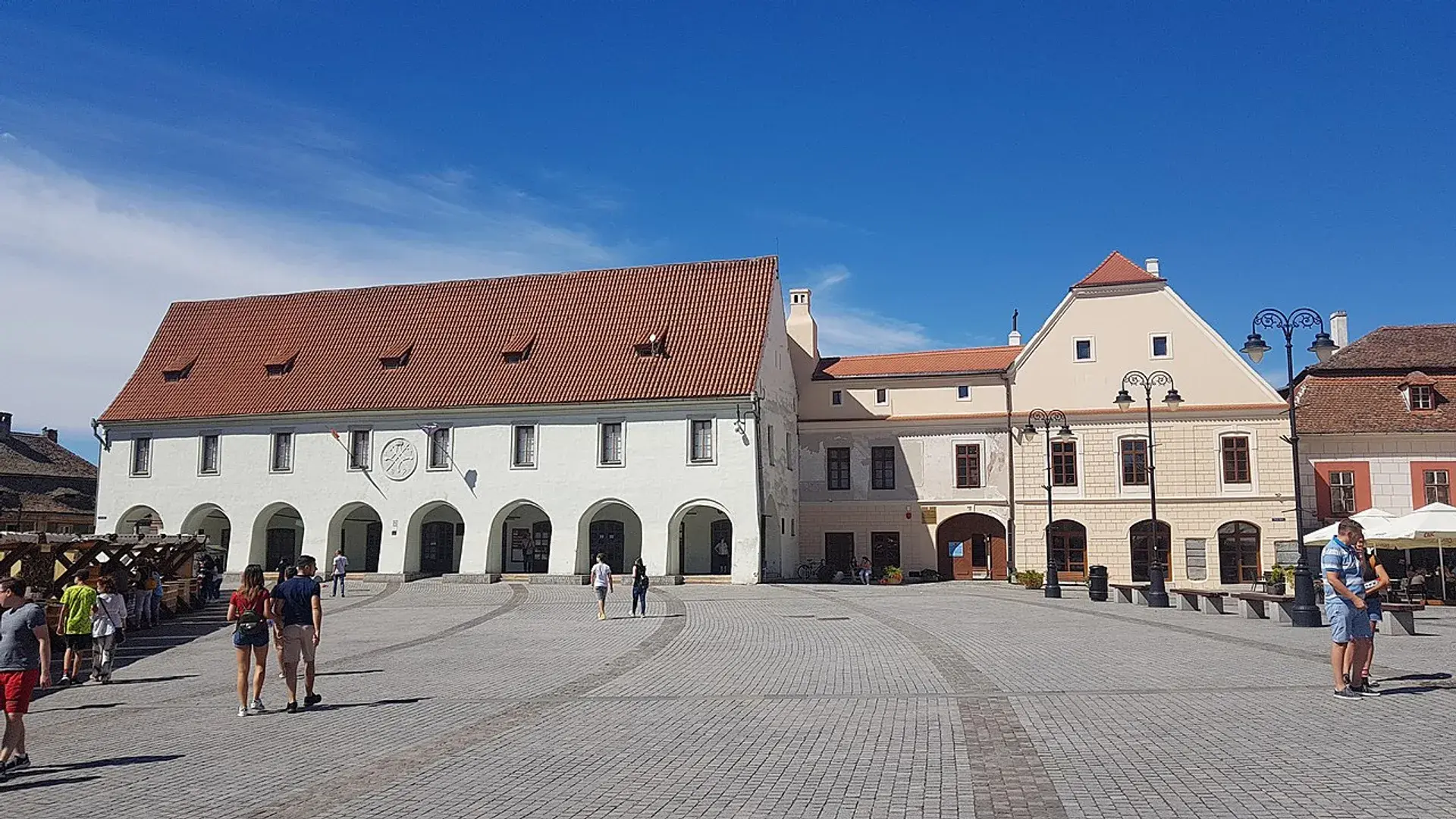
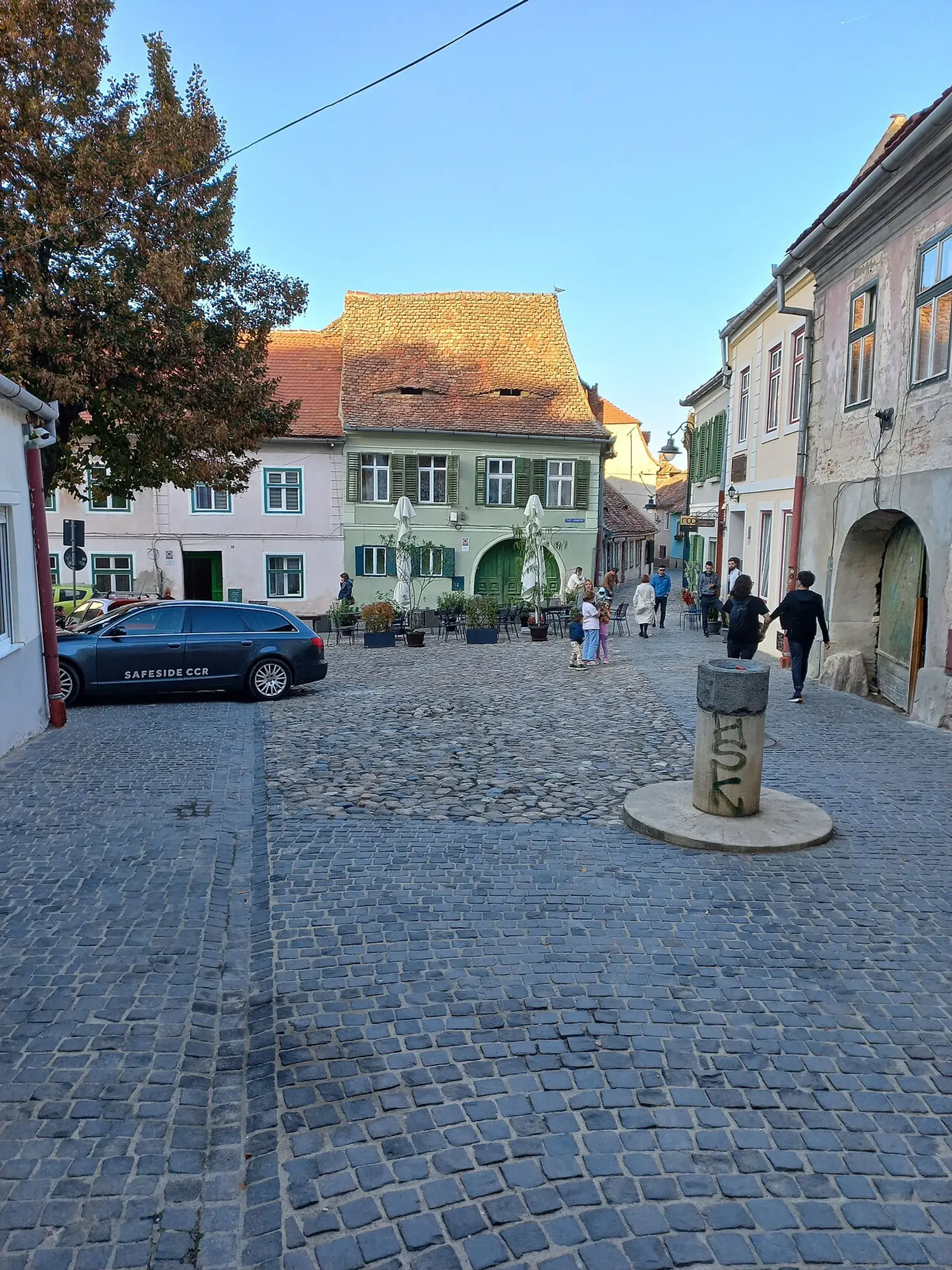
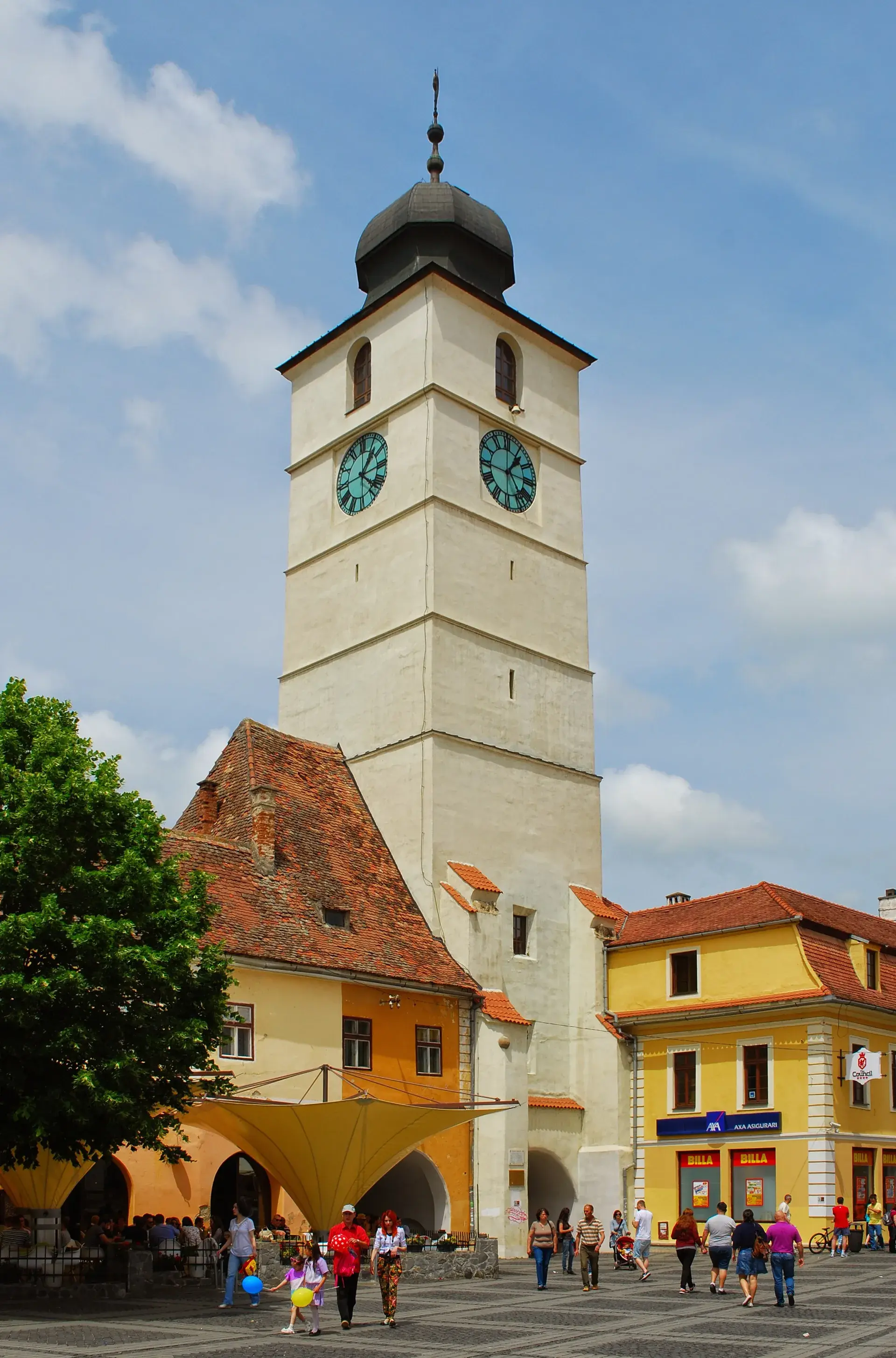
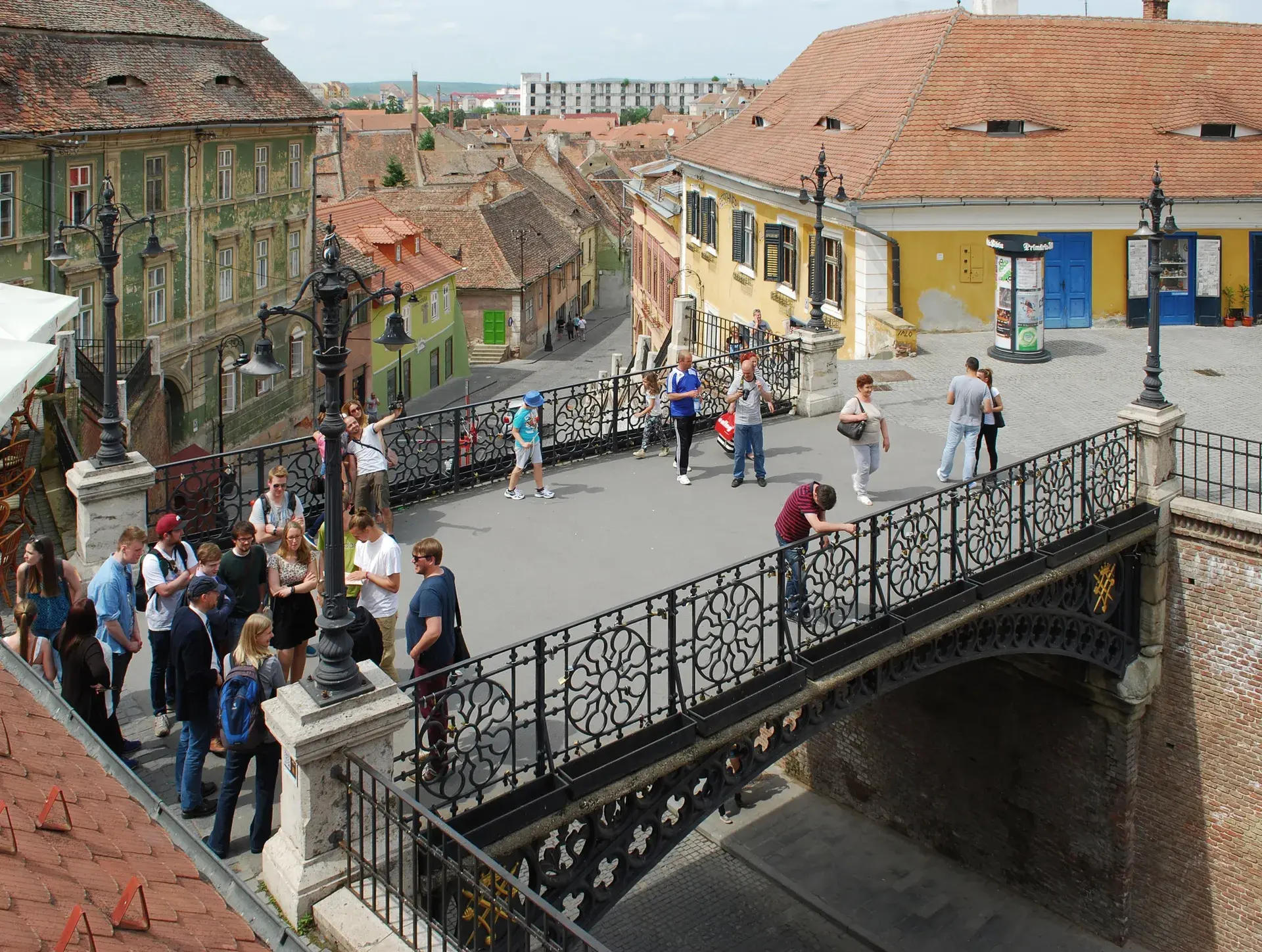
The buildings surrounding Piața Mică largely preserve their 15th and 16th-century appearance. A defining feature is the ground-floor loggias with semicircular arches, which were semi-open spaces where craftsmen would display their goods for sale. Many of the rooftops feature lenticular dormer windows, famously known as the 'Eyes of Sibiu,' which give the square a whimsical, watchful appearance. Key structures include the nearly 700-year-old Council Tower and the Roman-Catholic church and parish house, built between 1726 and 1733.
A History of Commerce and Culture
From its earliest days, Piața Mică was a bustling marketplace. Records from as early as 1370 show the presence of butcher shops, and by the 15th century, guilds for cobblers and tailors had established their headquarters here. The square's history also includes some peculiar events; in 1757, the 'Insane Cage' was relocated to Piața Mică from the larger square. In 1765, building No. 21 was temporarily used as a theater, staging plays by prominent European dramatists like Shakespeare, Goethe, and Voltaire.
The Bridge of Lies and Other Landmarks
One of the square's most iconic landmarks is the Bridge of Lies, constructed between 1859 and 1860. Its name originates not from local legends but from a linguistic misunderstanding. The original German name, 'Liegenbrücke,' meant 'lying-down bridge' due to its construction without support pillars, but it was mistakenly reinterpreted as 'Lügenbrücke,' or 'bridge of lies.' Another significant site is House No. 22, which served as the Austrian army headquarters during the 1848-1849 Revolution. In 1957, the oldest known laic mural paintings in Transylvania, dating to 1631, were discovered within this building.
Piața Mică Today
Today, Piața Mică is a vibrant hub for both locals and tourists, connecting Sibiu's Upper Town to the Lower Town. The square is lined with colorful baroque buildings housing numerous cafes, restaurants, and bakeries. It is home to several important cultural institutions, including the Franz Binder Museum, the House of Arts, and the Museum of the History of Pharmacy. Throughout the year, the square hosts craft markets, festivals, the annual Christmas market, and New Year's Eve concerts, continuing its legacy as a lively public space.
FAQ
What is special about the buildings in Piața Mică?
The buildings, mostly from the 15th and 16th centuries, feature ground-floor loggias where craftsmen sold their goods and distinctive dormer windows on the rooftops known as the 'Eyes of Sibiu'.
Why is it called the Bridge of Lies?
The name is a mistranslation of its German name, 'Liegenbrücke' (lying-down bridge), which referred to its pillar-less design. This was mistakenly interpreted as 'Lügenbrücke,' which means 'bridge of lies'.
What is Piața Mică used for today?
Today, Piața Mică is a bustling square with cafes, restaurants, and museums like the Franz Binder Museum. It hosts craft markets, cultural festivals, the annual Christmas market, and New Year's Eve concerts.