Brukenthal Palace: Sibiu's Baroque Museum & Art Gallery
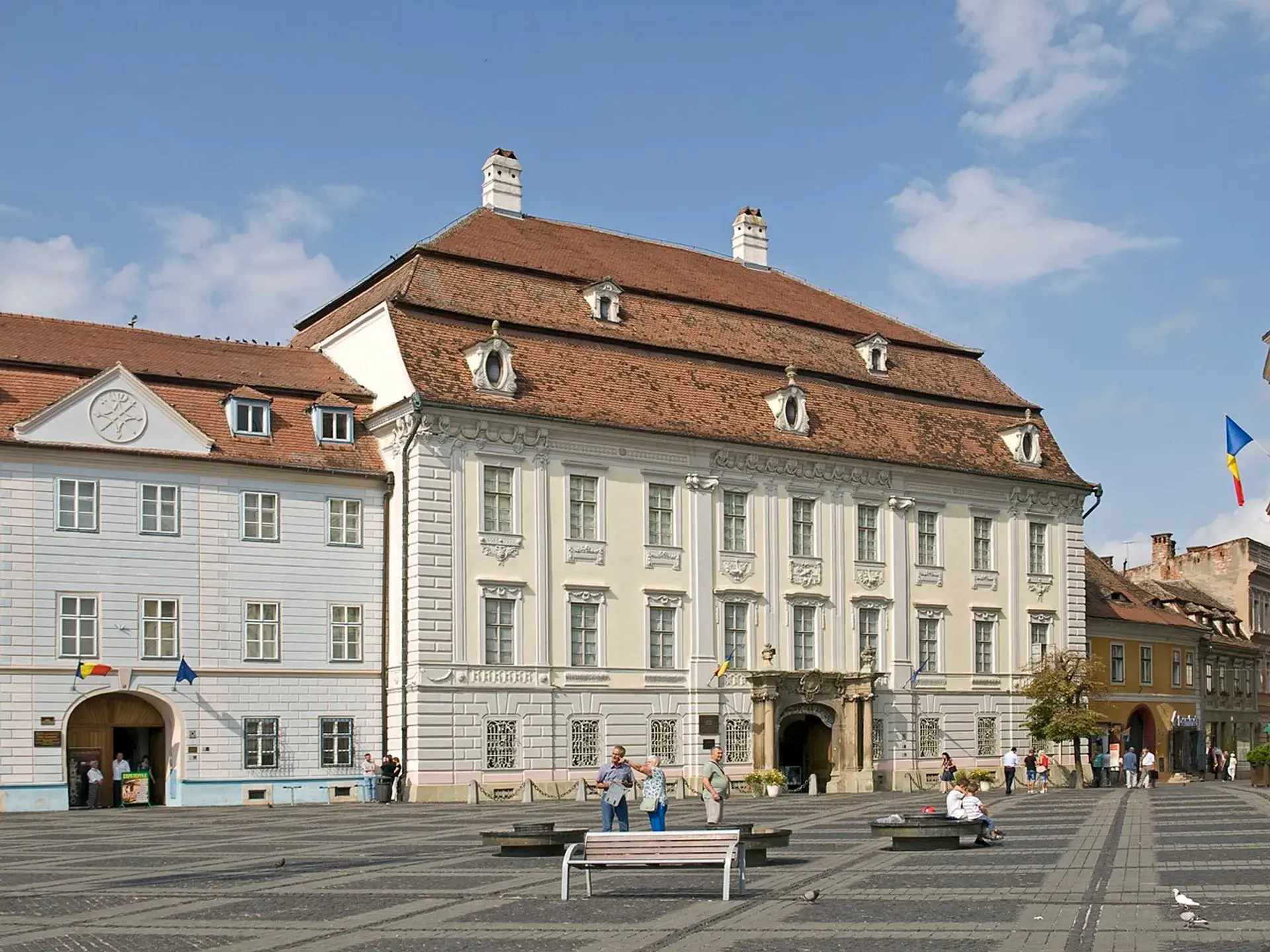
Dominating Sibiu's Great Square, the Brukenthal Palace stands as one of Romania's most significant Baroque monuments. This grand former residence, with its imposing facade, now houses the Brukenthal National Museum, a pivotal cultural institution with a rich history that positioned Sibiu at the forefront of European cultural development.
A Governor's Vision
The palace was constructed between 1778 and 1788 as the personal residence of Baron Samuel von Brukenthal. Serving as the Habsburg Governor of Transylvania from 1774 to 1787, Brukenthal was a personal advisor to Empress Maria Theresa and the only Saxon in history appointed to such a high position. Inspired by Viennese palaces, the design is attributed to architect Joseph Franz Martinelli and showcases a refined late-Baroque style with Neoclassic elements. The palace was specifically built to house the Baron's extensive and valuable art collection.
A Pioneer in Public Culture
In a remarkable move for the era, Baron von Brukenthal opened his art galleries to the public as early as 1790, a full three years before the Louvre Museum in Paris officially opened its doors. This act established one of the first public museums in Europe. After Brukenthal's death in 1803, his will bequeathed the palace and its collections to the Evangelical Church. This led to the official opening of the Brukenthal Museum in 1817. The Baron's commitment to public enlightenment also included sponsoring the first local scientific review and making a hall available for the Society of Readers.
The Palace Today: A National Treasure
Today, Brukenthal Palace is the primary building of the Brukenthal National Museum, a complex of six museums spread across Sibiu. It houses the European Art Gallery, featuring approximately 1,200 paintings from the 15th to the 18th centuries, and the extensive Brukenthal Library, which contains about 300,000 items. After a complete renovation between 2006 and 2009, the palace continues its legacy as a central hub for European and Romanian heritage.
Artistic and Botanical Curiosities
The museum's collection holds many treasures. One notable piece is the 'Portrait of a Man with a Blue Chaperon' by Jan van Eyck. This painting features ultramarine pigment, a color that, at the time of its creation, was considered more valuable than its weight in gold. Beyond art, Baron von Brukenthal was an avid botanist who cultivated exotic plants like pineapples and oranges, which were exceptionally rare for 18th-century Transylvania. These rare fruits are sometimes depicted in still life paintings found within his collection.
FAQ
When was Brukenthal Palace built?
The Brukenthal Palace was constructed between 1778 and 1788, with the main building being completed by 1785.
What is special about the Brukenthal Museum's history?
The art galleries within Brukenthal Palace were opened to the public in 1790, three years before the official opening of the Louvre Museum in Paris, making it one of the first public museums in Europe.
What can be seen inside Brukenthal Palace today?
The palace houses the European Art Gallery, with around 1,200 paintings from the 15th-18th centuries, and the Brukenthal Library, which contains approximately 300,000 library units.
Who was Baron Samuel von Brukenthal?
Baron Samuel von Brukenthal (1721-1803) was the Habsburg Governor of Transylvania and a personal advisor to Empress Maria Theresa. He was a passionate art collector and founded the palace and its museum.