Pletna Boats of Lake Bled: History, Design & Rides
Gliding across the waters of Lake Bled, the pletna is a traditional flat-bottomed wooden boat found nowhere else in the world. Propelled without an engine, these vessels serve as the primary heritage transport across the lake, linking the shoreline promenade and hotels to the 99-step Baroque staircase leading to the Pilgrimage Church of the Assumption on Bled Island.
Only around 22 to 23 licensed pletnas are permitted to operate on the lake. Because motorized boats with internal combustion engines are strictly banned to prevent environmental pollution and protect the natural tranquility, the lake's waters remain quiet, punctuated only by the rhythmic creaking of wooden oars against the hulls and the soft splash of oars entering the water.
Imperial Origins and a Hereditary Guild
Boat operations on Lake Bled date back to at least 1590, but the modern structure of the trade originated during the 18th century under the reign of Habsburg Empress Maria Theresa. To compensate local farming families for their poor agricultural land, the empress granted exclusive servitude rights to transport religious pilgrims across the lake to between 19 and 22 families, primarily located in the shoreline hamlet of Mlino.
This decree established pletnarstvo as a closed, strictly hereditary guild. Rather than being bought and sold on an open market, operating licenses and rowing traditions are passed down directly through family lineages. Alongside the carriage drivers known as fijakerji, the oarsmen of Lake Bled maintain a protected community often likened to the gondoliers of Venice.
Craftsmanship and the Stehrudder Technique
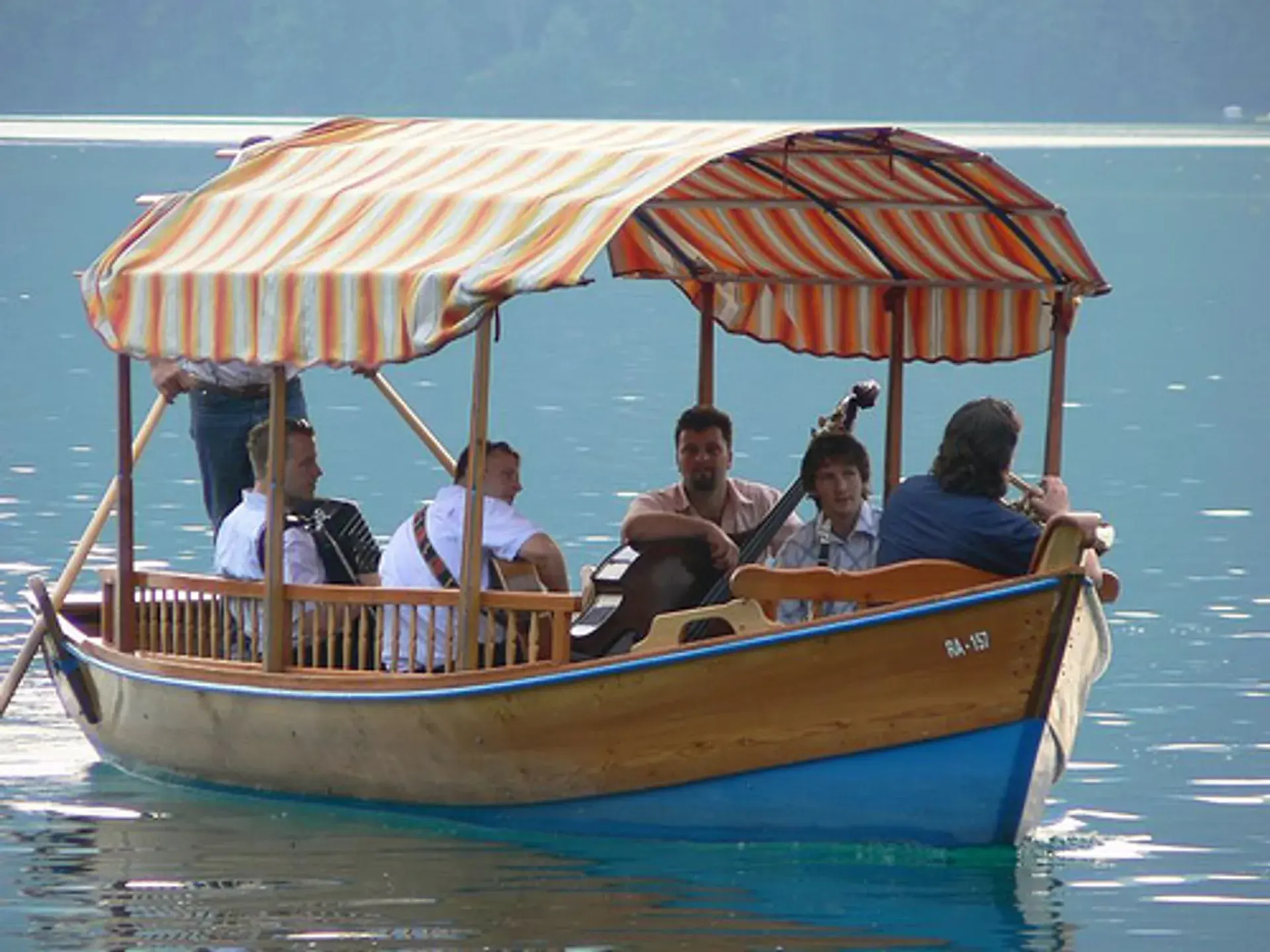
A pletna measures between 7 and 7.3 metres in length and 2 to 2.3 metres in width. It features a pointed bow, a widened stern fitted with an entry step, a colourful fabric canopy to shade passengers, and perimeter bench seating designed to accommodate 18 to 20 passengers. Although boats existed on the lake for centuries, the modern standardised shape and proportions were established around 1902 by local boatbuilder Anton Zupan.
The vessel's name has two likely linguistic roots: it may stem from the German term Platteboot, meaning a flat-bottomed boat, or from the Slovenian word pleten, meaning braided or woven, referencing the early wicker awnings once used on the vessels.
Propulsion requires exceptional physical endurance. A single oarsman, called a pletnar, stands at the stern exposed to the elements and operates two long oars using the specialized stehrudder standing rowing technique.
Crossings to Bled Island
Pletna boats provide daily crossings to Bled Island from several fixed docking points around the shore, primarily at Mlino, Spa Park (Zdraviliški park), and Velika Zaka. Journeys typically take between 15 and 25 minutes each way.
Fares are set collectively by the local boatmen's association, Čolnarsko združenje Pletna Bled, and generally cost between €18 and €20 per adult for a return journey. Crossings include a scheduled 30- to 40-minute stopover on the island, allowing visitors to explore the island's grounds before returning to the mainland on the same boat.
FAQ
Why are motorboats not used to reach Bled Island?
Internal combustion engines are completely banned on Lake Bled to prevent pollution and protect the lake's natural tranquility. As a result, passenger transport is preserved for traditional hand-rowed pletna boats and quiet electric line vessels.
Who is allowed to row a pletna boat?
Rowing rights are strictly hereditary. In the 18th century, Empress Maria Theresa granted exclusive transport rights to roughly 19 to 22 farming families in the hamlet of Mlino. These rights are inherited through family lineages rather than sold.
Where do pletna boats depart from?
Pletnas depart regularly from designated docks around Lake Bled, most notably at the hamlet of Mlino, the Spa Park below the town centre, and Velika Zaka.
How long is a typical pletna boat journey?
The crossing takes about 15 to 25 minutes each way and includes a scheduled stopover of 30 to 40 minutes on Bled Island before returning.
Discover Bled like never before
Dive into Bled hidden stories and secret spots with Ciceru interactive tours.
Explore tour
Audioguide
Quizzes
Maps
Solo
Couples
Groups & families

© Photo by PLETNA BOATS BLED via Google Maps · Google Places