Arco del Cristo: The Roman Gate of Cáceres
The Roman Gateway to Norba Caesarina
Situated along the eastern stretch of the monumental city wall, between Calle Adarve del Cristo and Callejón del Moral, the Arco del Cristo is the oldest standing gate in Cáceres. It represents the only surviving entrance of the four original portals built for the 1st-century AD Roman colony of Norba Caesarina.
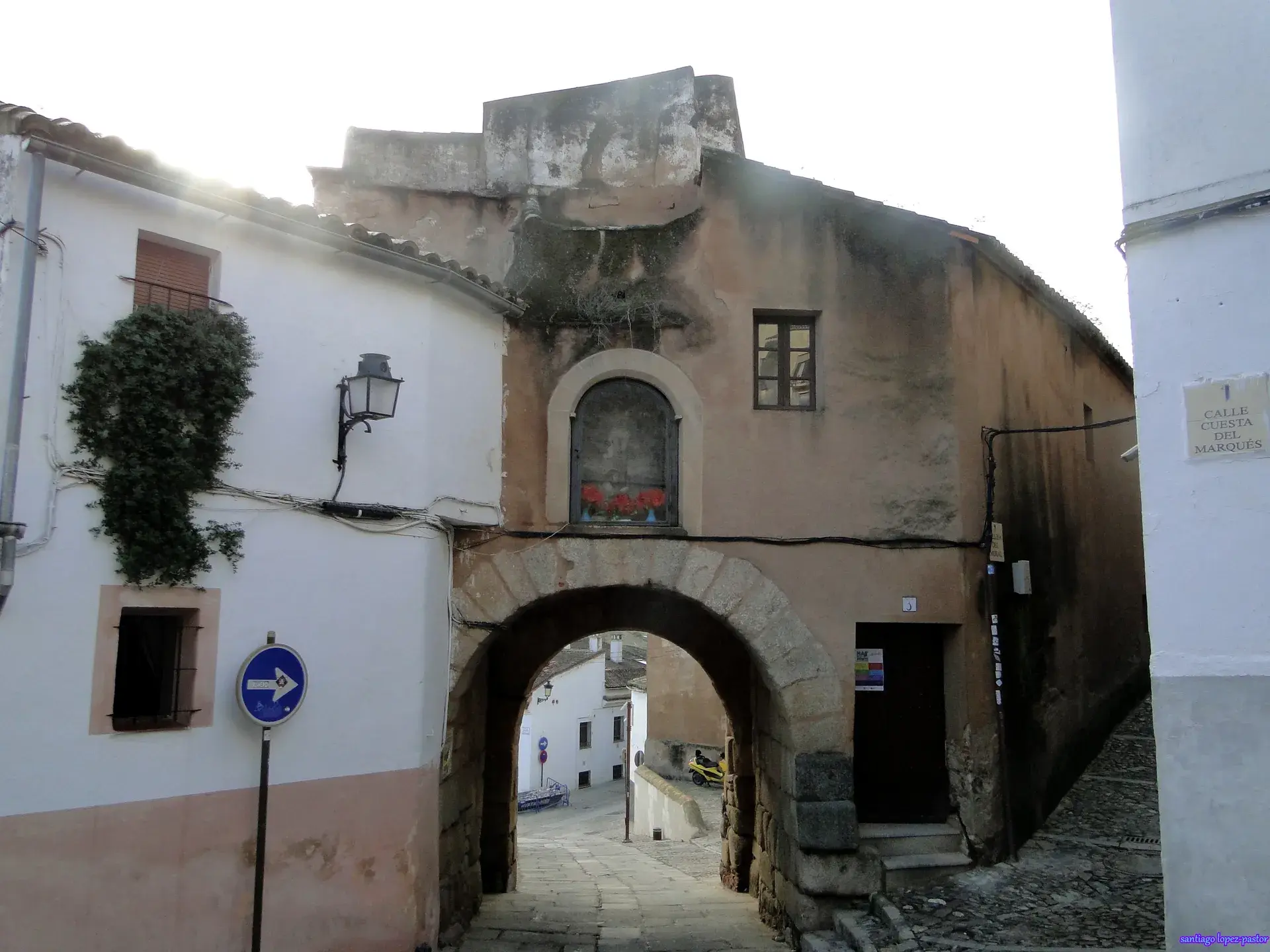
Constructed using monumental Roman masonry, the gate consists of two semicircular arches linked by an interior barrel vault that spans the thickness of the defensive ramparts. The structure was built from large, dry-laid granite ashlars. Archaeological traces preserved on the stone blocks indicate the use of wood-and-rope hoisting devices characteristic of classical Roman engineering works. Originally, this portal served as the eastern access point linking the settlement to an auxiliary route connected with the Vía de la Plata, heading toward Augusta Emerita (modern-day Mérida).
A Lifeline to the Ribera del Marco
While the other Roman gateways of Cáceres were eventually dismantled or walled up over the centuries, the Arco del Cristo remained in continuous use for more than 1,700 years. Its enduring preservation stemmed from its vital functional role: it offered the primary direct path from the hilltop settlement down to the Marco stream (Ribera del Marco).
Before modern municipal plumbing systems existed, the gate served as the primary thoroughfare for water-bearers (aguadores) who hauled water jars up into the fortified town from the valley's river springs. This link to local waters also dictated its historical nomenclature. By the 15th and 16th centuries, it was frequently documented as the Puerta del Concejo because it led directly to the Fuente Concejo, a prominent spring where municipal council assemblies historically gathered. It was also known as the Puerta del Río due to its orientation toward the river valley.
Medieval Defenses and Domestic Layering
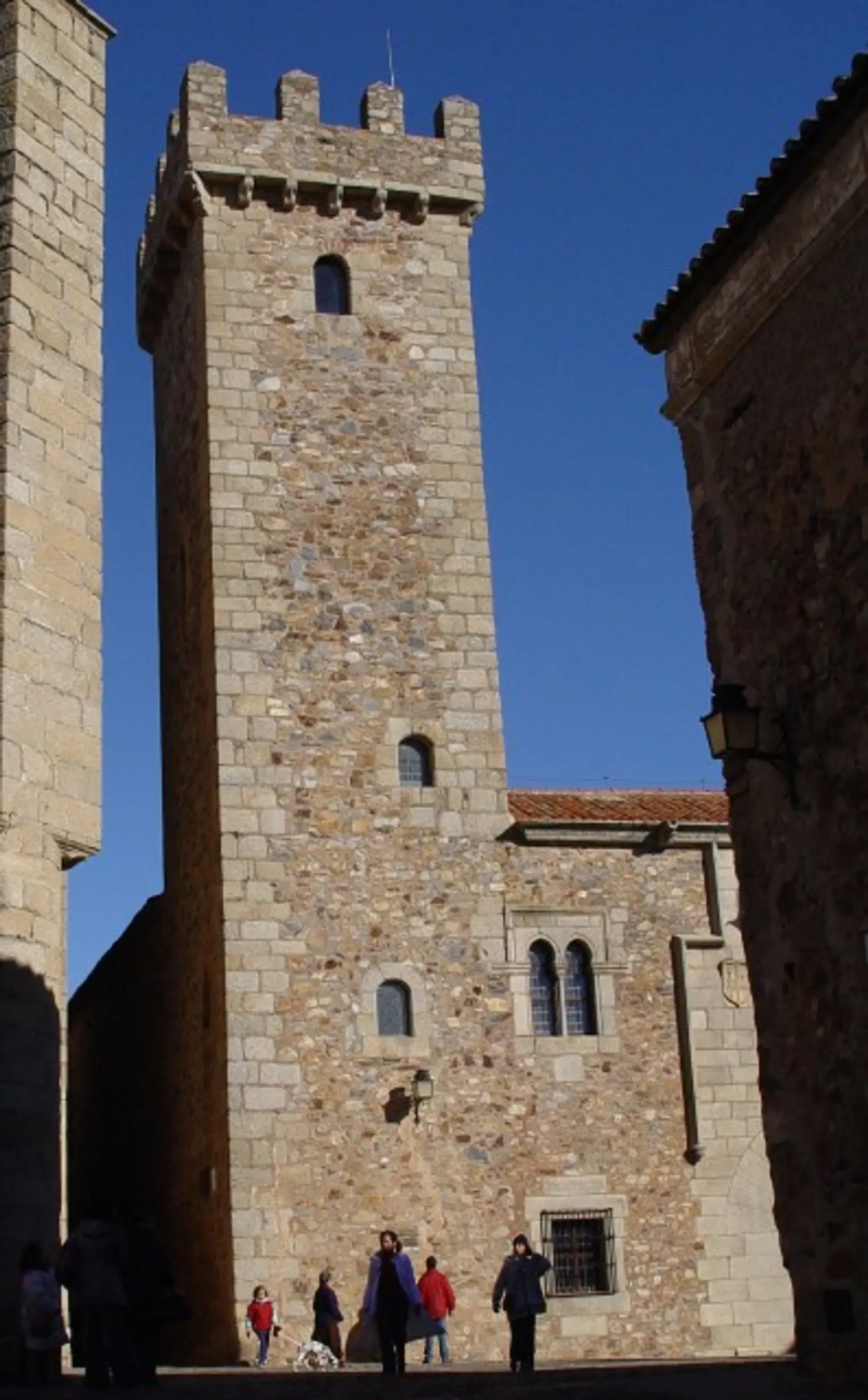
Over centuries of changing rulers, the Roman portal was integrated into newer defensive and civil structures. On the exterior face, the gate is flanked by the Torre del Río, an Almohad-era defensive tower. The rough-hewn granite blocks of the Roman gate provide a distinct textural contrast against the surrounding medieval mortar-and-rubble curtain walls.
On the interior (intramuros) side, later domestic dwellings were constructed directly on top of the gate. This historical adaptation incorporated the ancient Roman barrel vault into the structural foundations of private residences. Following repairs carried out during the 18th century, a niche containing a devotional image of the Crucified Christ was embedded over the interior archway in the early 19th century, giving the monument its modern name.
Modern Thoroughfare and Urban Context
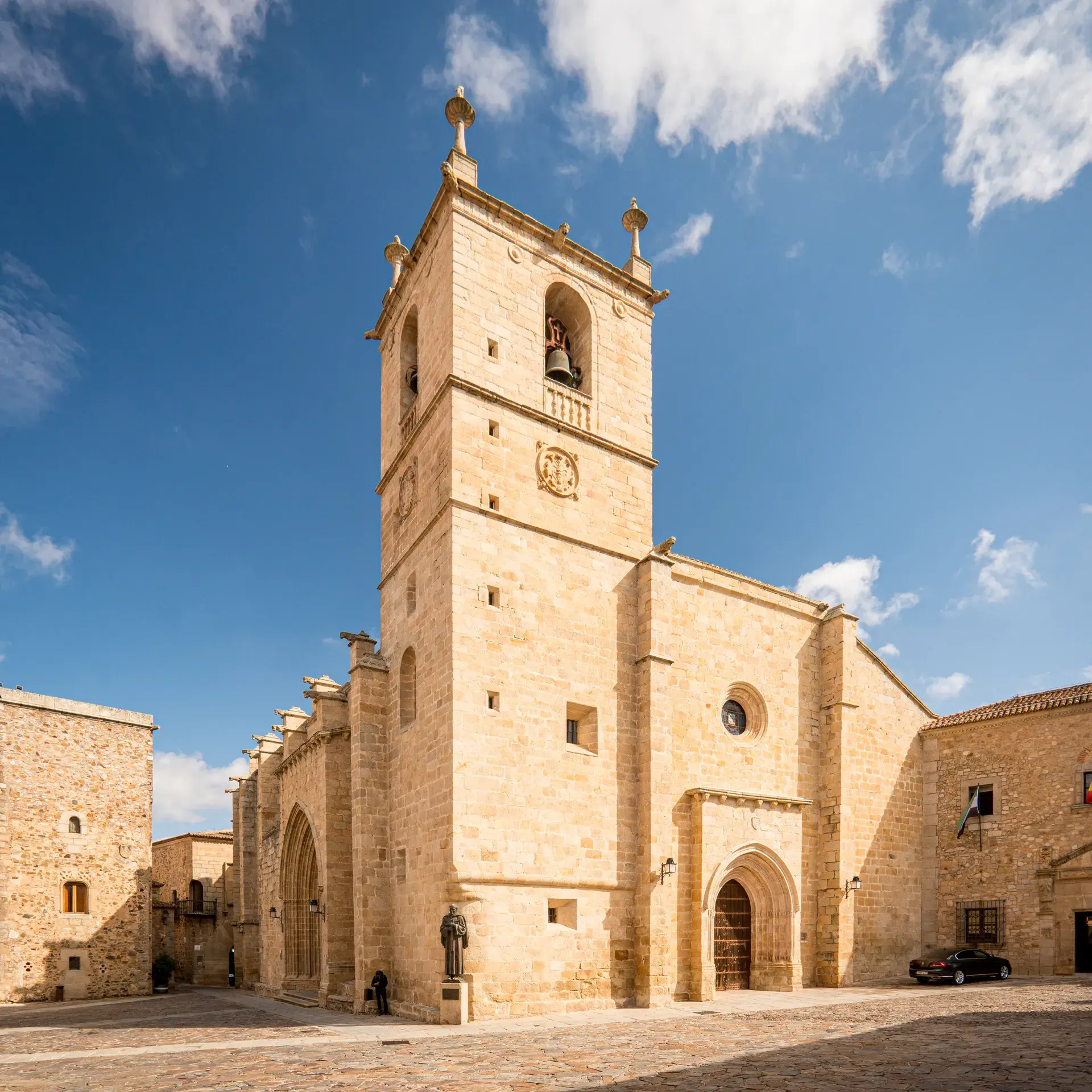
Today, the Arco del Cristo functions as an open, 24-hour pedestrian passage connecting the monumental walled precinct with the lower valley trails. It marks the eastern transition point of the historical core, completing the urban route that extends from the noble palaces of Plaza Mayor and Plaza de Santa María down through the whitewashed alleys of the Old Jewish Quarter (Judería Vieja) and Cuesta del Marqués.
FAQ
Why was the gate historically called Puerta del Concejo?
During the 15th and 16th centuries, the gate led to Fuente Concejo, a fountain by the Marco stream where city council assemblies gathered.
How old is the Arco del Cristo?
The gate was built in the 1st century AD as an eastern entrance to the Roman colony of Norba Caesarina, making it the oldest standing city gate in Cáceres.
What defensive structure stands beside the gate?
The gate is flanked externally by the Torre del Río, a medieval defensive tower dating to the Almohad period.