Torre de las Cigüeñas: Cáceres' Crowned Tower
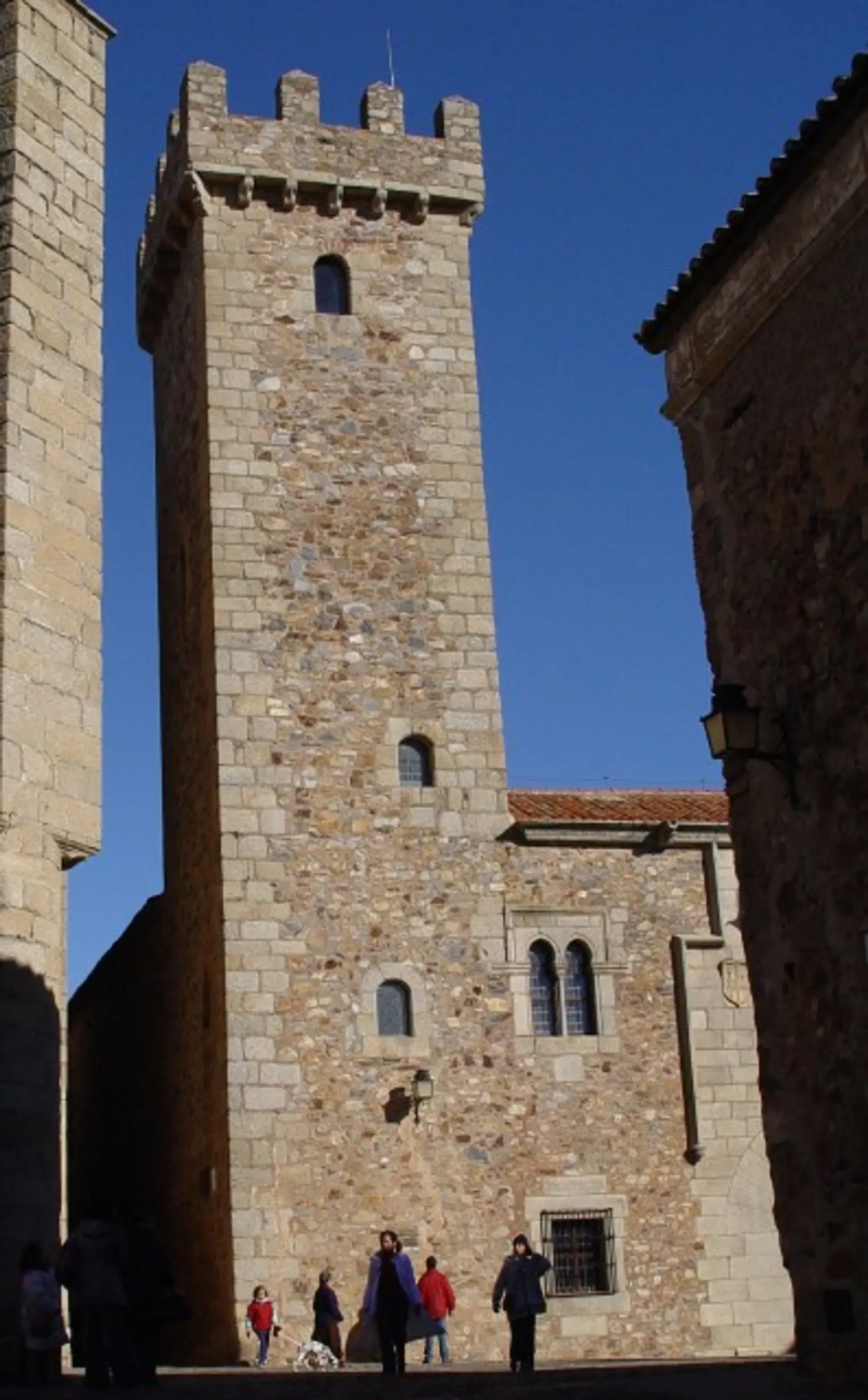
Rising over Plaza de San Pablo at the highest point of the walled Ciudad Monumental of Cáceres, the Palacio de las Cigüeñas stands out against the medieval skyline. Also known as the Casa de los Cáceres-Ovando or the Palacio del Capitán Diego de Ovando, this late 15th- to early 16th-century fortress palace occupies the grounds of the city's former Muslim alcázar. Its 25-meter-high defensive tower is an architectural anomaly in the city: it is the only noble tower in Cáceres that preserves its complete system of battlements and supporting corbels.
The Royal Decree and the Truncated Towers
The survival of the tower's battlements is tied directly to the political upheavals of 15th-century Spain. During the War of the Castilian Succession (1475–1479), the nobility of Cáceres fractured, with competing clans supporting either Isabella I of Castile or Juana la Beltraneja. After securing the throne, Queen Isabella sought to break the violent autonomy of the local aristocracy.
Visiting Cáceres in 1476 and 1477, Isabella issued the desmoche—a sweeping royal mandate ordering all private noble defensive towers in the city to be shorn of their crowns and truncated down to palace rooflines. However, Captain Diego Fernández de Cáceres y Ovando, a royal councillor, had remained steadfastly loyal to Isabella throughout the conflict. In 1480, Isabella granted him an exclusive royal license to construct his palace tower with unrestricted height and full crenellations. In an urban landscape where rival strongholds had been physically decapitated, Ovando's intact tower served as a lasting political statement of royal favor.
Architectural Features and the White Storks
Built primarily of robust masonry, the palace features a restrained exterior defined by military defensive elements. Its entrance is a semicircular arched doorway surmounted by the heraldic coats of arms of the Ovando and Mogollón families. The upper floor is framed by pointed horseshoe geminated windows (bíforas), while the interior centers on a late Gothic courtyard.
While formally titled the Casa de los Cáceres-Ovando, the building earned its popular moniker, Palacio de las Cigüeñas ("Palace of the Storks"), from local residents. Because it was the only noble tower left with high, unclipped crenellations, its battlements became the favored nesting habitat for the regional white stork population. To this day, the rhythmic bill-clattering (crotoreo) of nesting storks remains a defining acoustic backdrop audible across Plaza de San Pablo.
Current Military and Cultural Role
Acquired by the Spanish Ministry of Defence in the mid-20th century, the palace was adapted to serve as the seat of the Comandancia Militar de Cáceres. Alongside its military administrative function, parts of the complex are dedicated to cultural heritage.
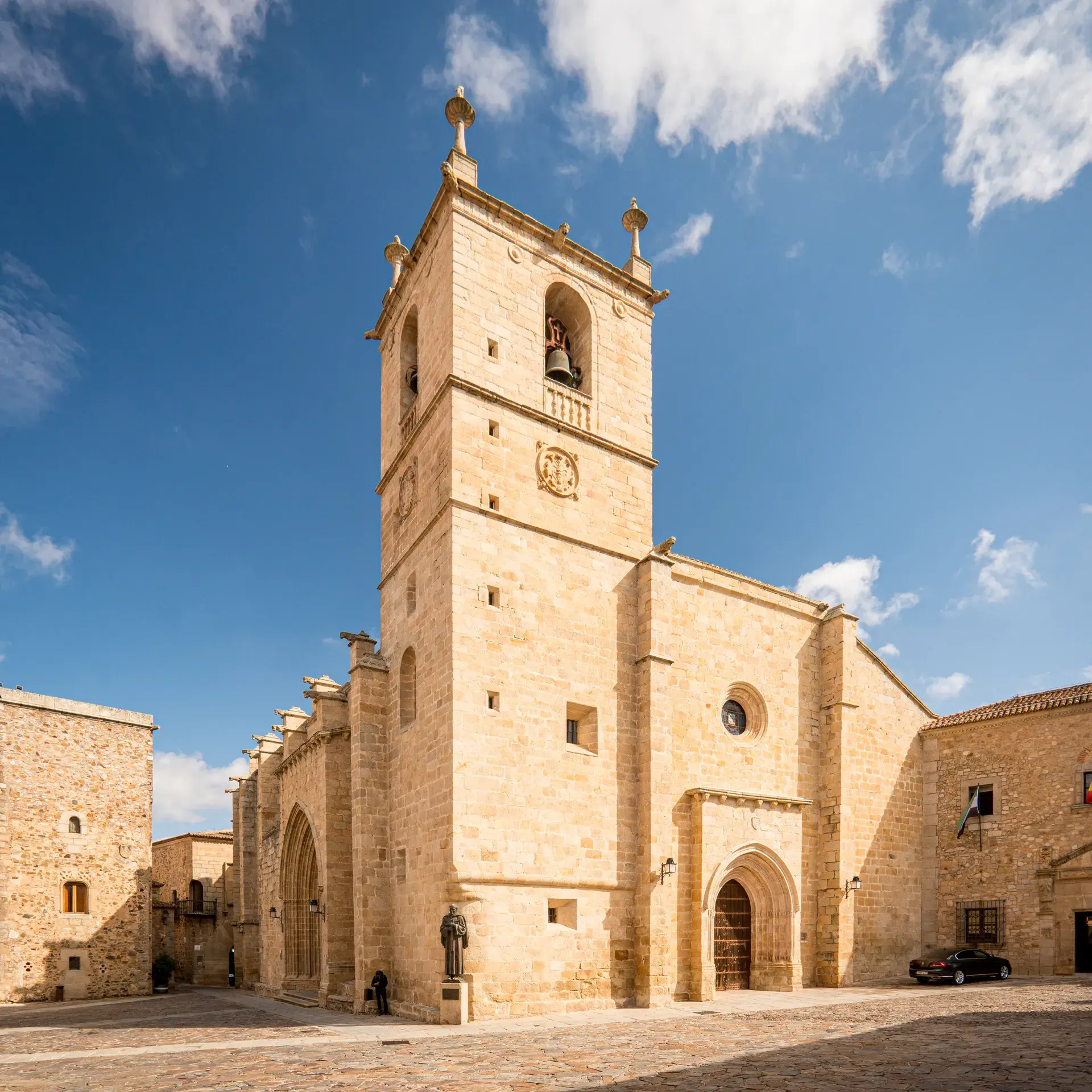
The palace houses a military arms museum featuring historical weapons and artifacts on loan from the Museo del Ejército, accompanied by spaces for temporary exhibitions. The 25-meter tower is also open for access, offering a 360-degree viewpoint over the historic quarter, adjacent to the Church of San Mateo and the Palacio de las Veletas.
FAQ
Why is the tower of Palacio de las Cigüeñas unique in Cáceres?
It is the only noble tower in Cáceres that retains its original battlements. Following the War of the Castilian Succession, Queen Isabella ordered all rival noble towers to be truncated to suppress factionalism, exclusively exempting Captain Diego de Ovando due to his loyalty.
How did the palace get the name Palacio de las Cigüeñas?
The name, which means Palace of the Storks, was given by locals because the high, unlopped battlements of the tower provided the primary nesting site for the city's white storks.
What is the building used for today?
Owned by the Spanish Ministry of Defence, the palace serves as the seat of the Comandancia Militar de Cáceres and houses a military arms museum with collections on loan from the Museo del Ejército.