Concatedral de Santa María: Cáceres Gothic Landmark
The Gothic Heart of Cáceres
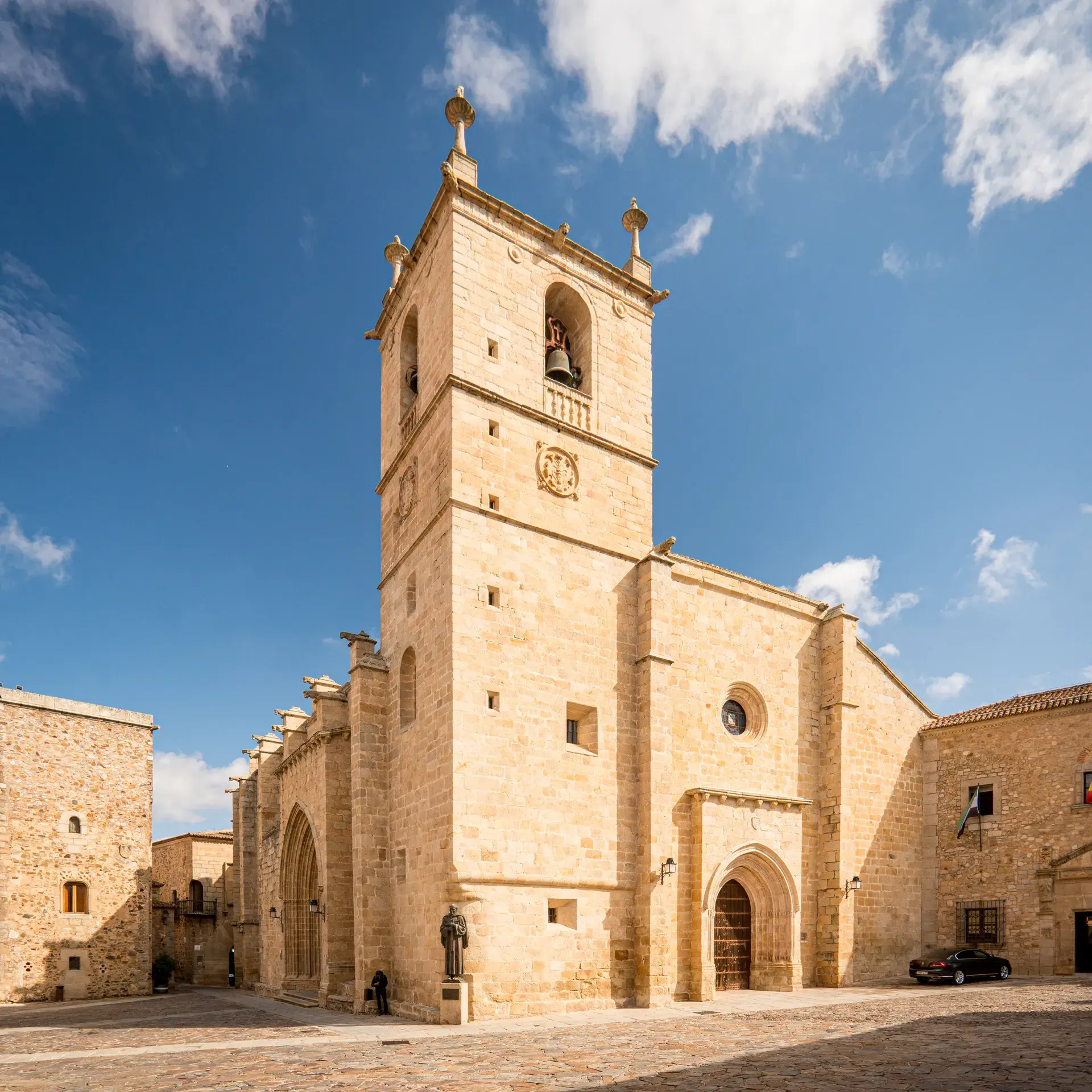
The Concatedral de Santa María (Co-Cathedral of Saint Mary) stands as the principal ecclesiastical monument within the walled old town of Cáceres. Situated in the monumental Plaza de Santa María, this granite ashlar structure is surrounded by historic residences, including the Episcopal Palace, the Palacio de Mayoralgo, and the Palacio de Hernando de Ovando. Designated a National Monument in 1931 and later included in the UNESCO World Heritage designation of Cáceres in 1986, the temple serves as a co-cathedral alongside Coria Cathedral within the Diocese of Coria-Cáceres.
Founded in the 13th century following King Alfonso IX of León’s conquest of Cáceres in 1229, the original building combined Romanesque and Mudéjar elements. Between the late 15th and mid-16th centuries, the parish church of Santa María la Mayor was dismantled and completely reconstructed in the late Gothic style to reflect the growing prestige of the local nobility. It retained its parish status until 1957, when Bishop Manuel Llopis Ivorra oversaw its official elevation to co-cathedral.
A Confluence of Civic and Religious Power
Long before a dedicated municipal building existed in Cáceres, the church served as a central venue for civic administration. The carved stone bench integrated directly into the exterior portal functioned as the open-air meeting site for the municipal council (Concejo Municipal). City leaders convened on this stone seat to conduct civic business under the shadow of the church, establishing the building as the operational core of medieval Cáceres.
Today, the temple remains an active Catholic church. In addition to daily and Sunday liturgies and cathedral chapter rites, it serves as the home for prominent Holy Week processions. The most famous of these is the midnight departure of the Hermandad del Cristo Negro on Holy Wednesday, an austere procession that winds through the dark, stone-paved streets of the historic quarter.
Distinctive Architecture and the Unpainted Altarpiece
The interior of the co-cathedral features three rectangular naves of equal height covered with intricate ribbed vaulting across five bays, paired with an elevated Renaissance choir tribune designed by Pedro de Marquina. The stone floor throughout the church is paved with individual burial slabs carved with the heraldic coats of arms belonging to prominent local families, such as the Carvajal, Mayoralgo, and Ovando lineages.
The most striking artistic feature inside the co-cathedral is its high altarpiece (retablo mayor), carved between 1547 and 1551 by sculptors Roque Balduque and Guillén Ferrant. While the overwhelming majority of Spanish Renaissance and Plateresque altarpieces were painted with vivid colors and coated in gold leaf, this work was deliberately left in unpainted, bare wood. Utilizing cedar for the sculpted figures and pine and Flemish oak for the framing, the altarpiece relies entirely on light, shadow, high relief, and natural grain to bring its biblical scenes to life.
The Bell Tower, San Pedro, and the Cristo Negro
The co-cathedral's exterior is anchored by a three-tiered Renaissance bell tower designed by Pedro de Ybarra and constructed between 1554 and 1556. Decorated with a carved central medallion of a vase of lilies—the traditional emblem of the Virgin Mary—the upper balustrades are a frequent nesting site for white storks. A stone spiral staircase inside the tower allows visitors to reach the upper terrace for panoramic views over the clay-tiled rooftops of Cáceres.
Near the foot of the tower stands a bronze statue of Saint Peter of Alcántara, patron of Extremadura, sculpted in 1954 by Enrique Pérez Comendador. Passersby frequently touch or kiss the statue's exposed toes for good luck, creating a bright, polished golden gleam against the dark, weathered bronze and the rough granite walls behind it.
Within the church, the Capilla de los Blázquez houses the 14th-century Cristo Negro, a crucifix carved from dark wood often identified as African iroko. For generations, local tradition held that anyone who viewed or touched the figure without devout faith and proper ritual prayers would suffer misfortune, blindness, or sudden death. The adjacent sacristy houses a sacred art museum displaying historic tombs, relics, and liturgical silver.
FAQ
Why is the high altarpiece of the co-cathedral unpainted?
Unlike most Spanish Renaissance altarpieces that were richly gilded and painted, sculptors Roque Balduque and Guillén Ferrant deliberately left the cedar, pine, and Flemish oak bare, allowing natural wood grain, carving relief, and lighting contrasts to define the artwork.
What historical civic role did the church portal serve?
Before the city built a dedicated town hall, the carved stone bench set into the church's exterior portal served as the official open-air meeting site for the municipal council (Concejo Municipal).
What legend surrounds the Cristo Negro?
Housed in the Capilla de los Blázquez, the 14th-century wooden crucifix was traditionally believed to bring misfortune, blindness, or sudden death to anyone who touched or gazed upon it without deep faith and proper prayer.
Why are the toes of the Saint Peter of Alcántara statue shiny?
The 1954 bronze statue by Enrique Pérez Comendador is the focus of a local tradition where visitors touch or kiss the saint's toes for good luck, buffing the bronze to a polished golden shine.