Ermita de San Antonio in Cáceres: Historic Chapel
Origins and the Synagogue Conversion
The Ermita de San Antonio occupies a defining site in the history of Cáceres, standing directly where the city's medieval synagogue once gathered the local Jewish community. Under Muslim rule and subsequent Christian governance, Jewish residents held recognized legal protections. These guarantees were confirmed by King Fernando III in the 1229 Fuero de Cáceres, a municipal charter that permitted community members to settle legal oaths upon the Torah within the synagogue.
The status of the site shifted decisively in 1470, when nobleman Alonso Golfín received authorization from Bishop Íñigo Manrique of Coria to replace or convert the synagogue into a Christian chapel dedicated to Saint Anthony of Padua. Eight years later, in 1478, municipal decrees forced the Jewish community out of the walled perimeter entirely. Residents relocated to the Judería Nueva near the Plaza Mayor, where they remained until the expulsion of 1492.
Vernacular Architecture and Design
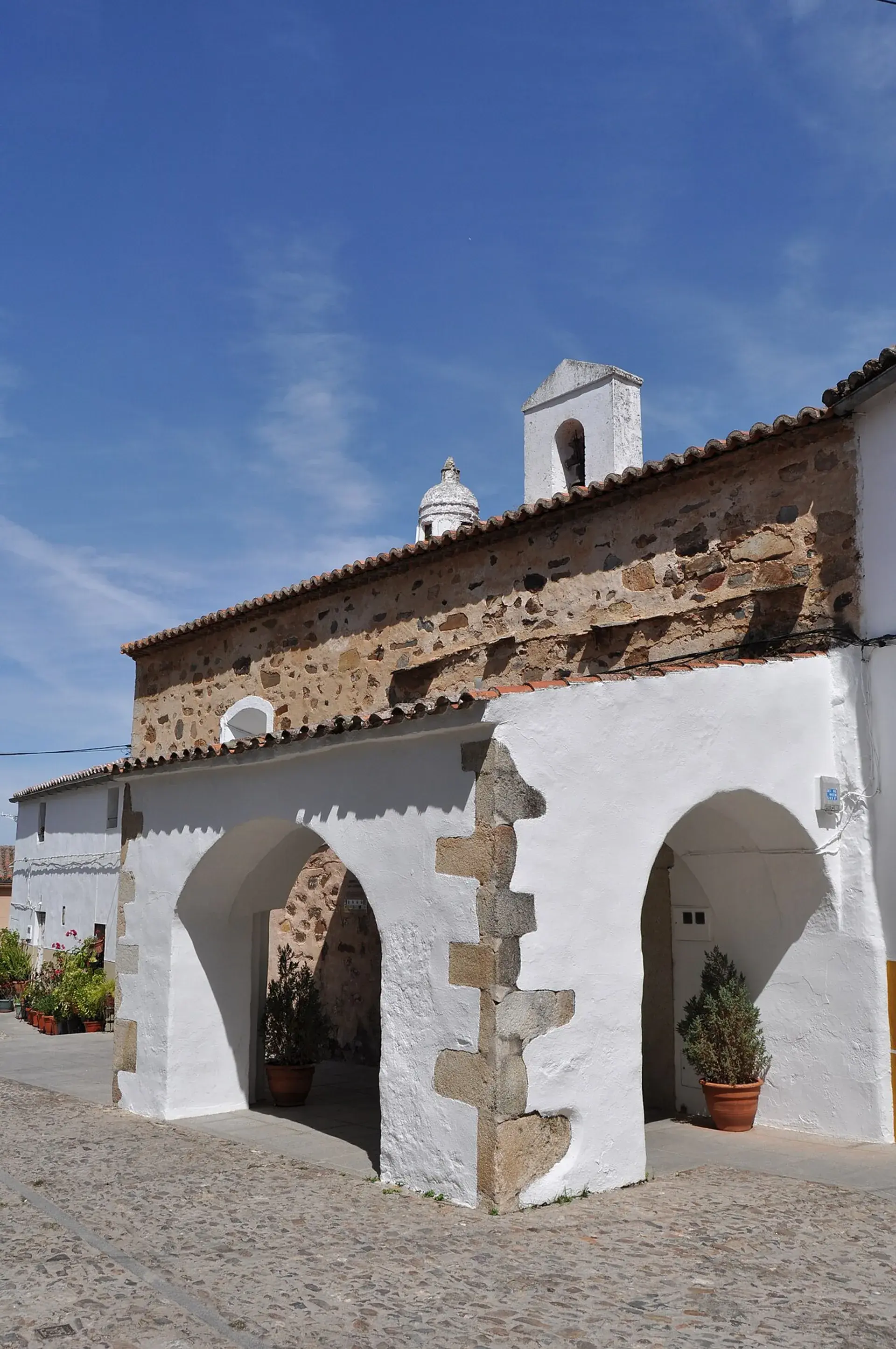
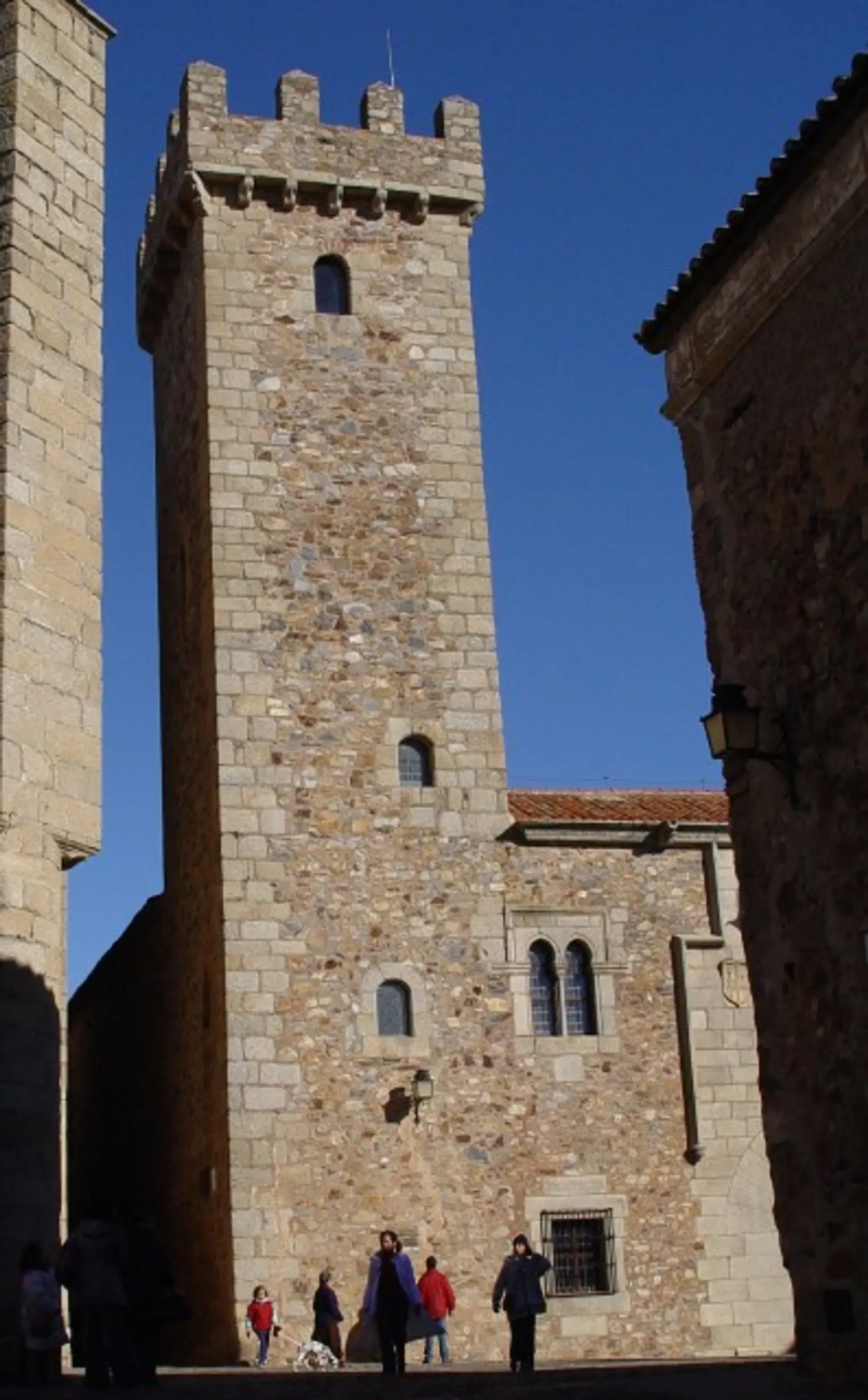
Unlike the monumental granite palaces and heraldic shields that dominate the central squares of Cáceres, the Ermita de San Antonio is built on a humble, domestic scale. The single-nave hermitage sits flush against the residential fabric and the fortified city wall, sharing the whitewashed character of the surrounding houses.
The exterior features an open three-arch portico and an 18th-century decorative tile depicting Saint Anthony. This modest aesthetic integrates the hermitage seamlessly into the everyday streetscape of the quarter rather than projecting ecclesiastical grandeur.
The Historic District of San Antonio
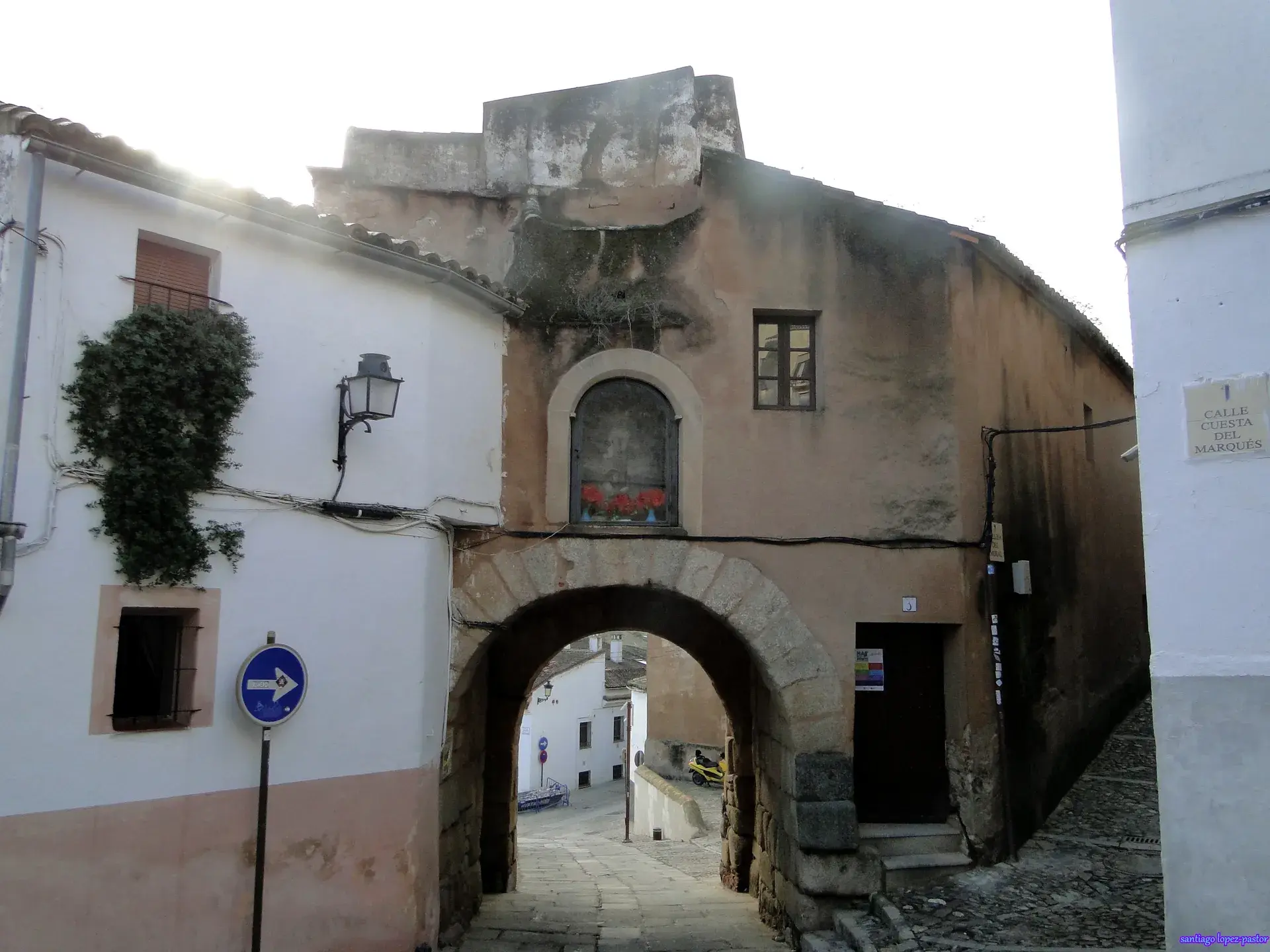
The hermitage stands in the Barrio de San Antonio, also known as the Judería Vieja or San Antonio de la Quebrada. The term quebrada refers to the steep, fractured slopes of the eastern perimeter above the Marco River valley. Cáceres is an active member of the Spanish Jewish Quarters Network (Red de Juderías de España – Caminos de Sefarad).
The quarter provides a transition between the aristocratic residences around Plaza de Santa María and Plaza de San Mateo and the eastern fortifications. Nearby landmarks along streets such as Calle Barrio de San Antonio, Callejón del Moral, and Rincón de la Monja include the 12th-century Almohad Baluarte de los Pozos, the Roman Arco del Cristo (Puerta del Río), and the local photo landmark known as the Puerta Azul, a whitewashed house featuring vibrant blue door and window trim.
Current Access and Community Use
The Barrio de San Antonio forms an integral part of the Cáceres UNESCO World Heritage site and remains an open residential neighborhood accessible to the public on foot at all times. The Ermita de San Antonio welcomes visitors and continues to hold active religious services, hosting a weekly Catholic mass on Tuesday afternoons.
FAQ
What previously stood on the site of the Ermita de San Antonio?
The hermitage was built directly over the primary synagogue of the walled Jewish quarter of Cáceres following episcopal authorization granted in 1470.
What architectural features distinguish the chapel?
Unlike the massive granite palaces nearby, the chapel has a modest domestic scale, an open three-arch portico, and an 18th-century tile depicting Saint Anthony.
When is the Ermita de San Antonio open for religious services?
The chapel hosts a weekly Catholic mass alongside visitor access on Tuesday afternoons.