La Virgen de la Estrella: The Gateway Shrine of Cáceres
The Shrine of Nuestra Señora de la Estrella
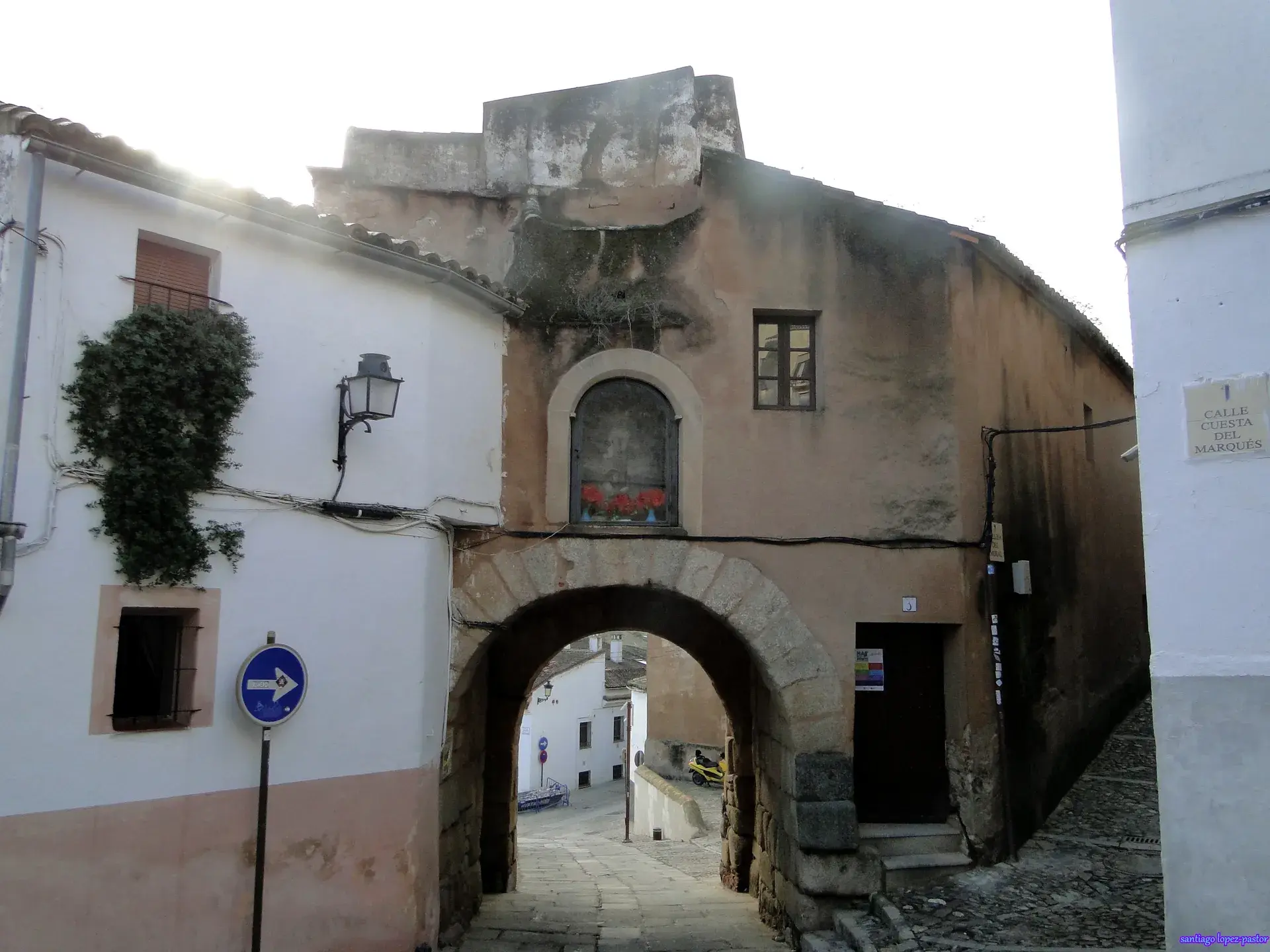
Set directly into the inner facade of the Arco de la Estrella stands the niche shrine dedicated to Nuestra Señora de la Estrella, or Our Lady of the Star. Positioned beneath a sculpted stone star and flanked by the coat of arms of the Carvajal family, the figure overlooks the threshold between the Plaza Mayor and the historic Ciudad Monumental of Cáceres.
A lantern hangs within the shrine, illuminating the stone recess and the figure of the Virgin. Historically, this image held deep significance for merchants and voyagers. Local travelers passing outward through the medieval gate would stop to pray before the Virgin for protection on the road, later returning to the shrine to offer gratitude after completing their journeys safely.
The Architecture of the Arco de la Estrella
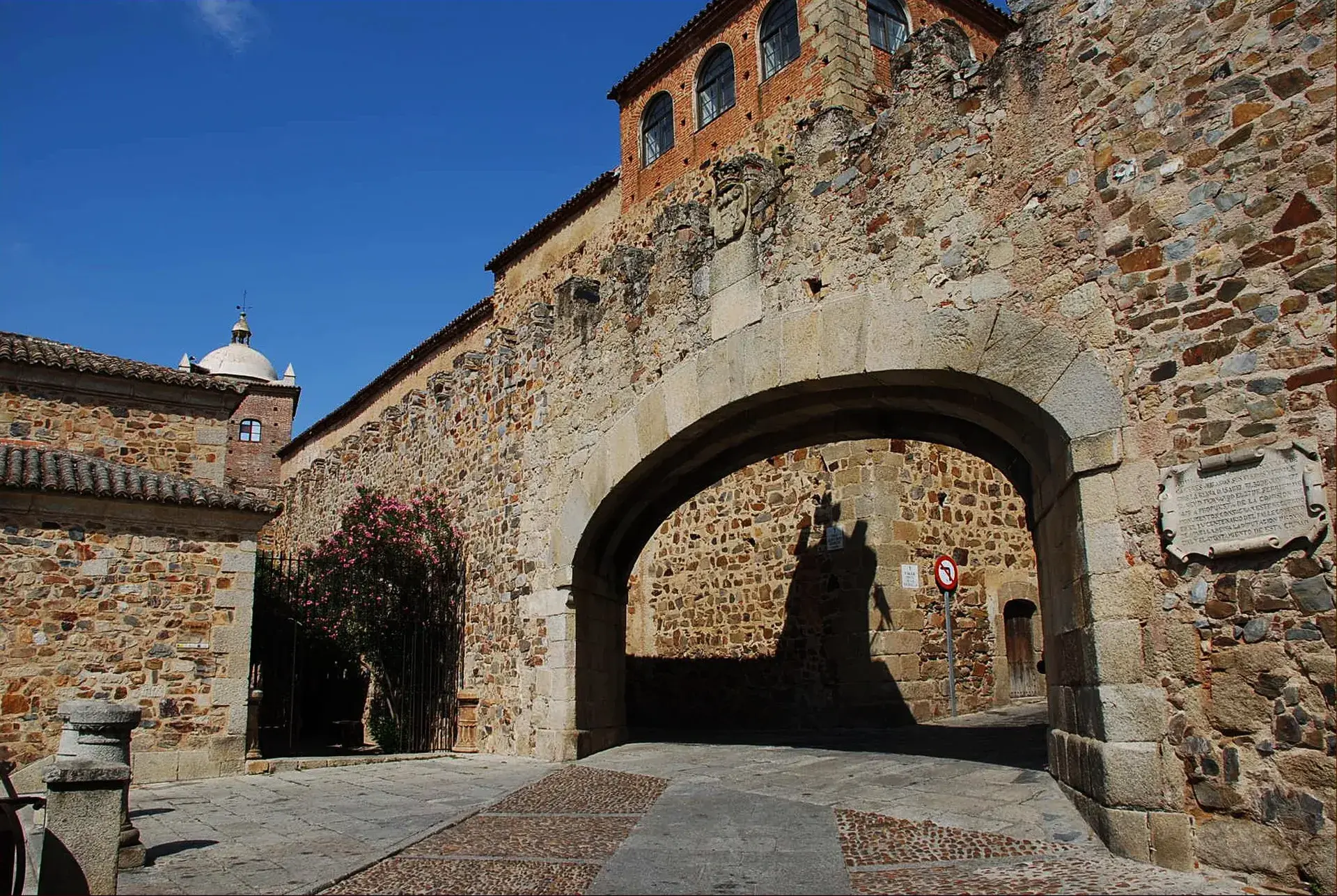
The shrine is integrated into the Arco de la Estrella, a wide Baroque segmental arch designed in 1726 by architect Manuel de Lara Churriguera. While the outer facade facing the Plaza Mayor features the carved stone coat of arms of Cáceres, the gateway's layout is structurally unique. Churriguera constructed an oblique skew arch (arco en esviaje), cutting diagonally through the ramparts rather than perpendicular to the medieval wall.
This structural modification occurred not for defensive needs, but at the request of Bernardino de Carvajal Moctezuma, a perpetual alderman (regidor perpetuo) of Cáceres. The diagonal angle was engineered to solve a turning issue, widening the path so Carvajal's horse-drawn carriages could negotiate the sharp bend leading along the ramparts toward his family palace.
Historic Origins and Royal Oaths
Long before Churriguera’s Baroque intervention, the gateway existed as the Puerta Nueva. Established in the 15th century, the opening linked the active commercial market in the lower plaza with the aristocratic residences inside the fortified city.
The portal also served as the site for momentous civic oaths. In 1477, Queen Isabella I of Castile swore to protect the city's fueros—its traditional municipal charters and legal privileges—at the original gate. King Ferdinand II of Aragon took the identical oath at the same gateway two years later in 1479.
A Gateway to the Ciudad Monumental
Today, the Arco de la Estrella remains the central pedestrian and ceremonial portal into the UNESCO World Heritage-listed historic quarter of Cáceres. Stepping beneath the wide stone vault marks an atmospheric shift, moving from the bright openness of the Plaza Mayor into narrow, shaded granite alleys that lead toward the Co-Cathedral of Santa María.
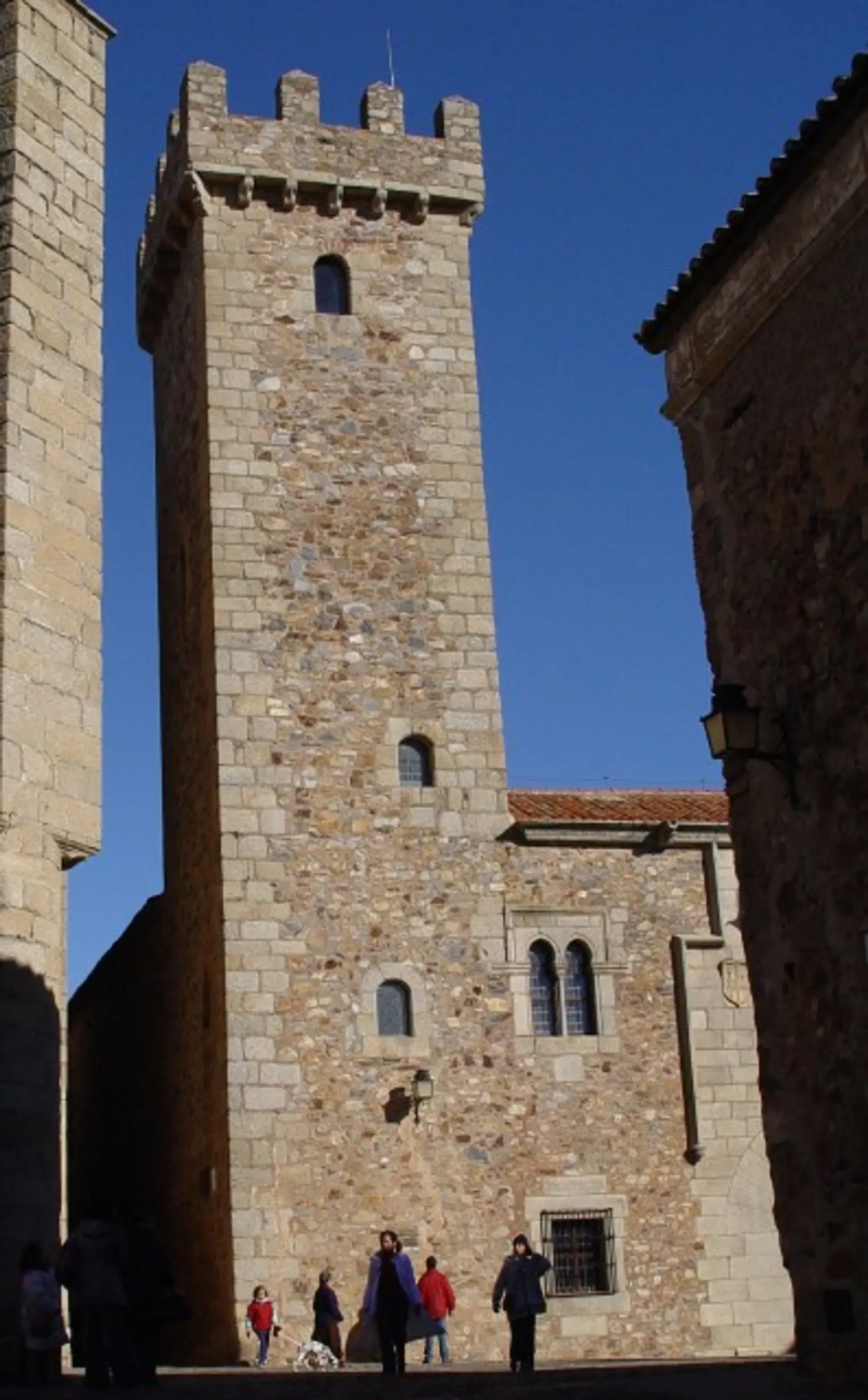
Visitors to the adjacent Torre de Bujaco museum can traverse the elevated medieval parapet (adarve) that runs directly across the top of the arch to connect with the Torre de los Púlpitos. The gateway and its ramparts also achieved modern international recognition as a filming location, representing the entrance to King's Landing during Euron Greyjoy's procession in Season 7 of Game of Thrones.
FAQ
Where is the shrine of La Virgen de la Estrella located?
The shrine is set in a niche on the interior facade of the Arco de la Estrella, which serves as the western gateway from the Plaza Mayor into the Ciudad Monumental of Cáceres.
Why was the Arco de la Estrella built at an oblique angle?
Architect Manuel de Lara Churriguera built an oblique skew arch in 1726 to accommodate the turning radius of horse-drawn carriages belonging to nobleman Bernardino de Carvajal Moctezuma.
What royal events took place at this gate?
Queen Isabella I of Castile in 1477 and King Ferdinand II of Aragon in 1479 both swore to uphold the municipal charters (fueros) of Cáceres at the site of the gate.