Plaza Mayor in Cáceres: History and Architecture
The Historic Seam of Cáceres
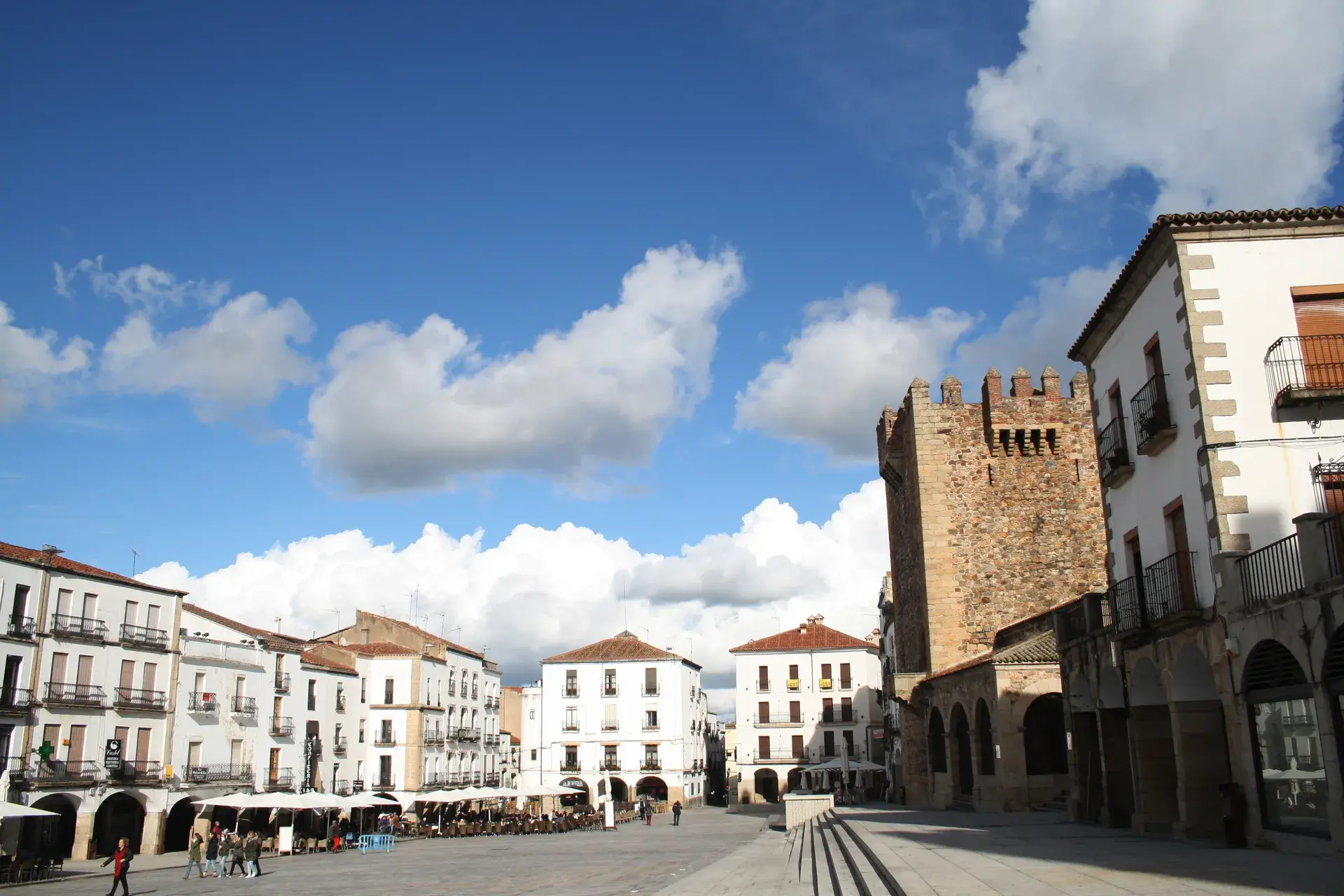
Plaza Mayor is the principal public square of Cáceres, located immediately outside the western boundary of the walled medieval city, known as the Ciudad Monumental. Historically, the plaza served as a geographic and social transition point, forming the boundary line between the aristocratic, inward-facing fortified town filled with noble palaces and the bustling commercial life of extramuros merchants and commoners.
The layout is defined by an open, gently sloping expanse of granite pavement. This wide civic space sits in stark contrast with the towering vertical backdrop of ochre masonry battlements and medieval fortifications along its eastern flank.
Medieval Fortifications and Landmark Towers
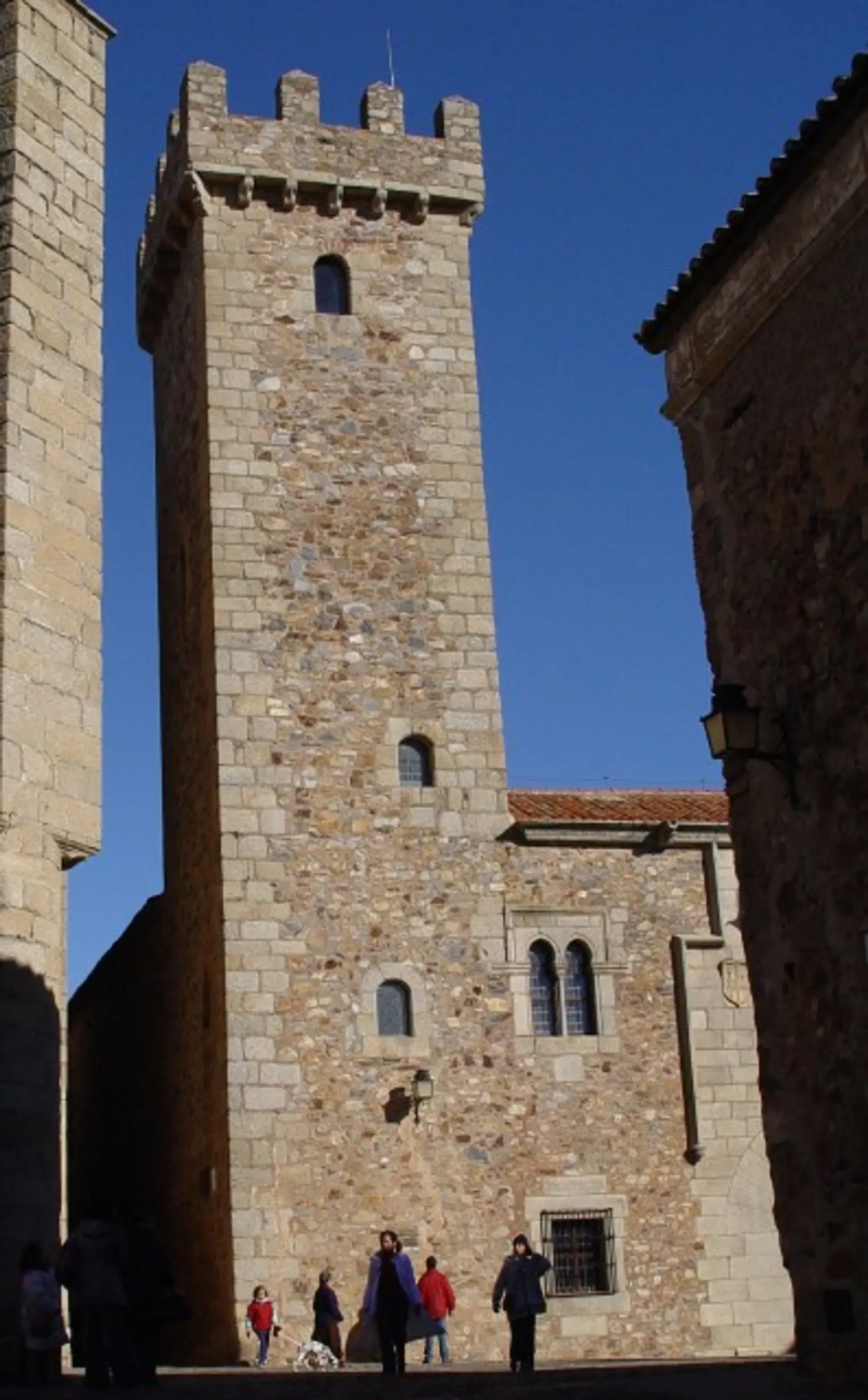
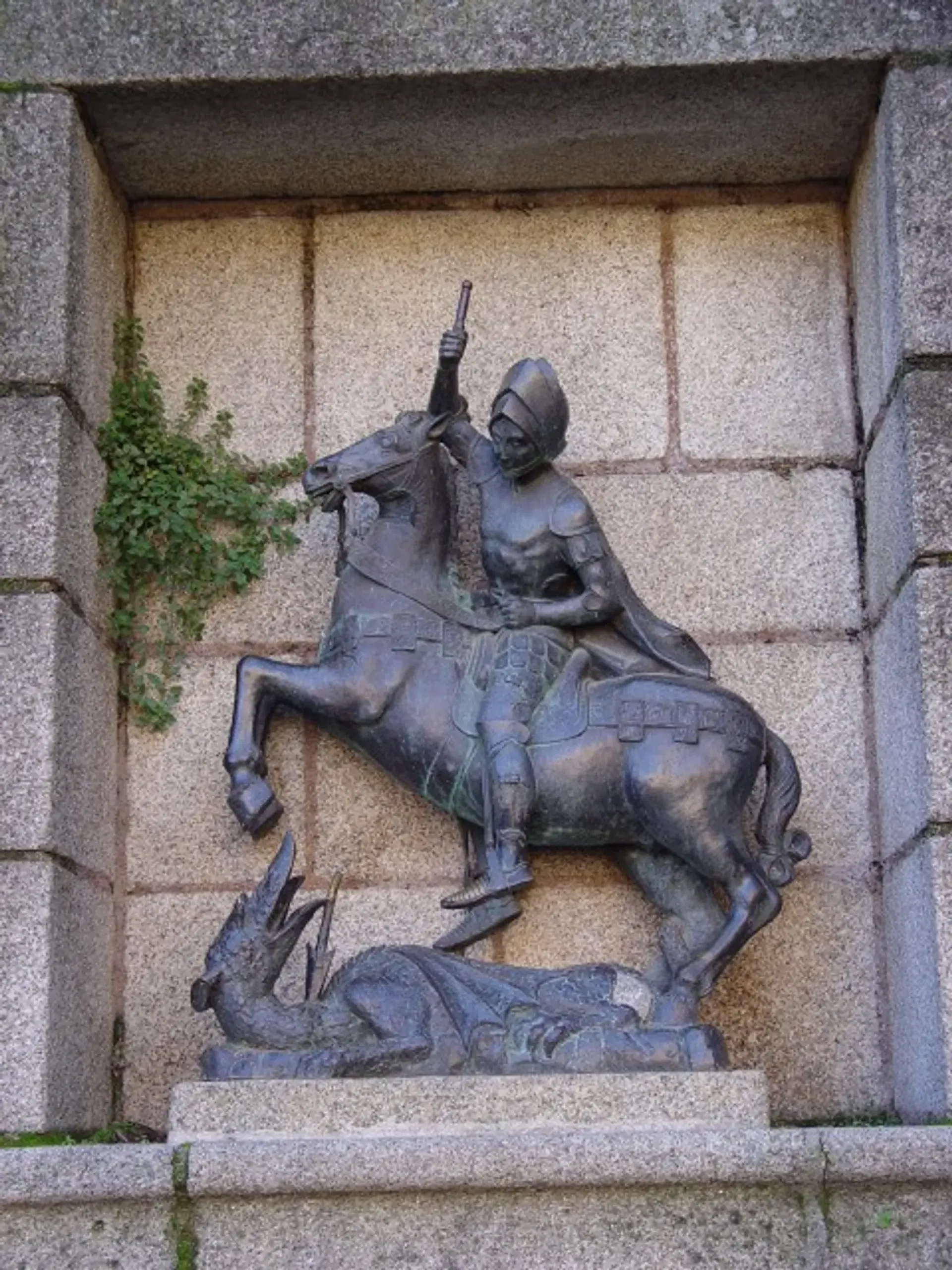
The eastern border of Plaza Mayor is dominated by historic defenses. Among the key structures is the 12th-century Almohad Torre de Bujaco, alongside the Torre de los Púlpitos and the Torre de la Yerba. The origin of the Torre de Bujaco's name is tied to two distinct traditions: one credits the Almohad caliph Abu Ya'qub Yusuf, while another links it to buhaco, a local term for a rag doll. The latter was applied as a mockery of a Roman statue representing a winged genius that was positioned on the battlements between 1820 and 1962.
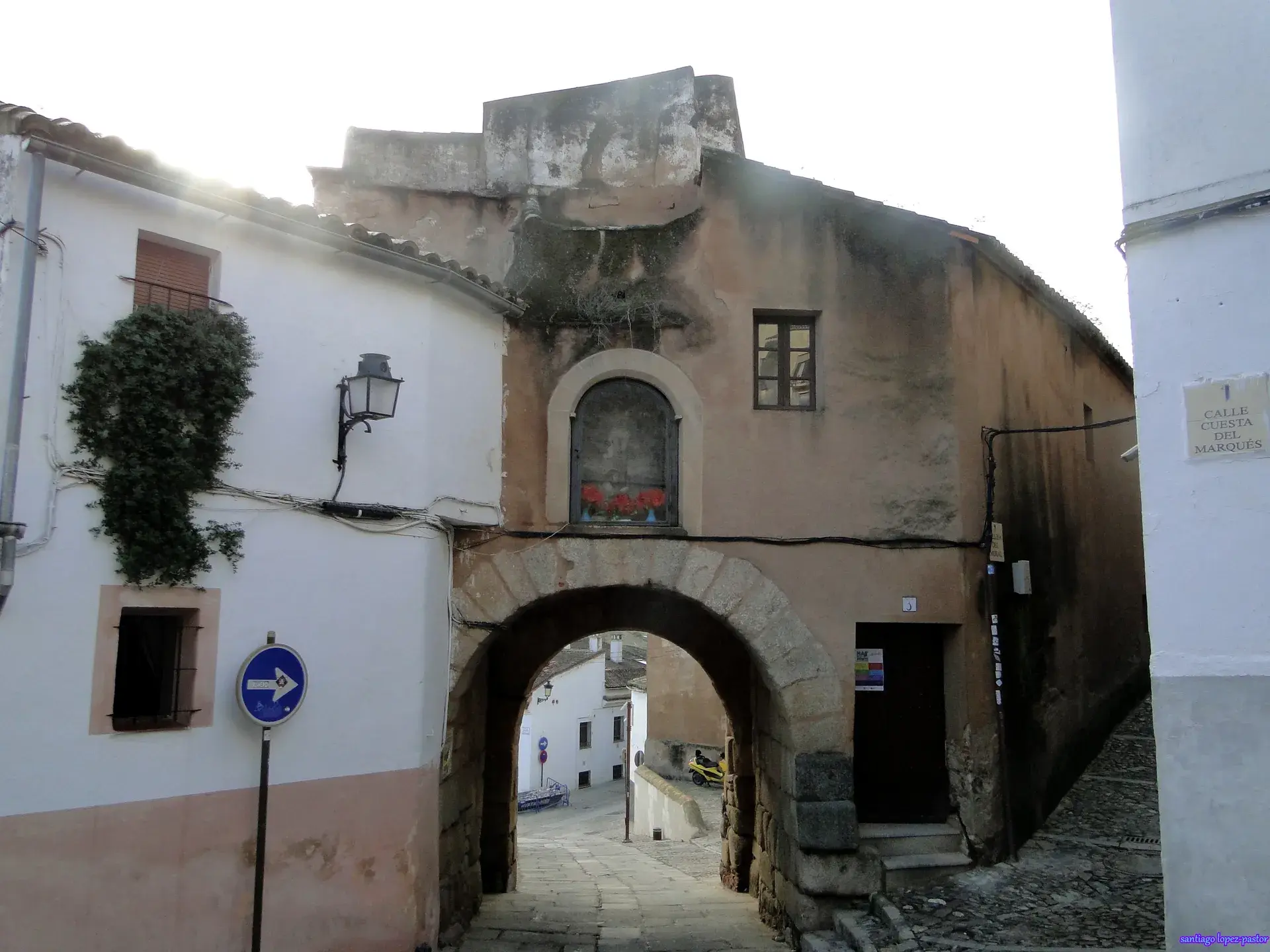
Also along this eastern edge stand the 18th-century Ermita de la Paz and the Arco de la Estrella. The gate was designed at an oblique angle by Manuel de Lara Churriguera in 1726 to replace the medieval Puerta Nueva. The demolition and subsequent construction met fierce opposition from the local bishop, who went so far as to excommunicate the municipal council and the builders involved in the project.
Evolution from Open Field to Civic Center
During the early Middle Ages, weekly markets took place inside the city walls in front of the Church of Santa María. By the 14th century, expanding trade outgrew the intramuros enclosure, prompting merchants and seasonal fairs to relocate outside the fortifications to an open field, establishing the square's permanent commercial role.
Over the course of the 15th and 16th centuries, temporary timber-post awnings were replaced by permanent masonry porticoes (soportales) on the western perimeter, creating sheltered stalls for artisans and merchants in Renaissance and vernacular styles. Civic governance formally shifted to the plaza following a royal decree in 1480, which instituted the Casa del Corregimiento. Today, the southern perimeter is anchored by the Cáceres City Hall (Ayuntamiento), designed by Ignacio María de Michelena and completed in 1869.
Throughout its history, the square hosted a diverse range of civic spectacles, including bullfights, jousting tournaments, military assemblies, royal proclamations, executions, and Inquisition autos-de-fe. The open layout narrowly escaped dramatic alteration in 1804, when a proposal was drawn up to build four private residences straight through the center of the square, an initiative that was ultimately discarded.
Modern Role and Civic Identity
Plaza Mayor operates as the central pedestrian threshold for entering the Ciudad Monumental via the ramp of the Arco de la Estrella. Its arcaded perimeters house active café and restaurant terraces, accommodating civic ceremonies, everyday gatherings, and major celebrations such as Holy Week (Semana Santa) processions.
Reflecting Spain's shifting political eras, the square has carried numerous names across the centuries. Documented titles include Plaza Pública, Plaza de la Feria, Plaza de la Constitución, Plaza de la Villa, and Plaza del General Mola, before arriving at its modern designation as Plaza Mayor.
FAQ
Why was the municipal council excommunicated during the construction of the Arco de la Estrella?
In 1726, the city demolished the medieval Puerta Nueva gate to build Manuel de Lara Churriguera's oblique-angled Arco de la Estrella. The local bishop strongly opposed the project and excommunicated the municipal council members and the builders responsible.
What are the theories behind the name of the Torre de Bujaco?
One tradition attributes the name to the Almohad caliph Abu Ya'qub Yusuf. Another tradition links it to 'buhaco', a regional term for a rag doll, which was used as a derisive nickname for a Roman statue positioned on the tower's battlements between 1820 and 1962.
What previous names has Plaza Mayor held?
Historically, the square has been officially known as Plaza Pública, Plaza de la Feria, Plaza de la Constitución, Plaza de la Villa, and Plaza del General Mola.