Cádiz Cathedral: A Golden Age Masterpiece
Cádiz Cathedral, officially the Catedral de Santa Cruz de Cádiz, stands as a monumental testament to the city's 18th-century Golden Age. Its construction spanned 116 years, resulting in a building that tells a story of shifting fortunes and architectural tastes, most visibly in its striking two-toned facade. Known locally as the Catedral Nueva (New Cathedral), it replaced an older, smaller cathedral deemed insufficient for a city at the height of its wealth and influence.
A Monument to a Golden Age
The decision to build a grand new cathedral was a direct result of Cádiz's immense prosperity. In 1717, the Casa de Contratación, which controlled all Spanish trade with the Americas, relocated from Seville to Cádiz. This move cemented the city's status as the principal port for trans-Atlantic commerce, ushering in an era of unprecedented wealth. The construction, which began in 1722, was largely financed by profits from this trade, earning the cathedral the nickname 'The Cathedral of the Americas.'
A Century of Shifting Styles
The cathedral's protracted construction period, from 1722 to 1838, is a key reason for its unique architectural character. The design evolved over time, beginning in the Baroque style under its first architect, Vicente Acero. Subsequent architects introduced Rococo elements, and the project was ultimately completed in the Neoclassical style. This blend is a physical record of the changing artistic trends and fluctuating economic conditions over more than a century.
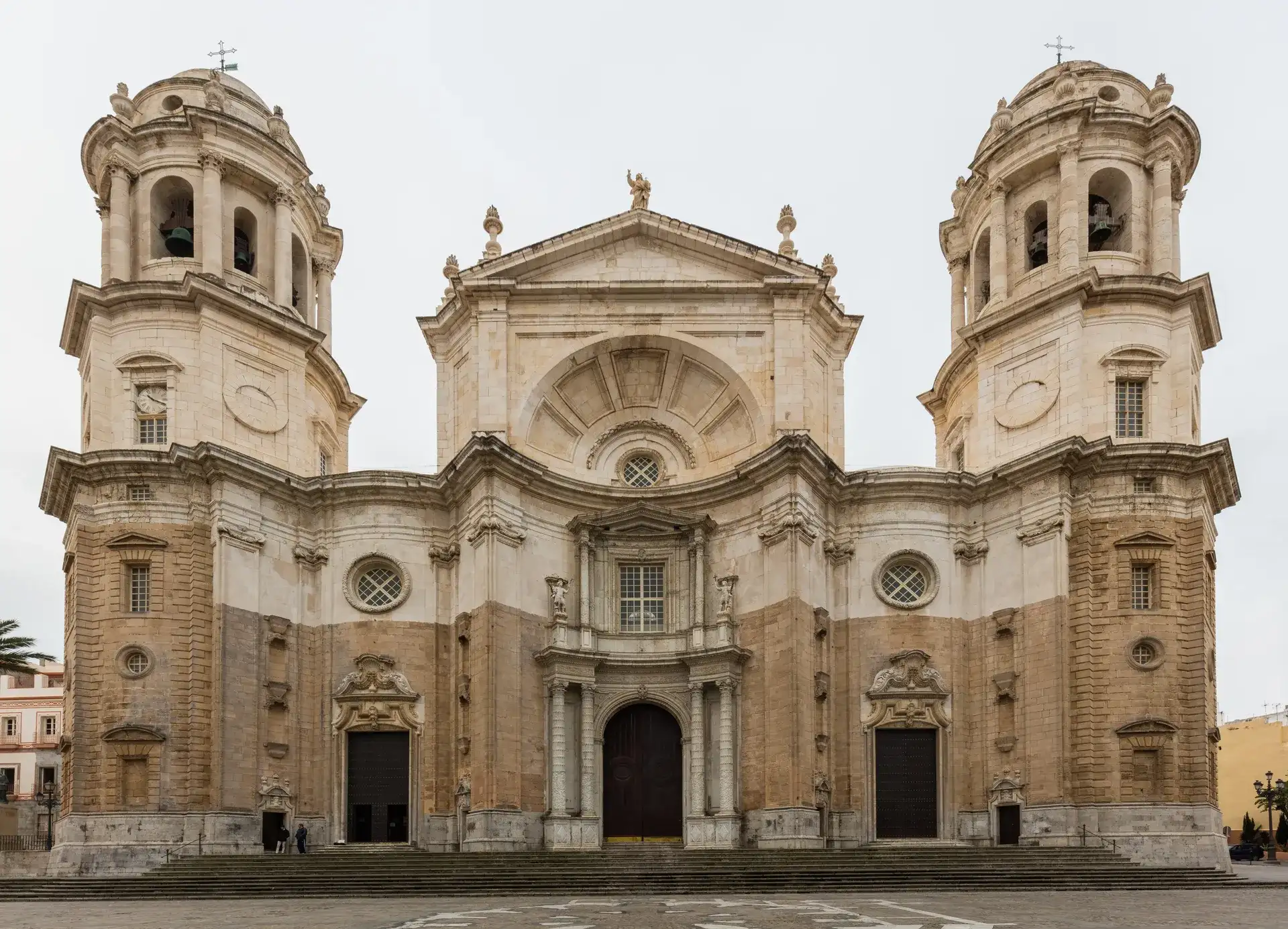
The most dramatic evidence of this long history is the cathedral's exterior. The lower sections feature a tan-colored shell limestone, characteristic of the initial Baroque design. The upper portions, however, were built with a lighter, less weather-resistant limestone, creating a distinct two-toned look. This change in materials reflected economic challenges and availability during the later stages of construction.
Art and Notable Figures
Inside, the cathedral houses significant works of art. The chapels of Saint Servando and Saint Germán contain sculptures of the city's patron saints created in 1687 by the celebrated Sevillian sculptress Luisa Roldán ('La Roldana'). The oldest painting in the cathedral, depicting the martyrdom of St. Sebastian, dates from 1621 and is the work of Genoese artist Andrea Ansaldi.
The cathedral's crypt is the final resting place for several prominent figures from Cádiz. Among them are the world-renowned composer Manuel de Falla and the poet and playwright José María Pemán. It also serves as the burial site for bishops of the diocese.
The Unique Crypt and Relics
The crypt is notable for its location below sea level, which gives it unusual acoustic properties, including distinct echoes. During high tides, it is reported that vibrations from the sea waves can be felt by touching the walls. The cathedral also holds several important relics, including the purported 'uncorruptable' remains of Saint Victoria in one of its chapels. Additionally, 17th-century reliquaries in the crypt are said to preserve fragments of the True Cross and a thorn from the Crown of Thorns.
The Cathedral Today
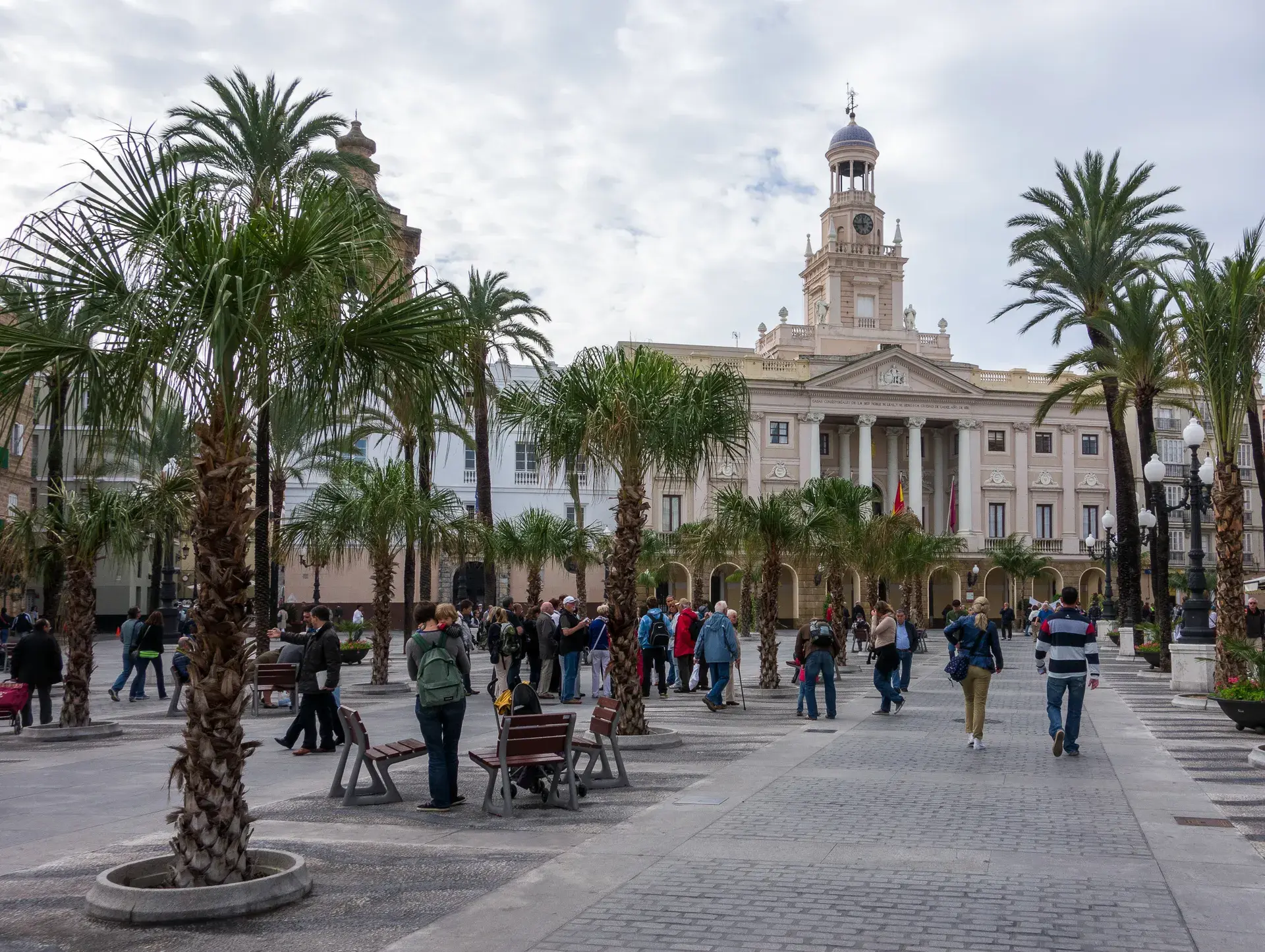
Cádiz Cathedral continues to serve its primary function as a Roman Catholic church and is the seat of the Diocese of Cadiz y Ceuta. It is also a major tourist attraction and was declared a Bien de Interés Cultural in 1931. Visitors can climb the Levante Tower, or Clock Tower, for panoramic views of the historic center and the Atlantic Ocean. The cathedral presides over the bustling Plaza de la Catedral, a popular gathering spot for locals and visitors alike.
FAQ
Why does Cádiz Cathedral have two different colors on its facade?
The two-toned appearance is a result of its 116-year construction period. The lower Baroque section was built with tan shell limestone, while the upper Neoclassical part used a different, lighter-colored limestone, reflecting changes in available materials and economic fortunes over time.
How long did it take to build Cádiz Cathedral?
The construction of Cádiz Cathedral was a lengthy process, spanning 116 years from its beginning in 1722 until its completion in 1838. It was consecrated in the same year.
Who is buried in the crypt of Cádiz Cathedral?
The crypt is the burial site for bishops of the diocese as well as prominent Cádiz natives. Notable figures interred there include the composer Manuel de Falla and the poet-playwright José María Pemán.
Can you go up the tower at Cádiz Cathedral?
Yes, visitors are able to ascend the Levante Tower, also known as the Clock Tower, to experience panoramic views of the city's historic center, the Atlantic Ocean, and the surrounding area.