Gran Teatro Falla: Cádiz's Carnival Heart
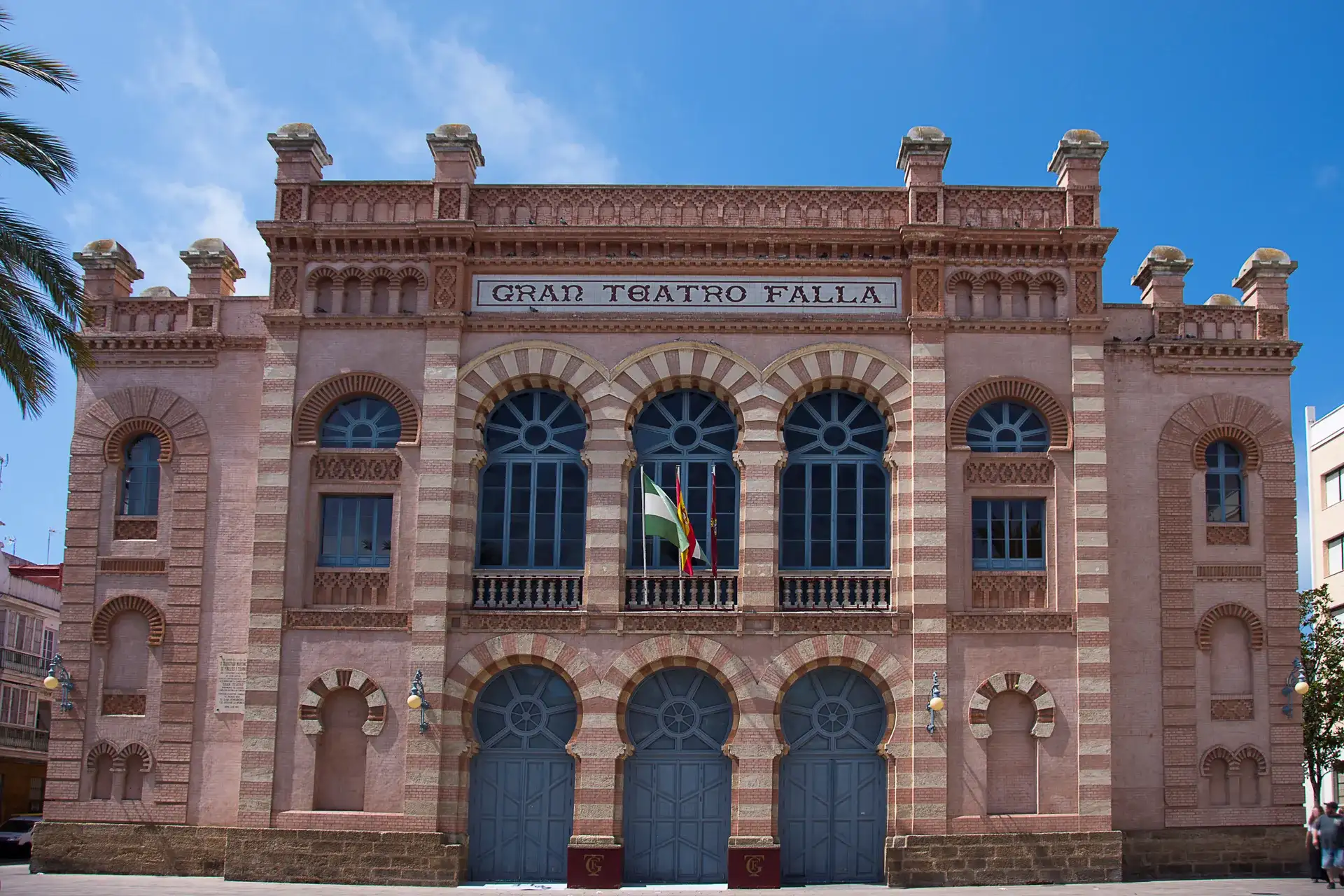
The Gran Teatro Falla stands as a central cultural landmark in Cádiz, Spain, instantly recognizable by its vibrant, colorful exterior. Its striking Neo-Mudéjar architecture has earned it the local nickname 'House of the Coloured Bricks,' making it a unique architectural statement in the city. More than just a beautiful building, the theatre is the beating heart of Cádiz's most cherished cultural tradition, the Carnival.
A History of Fire and Rebirth
The theatre's story begins with the destruction of its predecessor. The original Gran Teatro de Cádiz, a wooden structure built in 1871, was completely destroyed by a fire in 1881. Construction on the current building began on the same site in 1884, but the project faced significant financial difficulties, stretching the construction period over two decades.
The theatre was finally completed in 1905 and officially opened its doors on January 12, 1910, with a performance of a Barbieri symphony. Originally known simply as the Gran Teatro, it was renamed in 1926 to honor the renowned Cádiz-born composer Manuel de Falla. The building underwent significant renovations between 1987 and 1991 to preserve its historic structure.
Architectural Splendor
The Gran Teatro Falla is a celebrated example of the Neo-Mudéjar style, which integrated Islamic Andalusian motifs into 19th-century Spanish Romanticism. Its façade is defined by red brick and distinctive horseshoe arches. The design was initiated by architects Adolfo Morales de los Ríos and Adolfo del Castillo Escribano, with municipal architect Juan Cabrera de la Torre later making significant modifications and overseeing its completion.
Inside, the main ceiling features a magnificent fresco by Felipe Abarzuza y Rodríguez de Arias depicting an 'Allegory of Paradise.' Abarzuza's other works in the theatre's Ambigú bar area, which showed the four seasons as semi-naked women, faced censorship during the dictatorship, where children were reportedly given cardboard visors to block the view of the figures. In a curious historical footnote, a 1951 proposal to replace the iconic Neo-Mudéjar façade with a neo-Classical one was ultimately abandoned.
The Epicenter of Cádiz Carnival
The theatre's identity is profoundly intertwined with the Cádiz Carnival. In 1927, it hosted its first Carnival performance, and since 1949, it has been the revered venue for the Official Contest of Carnival Groups (COAC). Every February, the theatre becomes an intensely charged space for the satirical sung poetry competition.
For several weeks, groups such as chirigotas, comparsas, coros, and cuartetos compete on its stage, making the Falla the undisputed epicenter of this iconic festival. The event is a cornerstone of local culture, with tickets often booked months in advance by enthusiastic residents.
A Dynamic Cultural Hub
Beyond the Carnival, the Gran Teatro Falla serves as Cádiz's primary performance venue throughout the year. It is a dynamic cultural space, not a static monument, hosting a diverse program that includes opera, classical concerts, theatrical productions, flamenco, stand-up comedy, and dance performances. The theatre also hosts other major events, including the Iberoamerican Theatre Festival (FIT) in October and the Alcances Documentary Film Festival in September.
FAQ
Why is the Gran Teatro Falla famous?
The Gran Teatro Falla is famous for its distinctive Neo-Mudéjar architecture and for being the primary venue for the official singing competition (COAC) of the world-renowned Cádiz Carnival.
Who is the Gran Teatro Falla named after?
The theatre was renamed in 1926 to honor the celebrated Cádiz-born composer, Manuel de Falla, who is considered one of Spain's greatest musical figures of the 20th century.
What is the architectural style of the Gran Teatro Falla?
The theatre is a prominent example of the Neo-Mudéjar style, characterized by its vibrant red brick façade and distinctive horseshoe arches, which draw inspiration from Islamic Andalusian motifs.
When was the Gran Teatro Falla built?
Construction on the Gran Teatro Falla began in 1884 and was completed in 1905, though it did not officially open to the public until January 12, 1910. The long construction period was due to budget problems.