Plaza de las Flores & Central Market: Cádiz's Historic Heart
Plaza de las Flores and the Mercado Central de Abastos form a vibrant commercial and social core in the historic center of Cádiz. This bustling area combines the delightful aroma of fresh blooms from the plaza's flower stalls with the strong sea aromas of fresh seafood from the market, creating a unique sensory experience that embodies the city's daily life.
The Historic Mercado Central de Abastos
The Mercado Central de Abastos holds the distinction of being Spain's oldest continuously operating covered market. Inaugurated in 1838, it was commissioned by the City Council to provide a hygienic, centralized space for the food trade. The market was constructed on the grounds of the former Convento de Los Descalzos, a 17th-century convent.
The original neoclassical design, featuring Doric columns, is attributed to architect Torcuato Benjumeda. The structure underwent significant renovations over the years, including an expansion in 1929 and a comprehensive modernization completed around 2009. Beyond commerce, the market also served as a venue for theatrical performances and festivals during the 19th century.
A Modern Hub of Commerce and Cuisine
Today, the Central Market remains a vital hub for local life. It functions as a traditional food market with over 160 stalls where vendors sell fresh fish, shrimp, meats, fruits, and regional delicacies. It is a primary spot for locals conducting their daily shopping.
A key feature is the 'Rincón Gastronómico,' or Gastronomic Corner. This food court offers a variety of tapas and local dishes, becoming a popular social gathering place that stays open late, especially on weekends. The market is a cornerstone of the community, supporting numerous small businesses.
Plaza de las Flores: An Architectural Showcase
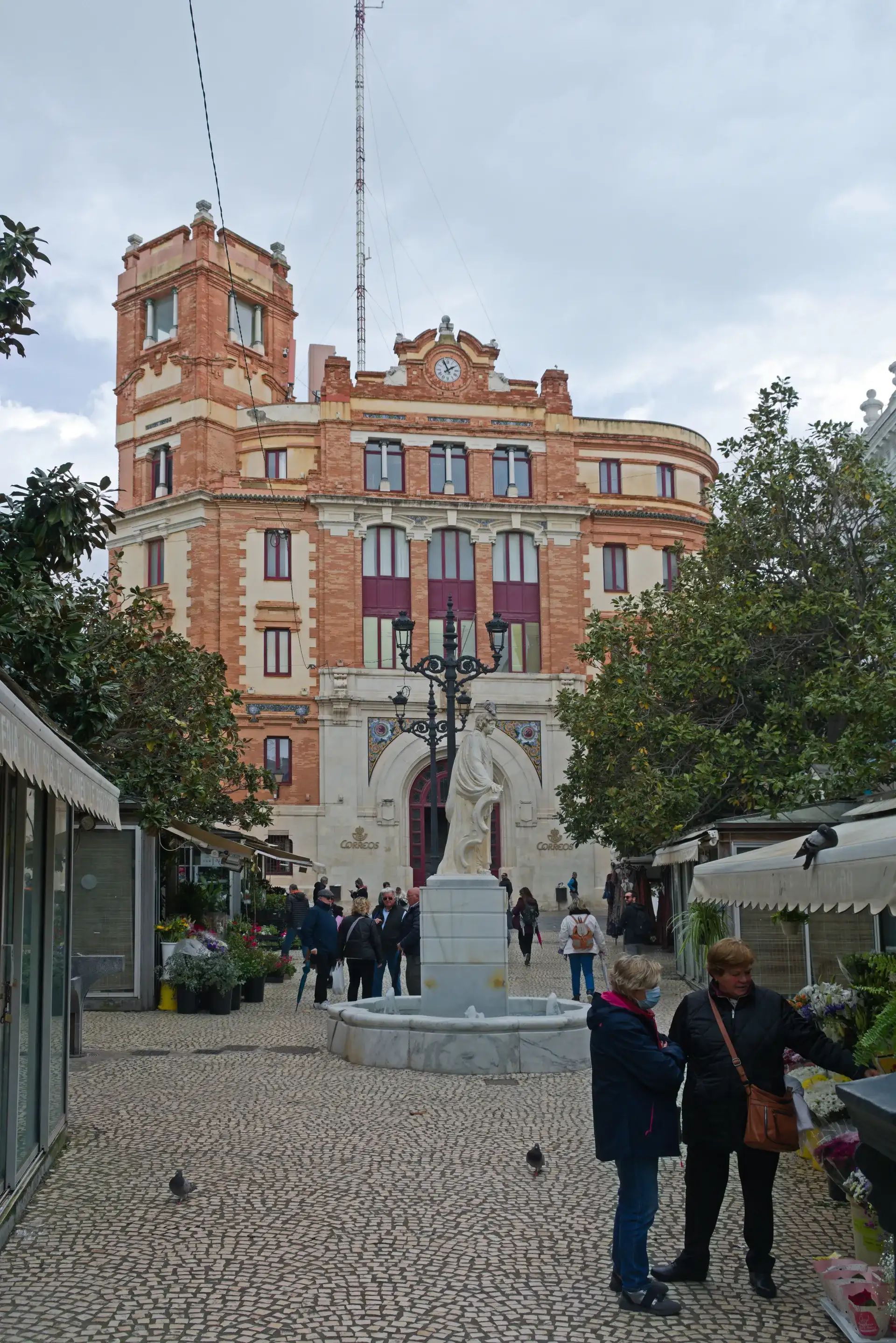
Adjacent to the market is the pedestrianized Plaza de las Flores, officially named Plaza de Topete after a 19th-century admiral. The square is an open-air gallery of architectural history, with buildings spanning several centuries. Notable structures include a Gaditan Baroque building from 1746 and a neoclassical work by Torcuato Benjumeda.
The dominant building is the eclectic, regionalist-style Post and Telegraph (Correos) building. Inaugurated in 1930, its brick and glazed ceramic tile facade stands on the site where the church of the demolished Convento de los Descalzos once stood. In the center of the plaza is a statue commemorating Lucio Junio Moderato Columela, a Roman writer from Cádiz known for his works on agriculture.
The Vibrant Life of the Plaza
The plaza lives up to its popular name with active flower stalls that have been present for generations. It serves as a popular meeting point for residents and visitors, surrounded by cafes, restaurants, and shops. The historic Post Office building continues to operate. During the city's famous Carnival, the square becomes a lively stage for street performances, continuing its tradition as a center for cultural activity.
FAQ
What is special about the Cádiz Central Market?
The Mercado Central de Abastos is Spain's oldest continuously operating covered market, inaugurated in 1838. It was also built on the former grounds of the 17th-century Convento de Los Descalzos.
What can you find at the Mercado Central today?
The market has over 160 stalls selling fresh seafood, meats, fruits, and vegetables. It also features the Rincón Gastronómico, a food court offering tapas and local cuisine that stays open late.
Why is the square called Plaza de las Flores?
Although its official name is Plaza de Topete, it is popularly known as Plaza de las Flores (Square of the Flowers) due to the numerous flower stalls that have been a feature of the square for generations.
What is the large building in Plaza de las Flores?
The dominant building is the main Post and Telegraph (Correos) office, inaugurated in 1930. It was designed in an eclectic regionalist style and is notable for its use of brick and glazed ceramic tiles.