Calle de las Teterías: Granada's Tea House Street
Nestled in the historic Albaicín neighborhood of Granada, Calle de las Teterías offers an immersive experience that evokes the city's deep Moorish past. While popularly known as "Tea Houses Street," its official name is Calle Calderería Nueva. This vibrant pedestrian thoroughfare serves as a tangible link to centuries of Islamic heritage, standing in contrast to the Christian architecture elsewhere in the city center.
From Cauldrons to Tea Houses
The street's official name, Calle Calderería Nueva, means "New Cauldrons Street" and hints at its industrial origins. During the Moorish era, this area was a hub for artisans who crafted and repaired pots and cauldrons from brass and copper. It developed as a commercial zone connected to the ancient souk. After the Christian reconquest in 1492, many Moriscos—Muslims who converted to Christianity—continued their traditional crafts in this district, preserving its cultural fabric.
Over time, the street transformed from a metalworking center into the bazaar and tea district it is today. The tradition of teahouses as social gathering places dates back to the 8th-century Moorish invasion, and its modern revival on this street marks a significant cultural evolution.
A 'Little Marrakech' in Granada
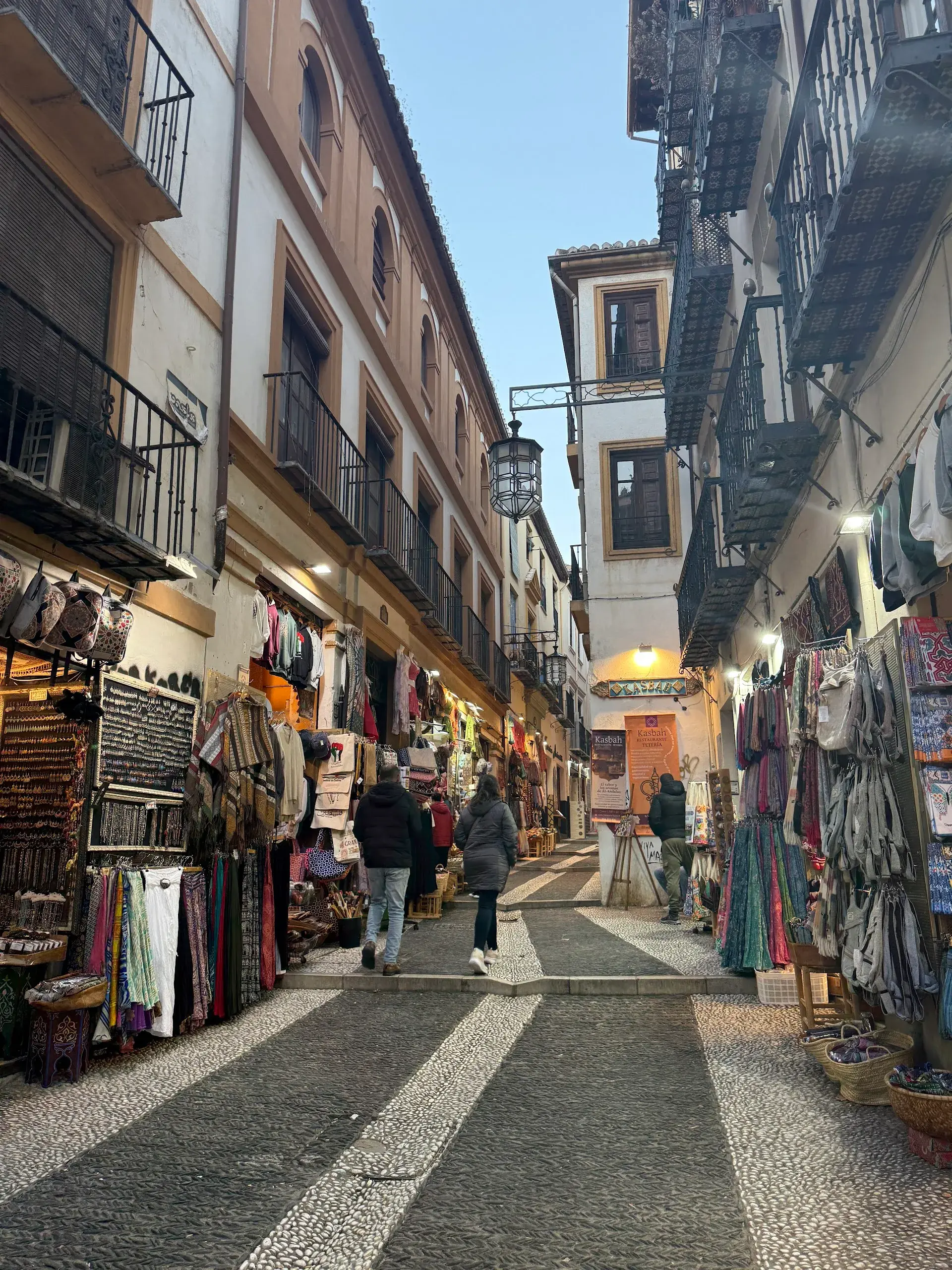
Today, Calle de las Teterías is often described as a "little Marrakech" due to its distinct atmosphere. The narrow, winding street is lined with low-rise buildings and traditional paving, reflecting its medieval Moorish architectural roots. It is a bustling commercial and cultural attraction for both locals and tourists.
The street is filled with shops selling Moroccan-inspired goods, including clothing, accessories, decorations, spices, and various handicrafts. Alongside the bazaars are numerous restaurants and the famous tea houses, or teterías, that give the street its popular name. These establishments are popular social spots for locals and students seeking a relaxed setting.
A Sensory Experience
The atmosphere of Calle de las Teterías is a feast for the senses. The air is filled with the pervasive aroma of spices, incense, and the sweet smell of tea wafting from the many shops and teterías. The sounds of Arabic music often drift from the establishments, completing the exotic ambiance.
The Culture of Tea
The teterías are central to the street's identity. They offer an extensive selection of teas, with some menus boasting over 80 varieties, including specific Arab, oriental, and even aphrodisiac blends. A staple is the traditional Moorish tea, made with green tea and mint, which is noted for its anti-inflammatory properties and digestive benefits. In addition to tea, most teterías serve traditional Moorish pastries and offer shisha or hookah smoking options.
FAQ
What is the official name of Calle de las Teterías?
The street popularly known as Calle de las Teterías (Tea Houses Street) is officially named Calle Calderería Nueva, which translates to "New Cauldrons Street," reflecting its past as a district for metalworkers.
What can you find on Calle de las Teterías?
Calle de las Teterías is a pedestrian street filled with tea houses (teterías), restaurants, and shops selling Moroccan-inspired goods like clothing, decorations, spices, and handicrafts.
Where is Calle de las Teterías located?
It is located in the lower Albaicín neighborhood of Granada, Spain, a historic district recognized for its medieval street plan and strong Moorish cultural influence.
What kind of tea is served in the teterías?
The teterías serve a wide variety of teas, with some menus featuring over 80 types. A staple is traditional Moorish tea, made with green tea and mint. Many establishments also offer shisha (hookah) and Moorish pastries.
Discover Granada like never before
Dive into Granada hidden stories and secret spots with Ciceru interactive tours.
Explore tour
Audioguide
Quizzes
Maps
Solo
Couples
Groups & families

© Photo by Camila Pisani via Google Maps · Google Places