Corral del Carbón: Granada's 14th-Century Nasrid Inn
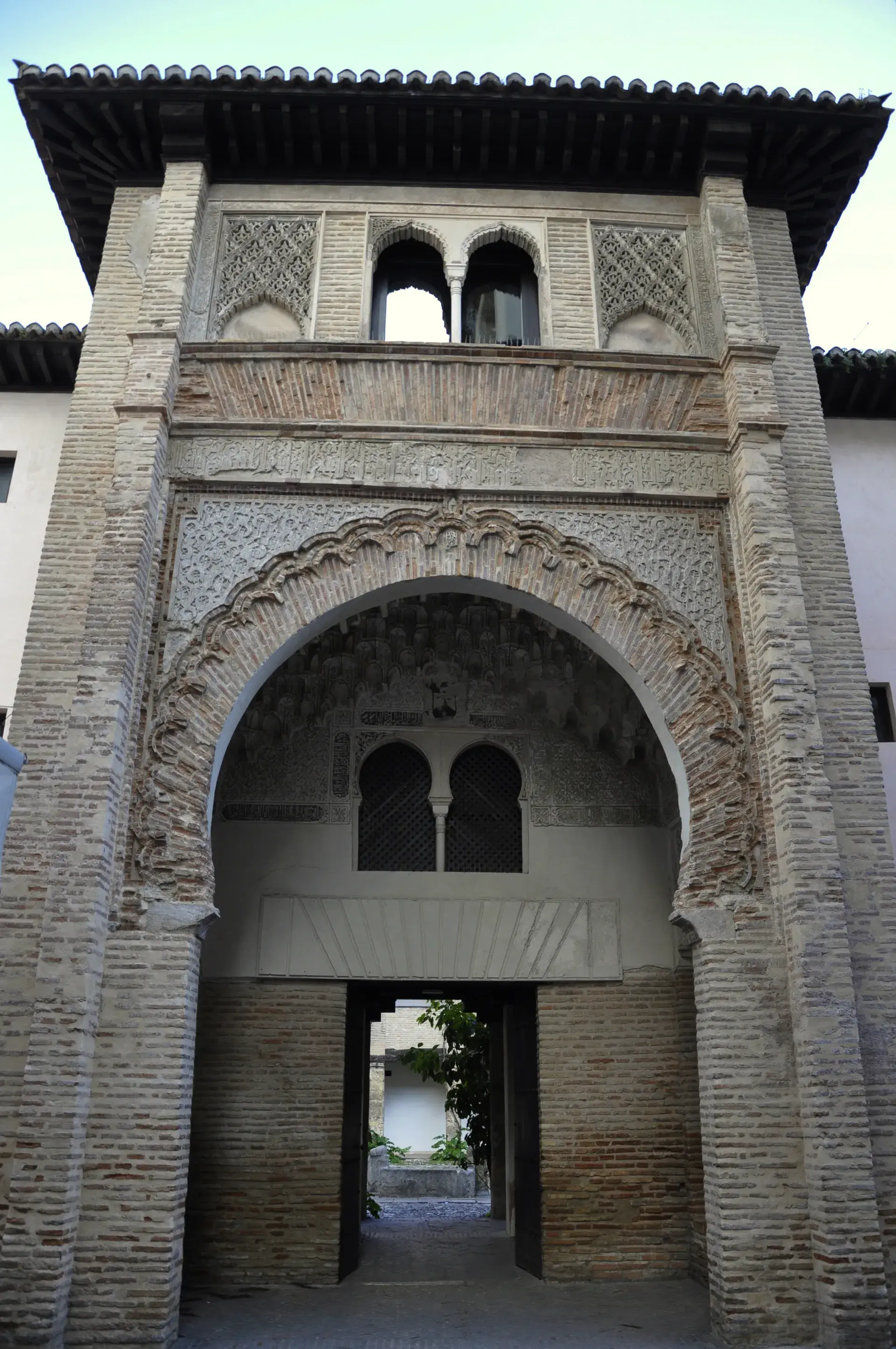
In the heart of Granada stands the Corral del Carbón, a remarkable monument of Islamic architecture and the only fully intact Nasrid alhóndiga, or inn, remaining on the Iberian Peninsula. Constructed in the early 14th century, this building offers a unique window into the city's bustling commercial past.
A Hub of Nasrid Commerce
Built before 1336 during the reign of Sultan Yusuf I, the structure was originally known as the Alhóndiga Gigida or al-Funduq al-Jadida. It served as a vital caravanserai—a combination of an inn, warehouse, and marketplace. Traveling merchants found lodging here while storing their grain and other goods. Its location was strategic, connected by a bridge over the Darro River to the Alcaicería, the city's main bazaar.
Life inside the alhóndiga was functional and secure. The upper floors, which housed the merchants, were designed without windows to prevent theft of the goods stored within. Accommodations were basic, with lamps provided but only large mats for sleeping, requiring guests to use their own cloaks for warmth. Security was paramount; the building's master, the fundeqayr, resided above the entrance and ensured the single main door was sealed from sunset to dawn.
A History of Transformation
Following the Christian conquest of Granada, the building's purpose evolved significantly. In 1494, the Catholic Monarchs granted the property to their lieutenant, Sancho de Arana. After being publicly auctioned in 1531, it found a new life in the 16th century as a vibrant open-air comedy theater, or Corral de Comedias, hosting performances until at least 1593.
From the 17th to the 19th centuries, the building's status declined. It was converted into a residential tenement, and its ground floor was used as a warehouse for storing and selling coal. It was during this period that it acquired its current name, Corral del Carbón, which translates to "Courtyard of Coal."
Rescue and Restoration
Declared a National Monument in 1918, the Corral del Carbón had fallen into such disrepair by the early 20th century that it faced demolition. Its salvation came through the efforts of Leopoldo Torres Balbás, an architect and curator of the Alhambra. In a surprising turn, the Spanish state purchased the monument in 1928 for 128,000 pesetas, using funds generated by ticket sales to the Alhambra.
Torres Balbás then undertook a meticulous restoration of the building between 1929 and 1931, preserving this singular piece of Nasrid heritage for future generations.
The Corral del Carbón Today
Today, the Corral del Carbón is a prominent historical landmark and cultural venue in Granada. The building houses the offices of the City of Granada Orchestra and the International Festival of Music and Dance of Granada. Its central courtyard frequently serves as a stage for exhibitions, concerts, plays, and flamenco performances.
Visitors can enter the ground floor of the monument for free. Inside, there is also a bookshop managed by Legado Andalusí and a municipal Tourist Office where official tickets for the Alhambra can be purchased.
FAQ
What was the original purpose of the Corral del Carbón?
It was a 14th-century Nasrid 'alhóndiga,' a building that functioned as an inn for traveling merchants, a warehouse for their goods, and a marketplace for trade, similar to a caravanserai.
Why is the Corral del Carbón historically significant?
The Corral del Carbón is the only complete and intact Nasrid alhóndiga (inn and warehouse) to have survived on the entire Iberian Peninsula, making it a unique example of commercial Islamic architecture from that period.
How did the Corral del Carbón get its name?
Its name, meaning 'Courtyard of Coal,' comes from its use between the 17th and 19th centuries, when its ground floor served as a warehouse for storing and selling coal.
How was the Corral del Carbón saved from demolition?
In 1928, the Spanish state purchased the dilapidated building for 128,000 pesetas, preventing its demolition. The funds for the purchase were notably raised from the revenue of ticket sales to the Alhambra, an initiative led by architect Leopoldo Torres Balbás.