Catedral de Granada: A Renaissance Masterpiece
The Catedral de Granada, dedicated to Santa María de la Encarnación (Our Lady of the Incarnation), stands as a colossal monument to the Spanish Renaissance. Its construction began on March 25, 1523, with its foundations laid on the site of the city's former Great Mosque. The cathedral was formally completed in 1704, spanning 181 years of intermittent construction, resulting in a magnificent blend of architectural styles.
A Symbol of a New Era
The cathedral's origins are deeply tied to the Christian Reconquista of Granada in 1492. Commissioned by Queen Isabella I of Castile and King Ferdinand II of Aragon, the project was a powerful symbol of new Christian authority. Queen Isabella initially wanted the cathedral built on the site of the Alhambra's Great Mosque, but the project's immense scale required its relocation to the city center. Though the Catholic Monarchs are buried in the adjacent Royal Chapel, effigies of them by Pedro de Mena y Medrano are placed within the cathedral's main chapel.
From Gothic Vision to Renaissance Grandeur
The cathedral's construction underwent a significant transformation early in its history. The initial Gothic plan was drafted in 1518 by Enrique Egas, a leading Gothic cathedral builder. However, in 1529, master builder Diego de Siloé was appointed and dramatically reoriented the project. At the request of Emperor Charles V, who desired a 'modern' style to reflect his imperial ideology, Siloé shifted the design to a Spanish Renaissance style. This made the Catedral de Granada the first fully Renaissance cathedral in Spain. Charles V intended the main chapel to serve as an imperial mausoleum for the Habsburg dynasty, though King Philip II later moved the royal tombs to El Escorial.
Architectural Highlights
Diego de Siloé retained the unusual five-nave layout from Egas's Gothic plan, a departure from the more common three-nave cathedrals in Spain. His most innovative contribution was the circular capilla mayor (main chapel), a domed rotunda that was an unprecedented structure in 16th-century Spanish architecture. This unique design may have been inspired by early Christian funerary temples like the Church of the Holy Sepulchre in Jerusalem.
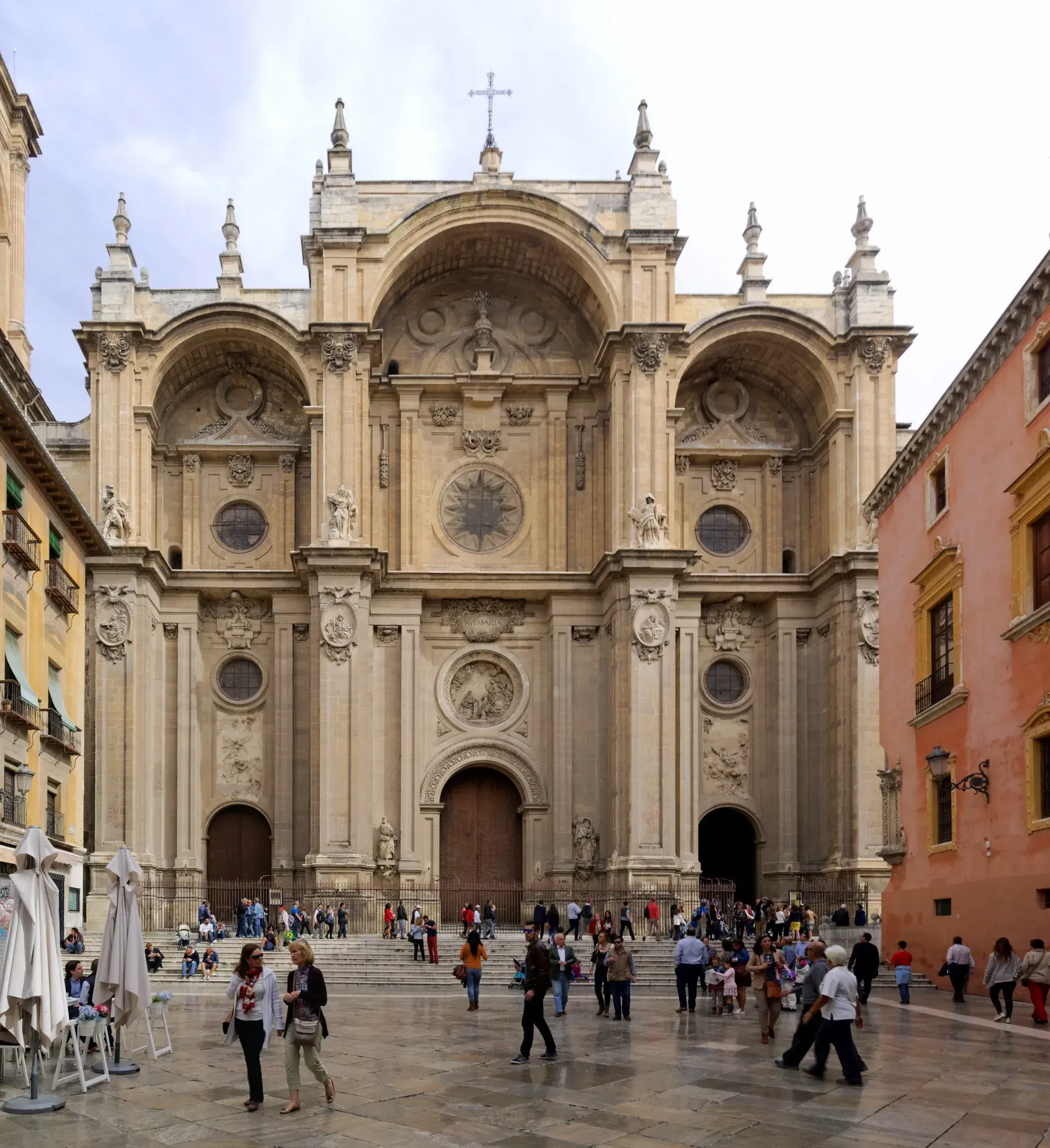
Later additions include the grand west façade, designed in 1667 by the Granadan artist and architect Alonso Cano. Considered a Baroque masterpiece, it is one of his most celebrated works. Cano also created the busts of Adam and Eve found inside. A notable aspect of the cathedral's appearance is its single tower. Original plans called for two imposing 81-meter towers, but financial constraints and Cano's death meant only one was ever partially constructed.
The Cathedral Today
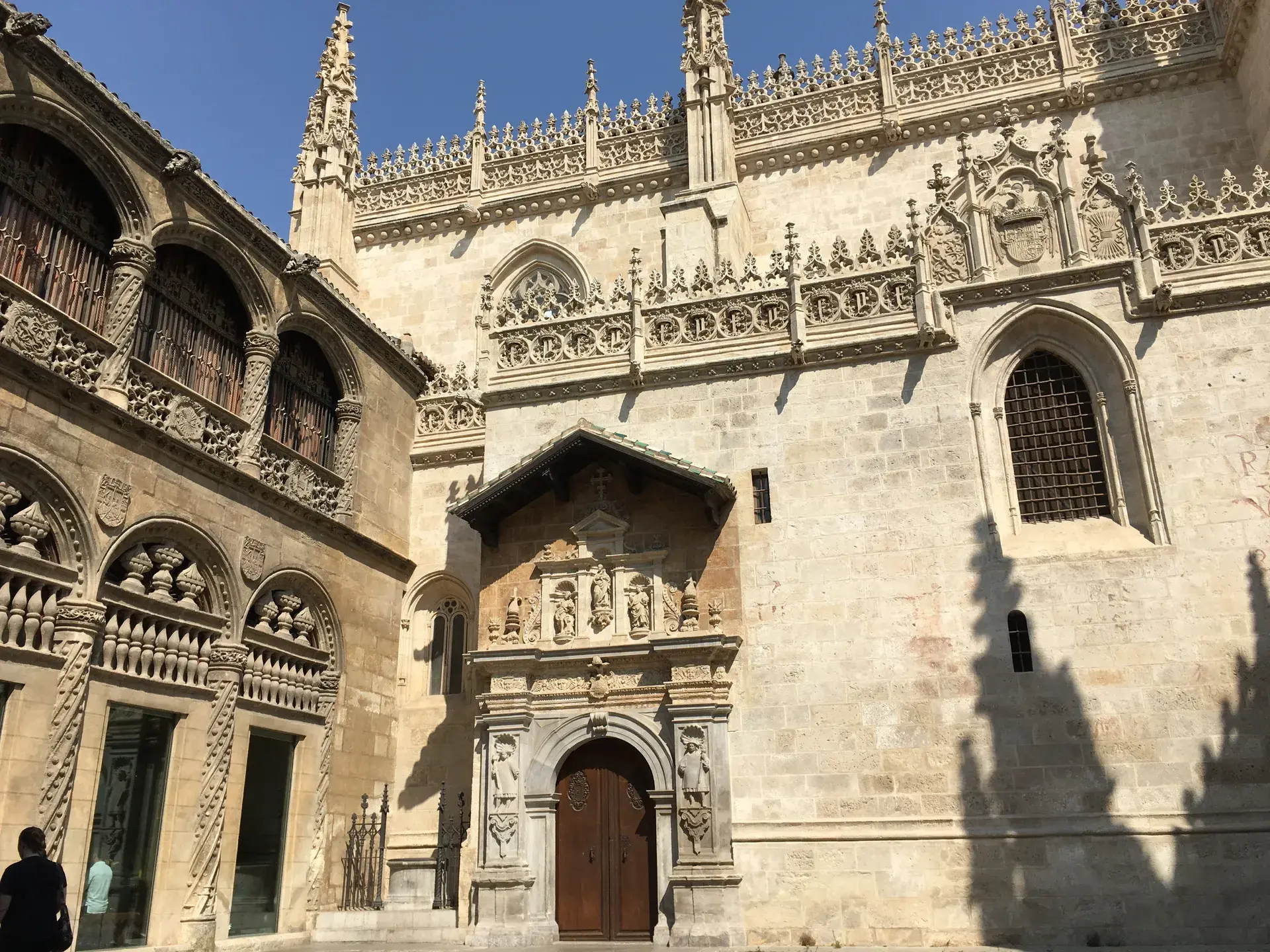
Currently, the Catedral de Granada serves as the seat of the Archdiocese of Granada and is an active Roman Catholic cathedral where public mass is celebrated. It is also a major tourist attraction, welcoming visitors to explore its vast interior. The adjacent Royal Chapel, which houses the tombs of the Catholic Monarchs, can be visited as part of the same complex.
FAQ
When was the Granada Cathedral built?
Construction of the Catedral de Granada began on March 25, 1523, and was formally completed in 1704. The entire building process spanned 181 years of intermittent work.
Why is the Granada Cathedral's architecture significant?
It is considered Spain's first fully Renaissance cathedral. Its design is notable for an unusual five-nave layout and a unique circular main chapel (*capilla mayor*) rotunda, an innovative feature created by architect Diego de Siloé.
Why does the cathedral only have one tower?
The original plans included two 81-meter towers. However, due to financial limitations and the death of architect Alonso Cano, only one tower was partially constructed, leaving the cathedral's skyline different from its intended design.
Who commissioned the Catedral de Granada?
The cathedral was commissioned by Queen Isabella I of Castile and King Ferdinand II of Aragon, the Catholic Monarchs, following the Christian Reconquista of Granada in 1492.